





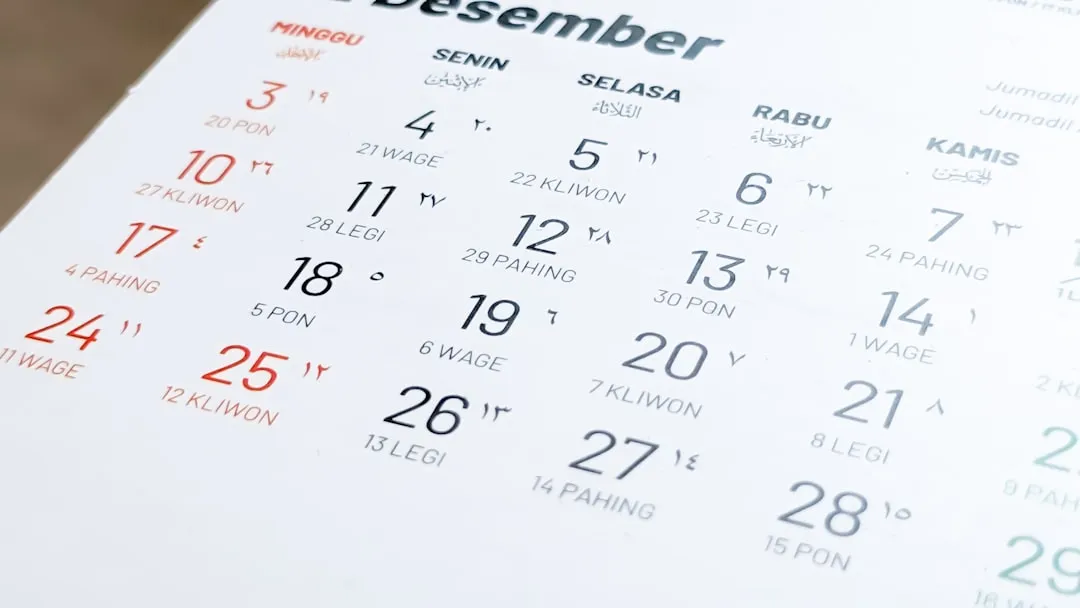
Gemini's calendar capabilities just got a major upgrade, and if you're someone who juggles multiple schedules—work, personal, family, shared team calendars—this matters more than you might think. Google recently expanded Gemini's calendar integration to support not just your primary calendar, but secondary and shared calendars too. For anyone who's tried asking an AI assistant about an event only to get a blank stare because it was on your "Family" or "Work Projects" calendar, this change fundamentally reshapes how useful Gemini can actually be in your daily workflow. The shift moves Gemini from a limited assistant that could only peek at one slice of your schedule to something that can genuinely help you navigate the complexity of modern calendar management.
Why multi-calendar support actually changes the game
The reality is that most of us don't live single-calendar lives anymore. According to Google's announcement, Gemini can now access events across all your connected calendars—primary, secondary, and shared ones—giving it a complete picture of your commitments. This means when you ask Gemini about your availability or upcoming events, it's no longer ignoring that team standup on your work calendar or your kid's soccer practice on the family shared calendar.
The feature works through the Google Calendar extension in Gemini, which you'll need to enable to take advantage of the expanded access. It's not automatic, which makes sense from a privacy standpoint, but it also means you'll need to deliberately turn this on if you want the full benefit.
Here's what that visibility unlocks in practice: Gemini recognize patterns you might miss when events live in different calendars. It can recognize patterns across your work and personal commitments—like noticing you consistently block Friday afternoons on your personal calendar, or that team meetings cluster on Tuesday mornings. This pattern recognition capability becomes the foundation for more intelligent scheduling assistance, moving beyond simple availability checks to understanding your actual scheduling preferences and constraints.
Privacy, permissions, and what Gemini can actually see
Here's where things get interesting from a privacy and control perspective. Google has implemented this with granular permission controls, meaning you decide which calendars Gemini can access when you activate the Calendar extension. This isn't an all-or-nothing proposition—you maintain control over what parts of your schedule the AI assistant can see.
What's particularly important is that the integration respects existing Google Calendar sharing permissions. If a calendar is shared with you but with limited visibility (like "see only free/busy"), Gemini will honor those same restrictions. It won't magically give you more access to calendar details than you already have through the standard Calendar interface.
For enterprise users and anyone working with sensitive scheduling information, this permission structure represents the right balance between utility and control. You can leverage Gemini's scheduling intelligence for personal calendars while keeping work calendars completely off-limits, or vice versa, depending on your comfort level and organizational policies. The flexibility to mix and match which calendars get AI access allows for strategic experimentation—you might start with just personal and family calendars to test accuracy before expanding to professional schedules.
PRO TIP: Start by enabling just your personal and one shared calendar to test Gemini's accuracy and understand how it interprets your scheduling patterns before granting access to sensitive work calendars. This staged approach lets you build confidence in the system while maintaining control over your most private scheduling information.
What this means for your actual workflow
So what does this actually change about how you use Gemini day-to-day? The practical applications extend well beyond just asking "what's on my calendar today." Gemini can now help you find meeting times across all your calendars, making scheduling coordination genuinely simpler when you're working with complex availability patterns.
Imagine asking Gemini to find a two-hour block next week when you're free across work, personal, and shared family calendars—that kind of multi-source analysis becomes possible without you opening three different calendar views and manually checking for overlaps. The assistant can also surface relevant events when you're planning, like reminding you about a conflicting commitment on a shared calendar when you're trying to schedule something new.
This transforms Gemini from a reactive tool that answers direct questions into something more contextually aware—an assistant that can help you navigate scheduling complexity rather than just reporting what's already there.
Let's break it down with a real scenario: you need to schedule a dentist appointment next month, but you've got work meetings on your professional calendar, your partner's schedule on a shared family calendar, and your personal commitments on your main calendar. You can ask Gemini to find available slots that work across all of them, and it actually has the visibility to give you a useful answer. Better yet, as Gemini learns from your scheduling patterns over time, it could potentially recognize that you typically prefer morning appointments and avoid scheduling during your usual deep work hours on Tuesday and Thursday afternoons—preferences derived from analyzing patterns across all your connected calendars rather than requiring explicit configuration.
The progression from basic availability checking to intelligent, pattern-aware scheduling suggestions represents where this multi-calendar foundation could lead. While Gemini might also proactively notice when you've double-booked across calendars and alert you before the conflict becomes a problem, that level of unsolicited assistance will depend on how Google refines the proactive notification balance in future updates.
Where this falls short and what's still missing
Let's be clear about the limitations, because this isn't a complete calendar management solution yet. The feature currently works through the Gemini app and web interface, but the depth of calendar manipulation—creating events, modifying existing ones, managing invites—isn't fully spelled out in terms of capabilities across all calendar types.
There's also the question of how this compares to Google Assistant's existing calendar integration, which has had years to mature and develop specific voice-command workflows that many users rely on. Gemini's approach is more conversational and context-aware, which has advantages, but whether it can fully replace Assistant for calendar-heavy users remains an open question. Commands like "OK Google, what's on my calendar tomorrow?" or "Add team lunch Friday at noon" have muscle-memory efficiency that Gemini's more conversational interface may not match for users who've built those voice command habits.
Additionally, for users of competing platforms—Microsoft 365 calendars, Apple Calendar, or third-party scheduling tools—this integration obviously doesn't extend beyond the Google ecosystem. If you're maintaining calendars across platforms (which plenty of people do, especially in mixed-device households or workplaces), Gemini's multi-calendar support only helps with the Google portion of your scheduling life, limiting its utility for anyone working across platforms.
The other reality is that we're still early in understanding how well this actually works in practice. The announcement tells us what's possible, but real-world performance with complex calendar setups, edge cases with permissions, and the accuracy of Gemini's scheduling suggestions will only become clear as more people use it extensively.
The bigger picture: AI assistants that actually understand your time
This update represents something more fundamental than just a feature expansion—it's about AI assistants evolving to understand the messy reality of how we actually manage time. The real question is whether comprehensive calendar access becomes table stakes for all AI assistants within the next 12-18 months, or whether Google's integration depth creates sustainable differentiation. Google's emphasis on comprehensive calendar access signals a recognition that effective AI assistance requires seeing the full context of our commitments, not just fragments—but execution and ongoing development will determine whether this advantage persists.
The competitive implications are worth noting. As AI assistants from Google, Microsoft, Apple, and others compete for utility in productivity workflows, calendar intelligence becomes a key differentiator. Gemini's expansion to secondary and shared calendars puts it on more equal footing with human assistants who naturally understand that people maintain multiple, overlapping schedules. Microsoft's Copilot has been making similar moves in the Microsoft 365 ecosystem, while Apple's Siri has historically lagged in calendar sophistication compared to both. The assistant that can most seamlessly synthesize scheduling complexity across platforms and calendar types will likely win significant mindshare in productivity-focused user segments.
This positions Gemini to potentially expand into more sophisticated time management capabilities—automated conflict resolution with user-defined priority rules, cross-calendar analytics showing how you're actually allocating time across work and personal commitments, or predictive scheduling that suggests optimal meeting times based on your energy patterns and historical preferences. Whether this translates to genuine productivity gains or just incremental convenience will depend heavily on how well the implementation works in practice and how effectively users adapt their habits to leverage these new capabilities. You have to actually ask Gemini the right questions and trust it enough to rely on its cross-calendar analysis. That behavior change isn't automatic.
But the foundation is now in place for Gemini to be genuinely helpful with one of the most universally challenging aspects of modern work and life—managing time across the increasingly fragmented landscape of our digital schedules. For users already committed to the Google ecosystem, this represents a meaningful step toward AI assistance that actually understands how scheduling complexity works in practice, not just in theory.





Comments
Be the first, drop a comment!