



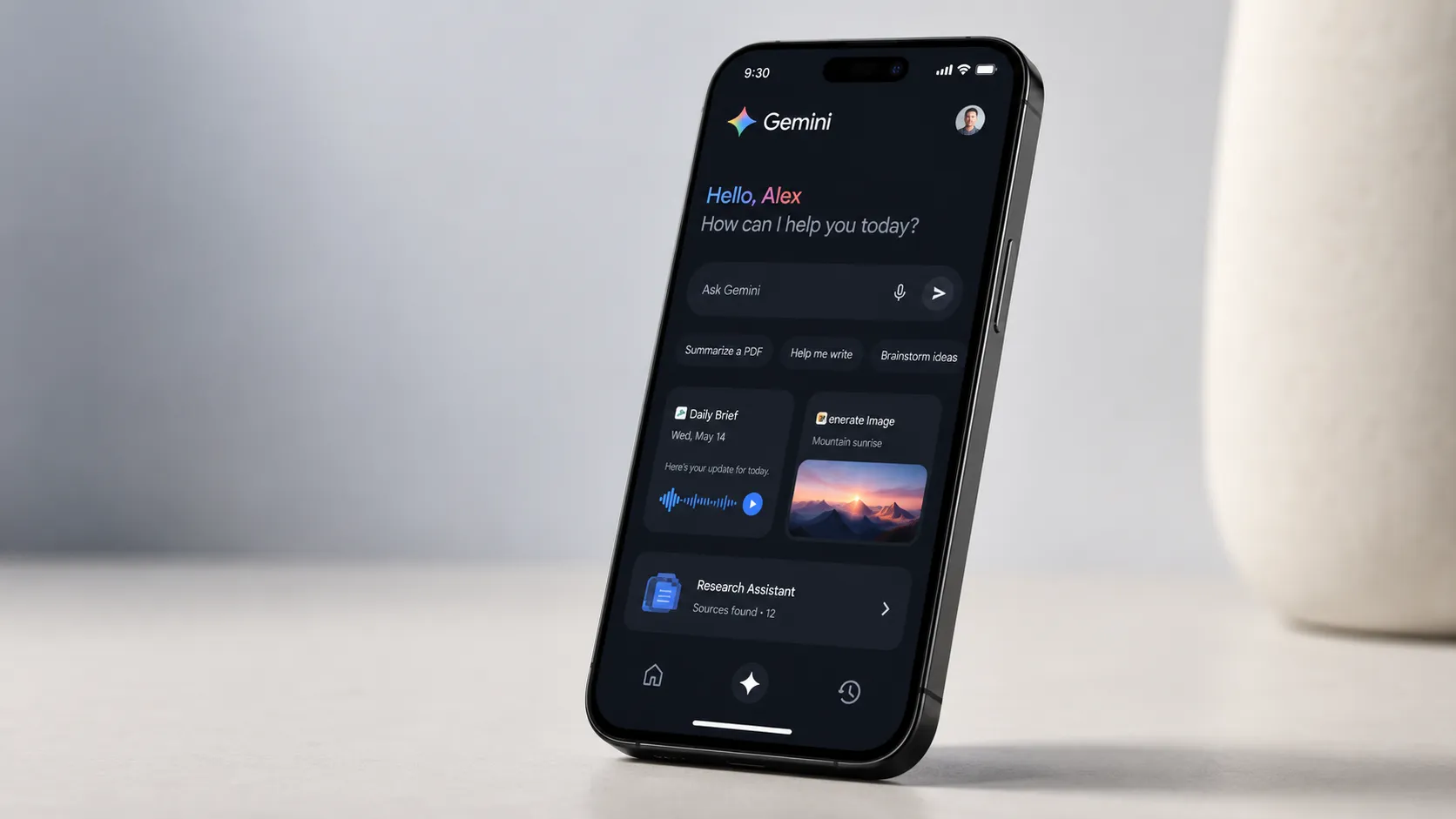
In November 2025, Google shipped Gemini 3 with a new model, a refreshed app, and something quieter underneath both: for certain prompts, Gemini can move beyond a plain text reply and generate a custom user interface instead, according to Google's product blog. That shift is what the Gemini app redesign is actually about. The visual cleanup is real but secondary. The more consequential work is architectural.
Two caveats upfront. Some of the most consequential features here are still experimental, selectively rolled out, or limited to Google's $249.99-per-month AI Ultra tier. This piece covers both what's changing and how much of it most users can touch right now.
What the new Gemini app UI does differently
Google introduced two interface experiments with Gemini 3, called visual layout and dynamic view, according to Google's Gemini 3 app announcement. Both can move eligible prompts beyond a standard text-only response. Neither is a cosmetic variation; they reflect a different theory of what an AI response can be.
Visual layout produces a structured, magazine-style response with images and navigable content modules. Ask for a three-day Rome itinerary and you get something that resembles a formatted travel guide with sections you can scroll and revisit non-linearly, not a bulleted list you read once and lose, per Google's Gemini 3 announcement. Dynamic view goes further: Gemini 3 uses its own coding capabilities to design and render a custom interface in real time, built specifically for the prompt, Google Research explained in its generative UI post. Google's example is a Van Gogh gallery walkthrough with biographical context for each piece, a purpose-built, tappable experience generated on demand rather than a static document, per the same announcement.
The shopping integration makes the practical logic concrete. When a user asks about products, Gemini can surface structured listings, comparison tables, and current product information and prices drawn from Google's Shopping Graph, which Google says includes more than 50 billion product listings. The response shapes itself around what the user does next: compare options, check prices, decide. That's the same underlying move as dynamic view.
The tradeoff is worth naming. A generated interface that adapts to each prompt can be more useful than a fixed layout. It's also less predictable. Users who rely on consistent controls in consistent locations give something up, and for repeated workflows that's a real design problem Google hasn't publicly resolved. Both experiments remain selectively available; Google noted that users may initially see only one of the two modes, meaning neither has reached default behavior, per the Gemini 3 announcement. The interface is genuinely experimental, not a polished rollout dressed up as a test.
Why agentic tasks make interface design a hard problem
A chat window handles answers. It handles actions poorly. Actions have states, require approvals, and span multiple steps across multiple services. Gemini Agent is Google's direct response to that limitation.
Built on insights from Project Mariner, Gemini Agent breaks down complex requests using tools including Deep Research, Canvas, Workspace apps like Gmail and Calendar, and live web browsing, per Google's Gemini 3 announcement. Two examples show how that plays out. Tell it to organize your inbox and it surfaces priorities and drafts replies for your approval before anything is sent. Tell it to find a mid-size SUV rental under $80 per day using details already in your email and it locates the relevant messages, compares available options, and prepares the booking, all pending a human confirmation step, per the same announcement. Google built that confirmation in deliberately; Agent is designed to pause before consequential actions like purchases or sent messages, and users can take over at any point.
Consider what a text transcript of that rental process would look like. A paragraph describing what the agent found, followed by another describing what it did. Now consider a generated interface for the same task: a comparison table showing options against confirmed travel dates, a highlighted recommendation, a visible log of completed steps, a confirm button. The second version would make the agent's progress easier to inspect. The first version makes it opaque. That's the product logic connecting generative interfaces to agentic capability: a chat thread is a poor container for work that has state.
Inbox management makes the same point. Gemini sorting through email, flagging priorities, and drafting replies needs to surface what it has acted on, what it's waiting on, and what needs a human call. A structured, task-specific interface is better suited to that than a scrolling conversation log.
What this means for users today
The Gemini 3 overhaul is not a uniform experience. Access breaks down along three lines.
For most Gemini users globally: Gemini 3 Pro began rolling out worldwide with the November 2025 update. The visual refresh, including a cleaner layout and a "My Stuff" folder for saved images, videos, and reports, is part of the general release. The generative interface experiments, visual layout and dynamic view, are rolling out selectively via A/B testing, per Google. If they haven't appeared yet, that's by design.
For Android and iOS users: Gemini Live with camera and screen sharing became free on Android and iOS at Google I/O 2025, where Google said Live sessions run five times longer on average than text-based conversations. Longer, more complex sessions expose the limits of text output faster, which helps explain why Google is investing in formats that can hold more than a chat window reasonably can.
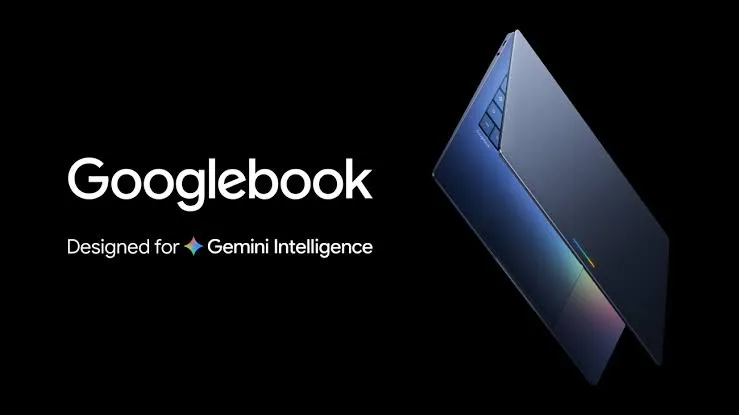
Since Gemini 3 launched, Google has also pushed the same idea deeper into Android. At the Android Show on May 12, 2026, Google introduced Gemini Intelligence, a broader Android layer for proactive app automation, Chrome help, opt-in form-filling assistance, spoken-message polishing, and custom widgets generated from natural-language prompts. Google says those features will begin rolling out this summer on select Samsung Galaxy and Google Pixel phones, with broader availability across other devices later in 2026.
For Google AI Ultra subscribers in the U.S.: Gemini Agent launched exclusively at this tier, on web only. Ultra costs $249.99 per month, compared to $19.99 for Google AI Pro, according to Google's AI subscription page. The version of the Gemini app where generated interfaces and agentic task execution actually converge is, for now, out of reach for most users.
Gemini is available globally across Android and iOS, but a broader mobile rollout of Gemini's agentic features, especially beyond the Ultra tier, would be the development that makes this redesign matter at that scale. That step hasn't happened yet. Google has extended a free year of Google AI Pro to U.S. college students, according to Google's November 2025 Gemini 3 update, but Agent itself remains unavailable to them.
What to watch for
Whether either interface experiment reaches default behavior. Both visual layout and dynamic view remain experimental or selectively available, rather than universal default behavior. The signal worth watching is whether one gets promoted to default for eligible prompts. That would mean the consistency problem has been sufficiently worked out. Staying experimental indefinitely would suggest it hasn't.
Whether Gemini's agentic features reach more users. Agent launched web-first and Ultra-only, while Gemini Intelligence shows Google is already pushing related task-handling features deeper into Android. The next question is whether those tracks broaden beyond limited devices, web access, and premium pricing.
Whether dynamic view and Agent converge. Right now they're separate experiments. One open question is whether Google eventually combines these tracks into an agent that generates its own interface as it works through a task, surfacing state and progress through a custom-built UI rather than a text log. Google hasn't signaled that explicitly. Both experiments are nevertheless solving the same underlying problem, and Google I/O 2026 will be worth watching for signs that either track is graduating into the mainstream Gemini app.




Comments
Be the first, drop a comment!