





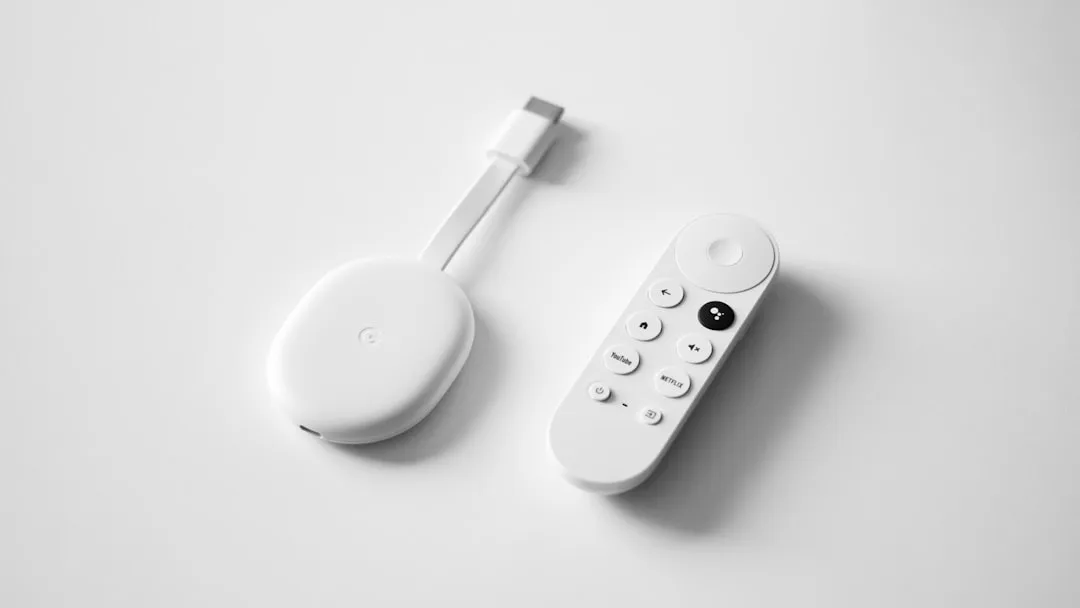
In March 2025, second-generation Chromecast and Chromecast Audio units stopped working. Owners woke up to an "Untrusted Device" error and a reasonable assumption: Google had simply let discontinued hardware die. Within a week, Google deployed a Chromecast fix, emailed affected users directly, and brought decade-old hardware back online. This week, Google clarified what that intervention actually was.
Google briefly updated its Nest device software-support documentation in a way that appeared to mark five Chromecast models as no longer receiving critical security updates, but later said that was an error and corrected the page. Before Google promised a fix last year, many assumed the outage was the beginning of the end for the Chromecast line. The documentation change this week suggests those observers weren't entirely wrong, just early.
Chromecast fix: how Google restored older devices in March 2025
The trouble started around March 9, 2025, when 2nd-gen Chromecast and Chromecast Audio units began rejecting cast attempts with an "Untrusted Device" error. Google acknowledged the problem the following day but took until March 17 to fully deploy a solution — over a week of downtime for hardware that had been on the market since 2015.
Google never confirmed the root cause. Outside analysis pointed to a security certificate embedded in the hardware expiring after ten years. Ars Technica called this "almost certainly" the explanation, though Google did not confirm it. The episode highlighted a common failure mode for older connected devices: certificate expirations can break authentication without warning, based on decisions made at the factory years earlier, with no obvious signal to users that a deadline is approaching.
The fix played out differently depending on what owners did during the outage. Those who left their devices alone received an automatic over-the-air update. "Everything should now function normally," Google wrote in an email to affected owners of the 2nd-gen Chromecast and Chromecast Audio. Owners who had tried to solve the problem by factory-resetting their device ended up in a harder position: a reset Chromecast in that broken state could not complete setup at all.
Google addressed the reset problem with an updated Google Home app version 3.30.1.6 on Android and 3.30.106 on iOS, which added the ability to re-provision those affected units.
Google no longer sells Chromecast devices and had already replaced the brand with the Google TV Streamer in August 2024. It shipped this Chromecast outage fix anyway, for hardware up to ten years old. That decision wasn't guaranteed, which is precisely why the support change this week carries weight.
What changed in Google's support documentation this week
Google updated its Nest device software-support page to mark five Chromecast models as no longer receiving critical security updates: the Chromecast 2nd Gen, Chromecast Audio, Chromecast Ultra, Chromecast 3rd Gen, and Chromecast with Google TV (4K). The only model still listed as actively supported is the 2022 Chromecast with Google TV (HD), which remains within Google's stated five-year minimum support window.
For most of those models, the change formalizes what had already been true for years. The 2nd-gen Chromecast's promised update window closed in 2020; the 3rd-gen's ended in 2023. Their inclusion in the newly unsupported column reflects a status that had been functionally accurate long before this week.
The Chromecast with Google TV (4K) is a different story. As recently as late 2025, Google's own firmware release notes logged an Android security patch for that device, bringing it to the October 2025 patch level. It briefly appeared in the unsupported column but is currently listed as receiving critical security updates. Every other model on the list had a predictable trajectory based on its age and original support commitment. The 4K model did not.
The documentation change arrived without any formal announcement, and Google's pages are not fully in sync. A Reddit user identified that an archived version of the Nest support page still listed all five models as supported as of March 13, meaning the status change happened within the past few days.
A separate Chromecast firmware page, last updated in November 2025, still only explicitly marks the 1st-gen Chromecast as end-of-life, per Google's own documentation. That page is stale; the Nest support matrix is the more current signal. But the gap between them makes Google's actual policy harder to read than it needs to be, and it raises a reasonable question about whether additional changes are still coming.
When Google formally ended support for the 1st-gen Chromecast, it used the firmware page to say so explicitly: "Support for Chromecast (1st gen) has ended. It no longer receives software or security updates, and Google doesn't provide technical support," Google's documentation states. No equivalent language has appeared for the five models newly marked on the Nest page. That inconsistency is either a documentation lag or a sign that the process is still playing out.
What this means for Chromecast owners
If your device still works and you never reset it: The corrected support page does not indicate a newly announced shutdown or an end to critical security updates for these models. Google has not indicated these devices are being disabled. The practical consequence is that newly discovered security vulnerabilities will no longer receive patches — a meaningful distinction for any networked device, but one that affects different households differently depending on how the device is used and what else shares the network.
If you reset your device during the March 2025 outage: The recovery path remains available. Update the Google Home app to version 3.30.1.6 on Android or 3.30.106 on iOS, then complete setup from there.
If you own the Chromecast with Google TV (4K): The brief apparent status change, which Google later attributed to an incorrect support article update, is the part of this week's update that remains unresolved. Google's firmware page logged an October 2025 Android security patch for that device, per its support documentation. Its removal from the supported list is the least explained move in an otherwise predictable housekeeping update.
If you own the Chromecast with Google TV (HD): Nothing has changed. Still supported, still within the minimum window.
The door is now closed for most
The March 2025 intervention established what Google is prepared to do: step in when a widespread, concrete failure hits hardware it no longer sells. This week's documentation whiplash shows how confusing Google's support signals can be when help pages and firmware pages appear out of sync. For five models, critical security maintenance is now formally over, even if the devices themselves continue operating.
The 1st-gen Chromecast reached this point first, and the firmware page made it explicit. The same pattern is now repeating for most of the rest of the lineup, through a quieter update to a different support page with no accompanying announcement. Owners of the affected models should treat the Nest support-page change as the most authoritative signal for now, not a reason for immediate concern, but a clear marker of where Google's obligation ends.
The one remaining open question is whether Google explains the 4K model's trajectory. A device that received a security patch six months ago appeared to sit in the same column as hardware from a decade earlier. That gap deserves a clearer answer than a silent documentation update.




Comments
Be the first, drop a comment!