





Android Auto Fixes Rolling Out for Pixel and Samsung Issues
Android Auto has been failing for drivers across Pixel, Samsung, and Motorola devices since around March 18. As of March 24, Google had not officially acknowledged the problem or confirmed any fix. No verified rollout exists. If your Android Auto keeps disconnecting or won't connect at all, here's what the reporting actually shows, what workarounds are worth trying, and what to watch for when a fix does arrive.
Complaints spiked last week across Reddit, Google's official support forums, and the Android Issue Tracker. Sessions either refuse to start or collapse within seconds, on both wired and wireless setups, across a wide range of vehicles, as ZDNET reported on March 24. Affected hardware spans multiple Pixel generations, Samsung Galaxy S23 through S26, and some Motorola phones. The spread is too broad to blame on a single bad cable or one vehicle model.
What Google has said about the Android Auto disconnecting problem
Not much. Three outlets reported the same baseline on March 24: no official acknowledgment, no confirmed fix. ZDNET noted Google hadn't acknowledged the issue and had reached out for comment. FindArticles confirmed no fix existed. time.news was equally direct: no statement from Google on the widespread failures.
Google stayed quiet for days while complaints piled up on its own support forum. ZDNET had to reach out directly before getting any engagement, per their March 24 report.
That leaves the root cause unconfirmed, the implicated Android Auto versions unspecified, and whether wired and wireless failures trace to the same underlying fault still unknown. What's known from Google's track record: similar waves of Android Auto instability have previously resolved through a server-side configuration change or a new app build pushed via the Play Store, typically without requiring manual action from users, according to FindArticles. That's the likeliest path forward. It isn't confirmed, so treat it as a working assumption.
Who's affected and what the failure looks like
The failure pattern is consistent across reports. Android Auto either won't initiate the phone-to-head-unit handshake at all, or establishes a brief connection that drops, cutting off navigation, media playback, and hands-free calls mid-drive, time.news reported on March 24. Sometimes it recovers after a few seconds. Sometimes it doesn't, per ZDNET.
Both wired and wireless setups are affected, with early reports suggesting wired connections are seeing a higher failure rate, according to time.news. That rules out a Bluetooth-only or cable-specific fault. The device spread, per ZDNET and time.news:
- Multiple Pixel generations, generating the most complaints
- Samsung Galaxy S26 most prominently, with S25, S24, and S23 models also appearing
- Some Motorola phones reporting the same behavior
- Failures across a wide variety of vehicle makes and infotainment systems
When the same failure shows up across dozens of different automakers and head units, a vehicle-specific bug becomes unlikely. The evidence points toward something in the phone software layer rather than any particular car manufacturer's implementation.
Pixel users on Google's support forums connected onset directly to the March 2026 Pixel Drop and concurrent Android Auto app updates, ZDNET noted. But that framing doesn't account for Samsung, which runs its own update schedule. The more plausible explanation is a fault in a shared dependency, the Android Auto app itself or Google Play Services, that both device families rely on, per FindArticles.
What to do if Android Auto keeps disconnecting on your phone
Check for an update first
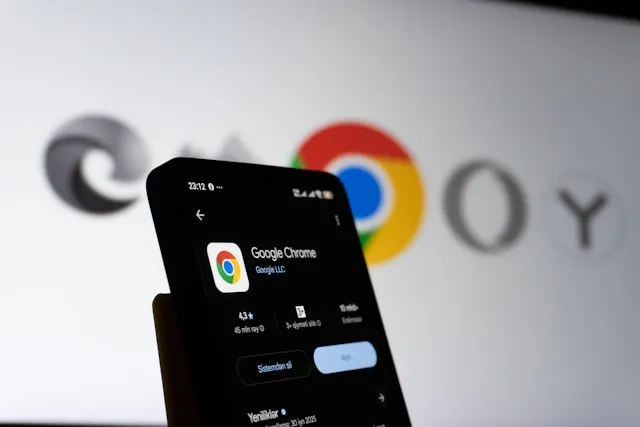
Open the Play Store, go to the Android Auto app page, and check for a pending update. Pull down to force a refresh if the page looks stale. Past waves of similar Android Auto instability resolved through a Play Store update or a server-side change, FindArticles noted. Check your phone's system update settings as well, and install anything pending before testing.
Reboot after any update installs, then run a full test drive. A stable connection through a complete trip is the only reliable confirmation the fix took hold on your specific phone-and-car combination.
If no update is available, or the problem continues after updating
Work through these steps in order:
- Clear the Android Auto app cache and data, then reinstall
- For wired connections, swap in a different USB cable; degraded cables produce symptoms that are genuinely hard to distinguish from a software fault
- For wireless connections, toggle Bluetooth off and back on, then forget and re-pair the vehicle
- If the phone is enrolled in Advanced Protection Mode, try disabling it via Settings > Security & Privacy > Advanced Protection, then test the connection
On that last point: Advanced Protection's USB restriction policy limits data access when the phone is locked, and some users identified it as a possible interference point for the phone-to-car handshake, according to time.news. One Reddit user flagged it directly: "I noticed this keeps the USB blocked, unless the phone is unlocked. It may have become a thing in one of the last two releases." Treat disabling it as a diagnostic step, not a confirmed fix. This is user pattern-matching, not confirmed technical analysis.
Skip the factory reset. Users who tried it did not consistently resolve the problem, time.news reported, which suggests the fault isn't rooted in individual device configuration. Mostly disruption, no reliable payoff.
If you're driving today before a fix arrives
Set your navigation destination before the car moves. Don't count on Android Auto holding a stable connection mid-trip until you've confirmed it does on your specific setup.
AAA recommends pre-planning routes to reduce any need to interact with in-car displays while in motion, per FindArticles. Sound advice until this resolves.
Where things stand on Android Auto fixes rolling out
Google has not acknowledged the Android Auto connection failures hitting Pixel, Samsung, and Motorola drivers since last week, and no official fix has been confirmed as of March 24. Check the Play Store for an Android Auto update periodically, watch for a new version number in the changelog, and run through the troubleshooting steps above if the problem is active on your device.
If a Play Store update doesn't materialize, the next scheduled Pixel Drop in June 2026 is being watched as a potential vehicle for a deeper OS-level fix, time.news reported. That's a three-month wait. For now, the Play Store check is the most useful first move an affected driver can make.

Comments
Be the first, drop a comment!