



Android 17 Quantum-Safe Security: What's Protected and What's Not
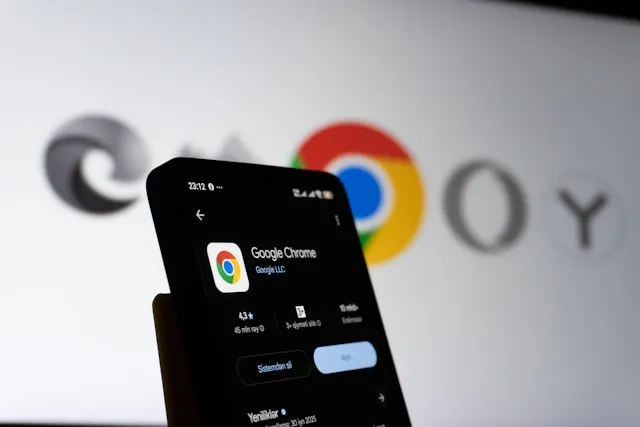
If you use Chrome on Android, or any app that relies on WebView for web rendering, your encrypted traffic already has a layer of Android 17 quantum-safe security active since late 2024, silently, with no setting to enable. That is the most important fact about Google post-quantum security for Android: the most significant change has already shipped, and most users never noticed it.
The protection is specific. Hybrid post-quantum key exchange in Chrome means session negotiation for browser and WebView traffic is now hardened against future quantum decryption. Apps with custom TLS stacks or certificate pinning are not covered. Android platform APIs, the Keystore, and non-browser app networking remain open questions. One through-line runs through all of it: browser-layer protection is here now; platform-layer change may come later, and the public evidence for it is limited.
The timing is not incidental. Adversaries intercept and stockpile encrypted traffic today, intending to decrypt it once capable quantum hardware exists a practice known as "harvest now, decrypt later." Data with a confidentiality shelf life beyond roughly ten years is already at risk, per a developer guide published earlier this month. Under NIST IR 8547, post-quantum cryptography is preferred for new systems as soon as 2027, required for all new systems by 2030, and classical algorithms are banned outright by 2035. Android 17 ships squarely inside that window.
What Chrome and WebView already protect, and why Android's connection volume makes it matter
Since Chrome 131 in November 2024, Google has enabled X25519+ML-KEM-768 hybrid key exchange as the default for TLS 1.3. The session key used to encrypt each connection combines outputs from both a classical elliptic-curve exchange and a quantum-resistant lattice-based exchange, according to a developer migration guide published this month. To break the session, an attacker must defeat both schemes simultaneously. Neither is a fallback for the other: if ML-KEM has a flaw, X25519 still holds; if quantum computers eventually break X25519, ML-KEM holds.
Chrome is preinstalled on many Android devices, and Android's WebView is Chromium-based which means apps that render content through WebView carry this protection without any code change from the developer. Not a new Android 17 API; a browser default that flows through an existing integration.
A PQShield analysis of the highest-ranked Google Play Store apps found they establish a median of 94 TLS connections per session, while many underuse session resumption the technique that lets repeat connections skip the expensive full handshake. Each full handshake without resumption is a fresh interception opportunity. Nearly a hundred of those per typical app session. That volume is why getting protection into the transport layer by default, rather than waiting for app developers to act individually, is the only practical path to broad coverage.
The fault line for developers: apps with custom TLS stacks or certificate pinning bypass WebView entirely. Those apps are not protected by Chrome's defaults.
What is actually new in Android 17 quantum-safe security
This is where the headline question deserves a direct answer. As of March 25, 2026, there is no publicly documented Android 17 platform-wide shift to post-quantum cryptography in Conscrypt, the Keystore, or general app networking. No announced changes to the platform APIs that non-browser apps use for their own cryptographic operations. No public roadmap for BoringSSL defaults at the OS level.
The visible progress on harvest now decrypt later Android security is browser-layer. Chrome made the move. Android inherited it through WebView. That is a real and meaningful protection for a large share of the traffic most Android users generate, but it is not the same as a platform-level transition.
Developers and security teams should be precise about this distinction. An Android 17 device is better protected than its predecessor for browser and WebView traffic. For apps that handle their own TLS, or for data processed through platform cryptographic APIs, the migration path depends on future AOSP and library-level changes that Google has not publicly detailed as part of Android 17. That gap is not a criticism it reflects where the work actually stands.
The harder problem: why Google is redesigning certificate infrastructure, not just swapping algorithms
Hybrid key exchange solves session negotiation. It does not solve authentication.
Verifying a server's identity during a TLS handshake requires checking its certificate a separate cryptographic operation entirely. Post-quantum signature algorithms make that operation expensive to transmit. An ML-DSA-65 signature runs approximately 3,293 bytes; a comparable ECDSA signature is about 64 bytes. A full certificate chain signed with post-quantum algorithms can reach around 17 kilobytes, as security researchers noted in analysis published this month. That exceeds TCP's typical initial congestion window, forcing additional network round trips before a connection is established a penalty that hits cellular networks hardest, where latency is variable and reconnections are frequent.
Google's response is not to engineer around the size problem. It is to change the certificate format itself.
Chrome has no near-term plan to add traditional X.509 certificates containing post-quantum cryptography to the Chrome Root Store, citing scalability and efficiency concerns, the Google Security Blog reported in February 2026. Through the IETF PLANTS working group, Google and partners are developing Merkle Tree Certificates (MTCs).
Instead of transmitting a chain of cryptographic signatures, a browser receives a compact proof that a certificate exists in a public tree. The certificate authority signs a single "tree head" covering potentially millions of certificates; what travels over the wire is only a proof of inclusion. The CA can use a signature algorithm as heavy as quantum resistance requires that cost is paid once, not on every handshake. The mathematical weight of the signature is decoupled from the data size of each individual TLS connection.
The rollout is already underway, with concrete phases and a 2027 target for the key milestones, per the Google Security Blog:
- Phase 1 (underway): Chrome is running live MTC experiments with Cloudflare using real internet traffic. Every MTC-backed connection during this phase is also supported by a traditional X.509 certificate if the experiment surfaces unexpected problems, users remain protected.
- Phase 2 (Q1 2027): Certificate transparency log operators will be invited to participate in bootstrapping the public MTC system.
- Phase 3 (Q3 2027): The Chrome Quantum-resistant Root Store will be established, purpose-built for a post-quantum web.
Each phase has a fallback. That's not bureaucratic caution it's the appropriate structure for infrastructure that a billion devices depend on.
What Android developers should actually check
Three questions determine exposure:
- Does the app use Chrome or WebView for its web requests?
- Does it implement its own TLS stack?
- Does it use certificate pinning?
WebView-dependent apps benefit from Chrome's hybrid key exchange defaults now. Apps with custom networking code do not, and their migration path will depend on AOSP and library-level changes that remain publicly undocumented as part of Android 17.
One specific pitfall for backend teams: deploying post-quantum protection at a web application firewall or load balancer does not guarantee end-to-end coverage if the connection from the WAF to the origin server still runs on classical TLS only. Developers enabling PQC at the edge should verify the full connection path, not just the client-facing termination point, as analysis from February 2026 makes clear.
Urgency scales with what the data actually is. Session tokens and ephemeral UI state carry minimal risk their shelf life is too short for harvest now decrypt later to matter. Health records, financial credentials, and biometrics are a different category entirely: data being collected today that must stay confidential for decades is at practical risk right now.
In January 2026, CISA issued guidance under Executive Order 14306 requiring federal agencies to procure only PQC-capable products in categories where capable options already exist browsers and web servers are on that list, as reported in analysis published this month. Federal departments must complete migration of high-priority systems by end of 2031. For developers handling long-lived sensitive data, the enterprise and regulatory pressure is not approaching it has arrived.
What Android 17 actually delivers on quantum security
For browser traffic on Android, the migration is already underway. Chrome and WebView connections have hybrid post-quantum key exchange active now. Certificate infrastructure is being rebuilt to support post-quantum signatures at scale without degrading connection performance, with a phased rollout running through 2027. For most Android users, this arrives without any action required.
These protections are also bounded. Post-quantum transport hardens the connection between a device and a server. It does not protect against endpoint compromise if a device is hacked, encryption becomes irrelevant. Traffic patterns remain visible even when payloads are protected. Side-channel attacks on the hardware performing cryptographic operations are a separate category of risk, as security researchers note. Android 17 is more accurately described as quantum-safer in transit for the traffic Chrome and WebView handle not quantum-safe as a platform.
What Chrome has done to its transport and certificate architecture is the template. Whether and when that extends to Android's platform-level cryptographic components Conscrypt, BoringSSL, the Keystore remains publicly undocumented as of this writing. That is the story to watch after Android 17 ships.


Comments
Be the first, drop a comment!