



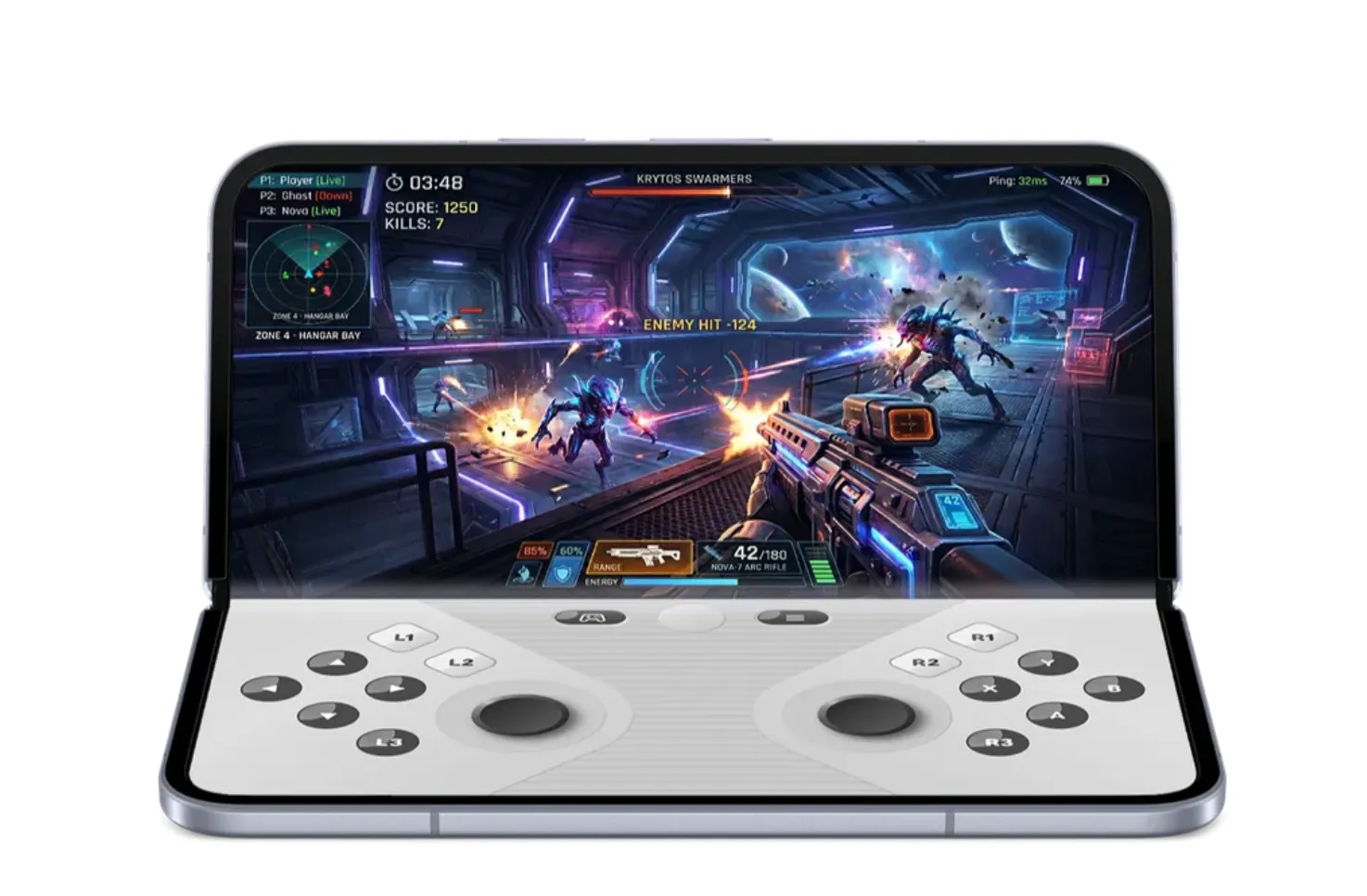
Google began rolling out Android 17 to supported Pixel devices on June 16, 2026, and the update includes a dedicated gaming interface designed for foldable inner displays. The Android 17 foldable gaming mode is confirmed and built into the OS, but it is not user-accessible yet.
Google says the feature is enabled in Android 17 but will be available only "in the coming months." That means Pixel owners can install Android 17 now without getting the foldable gamepad layout yet.
Two gaming-related changes are available now: native controller remapping and Google's claimed performance improvements for high-definition gaming. They are useful additions, especially if you play with an external controller, but they are not the foldable-specific upgrade many users were watching for.
How foldable gaming mode is supposed to work
Google describes foldable gaming mode as an "optimized 50/50 layout" with the game on top and a dynamic gamepad below. The foldable's hinge becomes the dividing line between the game view and a virtual controller surface built into the lower half of the display.
The appeal is simple: Android 17 could keep virtual controls off the game view, which matters most for cloud gaming, emulation, and touch-heavy games that rely on fixed input positions. A system-managed controller area could make those games feel less cramped on foldable inner displays, especially when the device is partly folded like a mini handheld console.
Google has not said which foldables will support the mode first, whether it will be Pixel-exclusive at launch, whether virtual controls can be customized per game, or how many games will work with it. Latency, accidental touches, and crease placement are still unanswered. "Coming months" is the only timeline.
What gamers get in Android 17 right now
Native controller remapping is the most useful gaming feature available at launch. Users can tailor external-controller inputs with Android 17's built-in remapping tools, reducing the need to rely on individual game menus or third-party utilities.
For Android players who already use a physical controller, system-level remapping should be the most immediately useful gaming change in Android 17. It will not make a foldable phone feel like a handheld console on its own, but it should make controller-based gaming easier to set up and more consistent.
Google also says Android 17 reduces frame drops and stutters by making memory cleanup more efficient for high-definition gaming. No benchmark data accompanies that claim, so treat it as Google's stated improvement until independent testing catches up.
Android 17 started rolling out to Pixel devices on June 16, 2026, with other eligible Android devices expected to follow throughout 2026. For most Android gamers, the near-term update is controller remapping, Google's claimed performance gains, and a foldable-specific layout still waiting on release.
Why games are harder to adapt for foldables
Google has not explained why foldable gaming mode missed the stable Android 17 launch. Android Developers documentation last updated June 2, 2026, points to one structural constraint: games do not follow all of Android 17's new large-screen behavior rules.
For apps targeting Android 17, or API level 37, orientation, resizability, and aspect-ratio restrictions no longer apply on displays whose smallest width is greater than 600dp. Android 17 also removes the temporary developer opt-out that existed in Android 16, so apps fill the full display window instead of relying on letterboxing.
Games are explicitly excluded from those rules based on the android:appCategory flag. That exemption means Android's large-screen layout rules do not apply to games the way they apply to productivity or utility apps. Google has not explained publicly what technical approach foldable gaming mode uses instead.
Foldable gaming mode fits Android 17's broader push toward large-screen software, but games remain a special case. That helps explain why the headline gaming layout can be enabled in the OS without being ready for users on day one.
The questions that still decide whether it matters
For Pixel owners who installed Android 17 after the June 16 rollout, the situation is straightforward: external-controller remapping is available, Google's gaming performance improvements still need independent testing, and foldable gaming mode is not available yet.
When the mode does arrive, the important questions will be practical ones. Does it work broadly across game categories, or only with titles that already handle controller input well? Does it reach third-party foldables at the same time as Pixel devices, or will Samsung and other OEM foldable owners wait longer? Are the virtual controls configurable per game?
One question matters most: Is this a system-level overlay, or does it require active developer support? That distinction will determine how many games work with it on day one.
Until Google answers those questions, Android 17's foldable gaming mode is more promise than payoff. The update gives Android gamers better controller tools now, but the feature that could make foldables feel more like pocket gaming handhelds is still waiting to launch.



Comments
Be the first, drop a comment!