



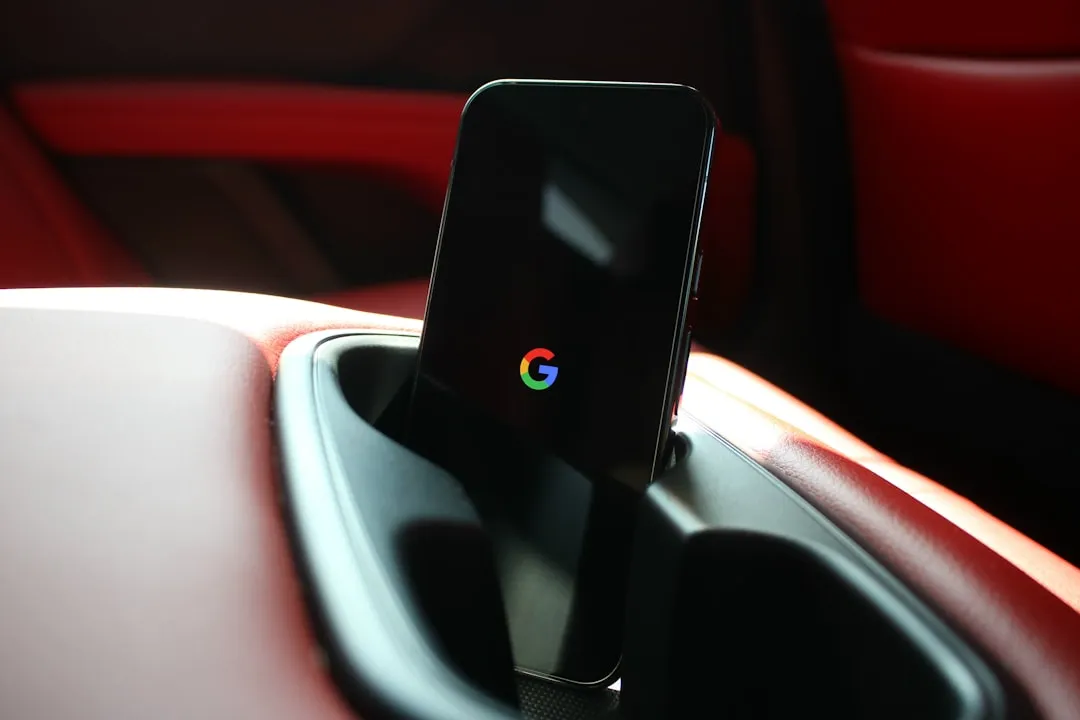
YouTube on Android Auto Arrives as Audio-Only Media Controls
YouTube's playback controls are now surfacing inside Android Auto's dashboard media widget, letting subscribers play, pause, and skip content from their car's infotainment screen. The rollout appears broad, confirmed across multiple devices, app versions, and both beta and stable tracks, according to 9to5Google this past Sunday. There is no video playback, no browsing interface, and no standalone YouTube app. This is an audio control layer, and it requires a paid subscription to use.
YouTube appears in Android Auto's media controls what actually changed
YouTube now sits in the same dashboard widget where drivers manage Spotify or YouTube Music. The phone keeps running YouTube in the background; Android Auto surfaces basic playback controls for whatever is already playing on the phone. It is not a native Android Auto app. As Android Developer documentation describes, media apps expose a playback session that external surfaces like Android Auto can connect to for transport controls that is precisely how YouTube is operating here, Android Authority reported this Monday.
The rollout is not a limited test. 9to5Google confirmed the functionality across multiple devices, accounts, and app versions on both beta and stable tracks, with Reddit users independently reporting the same.
What this feature actually does and doesn't do
The control set is deliberately minimal. Drivers can play, pause, and skip to the next item in their queue. The skip button advances to the next video entirely; it does not seek within the current one. Steering wheel controls behave identically, 9to5Google confirmed after testing.
No browsing option appears in the car interface at all, Android Police noted based on the Reddit post that first surfaced the feature. Whatever is queued on the phone is what plays in the car, which means queue setup has to happen before driving.
In practice, this works best for content that holds up without a picture: long-form interviews, creator essays, news briefings, lecture-style uploads, podcasts hosted on YouTube. A three-hour conversation or a daily news recap translates to the car perfectly. A cooking tutorial or a reaction video does not. The feature essentially treats YouTube as a very large audio library because for this use case, that is exactly what it is.
Can you watch YouTube on Android Auto?
No. YouTube on Android Auto is audio-only right now. There is no video playback, no full-screen player, and no way to browse or search from the car display.
This is a YouTube Android Auto limitation rooted in platform rules, not an oversight. Android for Cars documentation specifies that video apps may only stream video while a vehicle is parked, not while driving. YouTube sidesteps that constraint entirely by operating as a media-session app rather than a video app it never triggers the parked-only restriction because it never presents video in the first place.
A separate hybrid capability, where video apps automatically drop to audio-only once driving begins, remains in early access and requires explicit developer adoption, Android Police reported last May. Anyone expecting a full YouTube app on their dashboard will be disappointed for now.
How to use YouTube on Android Auto right now
For subscribers who want to use this today, the setup is straightforward:
- Requires YouTube Premium or Premium Lite free-tier users will not see YouTube in the media controls
- Queue videos or playlists on the phone before connecting to Android Auto
- Start playback on the phone, then connect
- Expect play, pause, and next-track controls only
- No browsing, searching, or video playback available from the car screen
Who can use it: the Premium paywall
Background playback is the technical requirement, and YouTube withholds it from free users. That makes this a paid-only feature regardless of how broadly the support has rolled out, per 9to5Google.
The subscription options that unlock it:
- YouTube Premium Lite: $7.99/month in the US, includes background playback as of February 2026
- YouTube Premium: $13.99/month in the US, includes all Premium benefits
Background playback was added to the Lite tier only six weeks ago, which makes the $7.99 plan the practical entry point for anyone who wants Android Auto support without paying full price, Android Police reported. Existing Premium or Premium Lite subscribers get YouTube controls on the dashboard starting now. Free-tier users get nothing from this update.
Why there's no video and why that's not accidental
Android Auto and Android Automotive OS are separate platforms, and the distinction matters here. Android Automotive OS is a full operating system built into select vehicles certain Volvos and Polestar models, for example. Parked-video support is further along on that platform, already in early-access testing. Android Auto, the phone-projection system present in most cars, is still catching up, Android Police reported last May.
Google announced parked-video support for Android Auto at I/O 2025, and a flag labeled CradleFeature__allow_video_apps found inside the Android Auto 16.3 beta confirms the work is still active, 9to5Google reported in February. Based on Google's earlier guidance and reporting from Android Police, parked-video support for Android Auto is expected to require Android 16 and work only on select compatible vehicles constraints that will limit real-world availability when it eventually ships. Apps built for in-car use also undergo additional manual review beyond the standard Play Store process, per Android developer documentation, which helps explain the measured pace of change across this ecosystem.
What this signals about Google's in-car strategy
Taken in isolation, YouTube's media-control support looks like a minor quality-of-life update. In context, it fits a deliberate pattern. Over the past several months, more apps have been integrating with Android Auto's media widget, and the platform's media player received a Material 3 redesign that began rolling out in January 2026, according to 9to5Google an aesthetic overhaul that aligns Android Auto more closely with Google's current design language across Android as a whole.
The most plausible reading of the current rollout: Google is getting YouTube's playback session wired into the car interface now, before the architecturally complex parked-video feature is ready. That sequencing makes sense. A media-session integration is straightforward to ship and introduces no safety risk. A full video player requires platform readiness, manufacturer cooperation, and device requirements that will constrain availability from day one, Android Authority noted.
The I/O 2025 announcements and 16.3 code flags establish intent, not schedule. No timeline exists for when parked-video support will arrive on Android Auto. For now, what is confirmed is an audio-control layer operating across a platform present in more than 250 million vehicles, according to Google. What comes next depends on how quickly Google can close the gap between what it has announced and what it has actually shipped.



Comments
Be the first, drop a comment!