



Why the Googlebook Exists: Google's AI Laptop Strategy Explained
More than 15 years ago, Google introduced Chromebook, a laptop built for a cloud-first world that, as WIRED put it Tuesday, would come to dominate the US education market. Google is now making a structurally similar bet: that AI-native design and Android integration can define a new laptop category before Microsoft or Apple sets the terms.
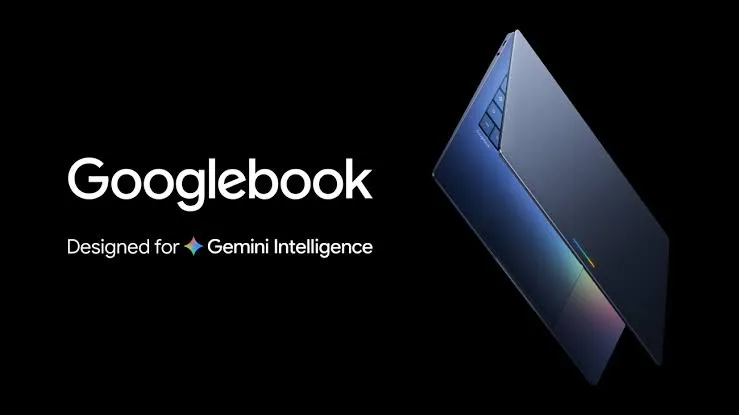
Why does the Googlebook exist? Google is trying to do for the AI era what Chromebook did for the cloud era. The company announced Tuesday what it calls "a new category of laptops built from the ground up for Gemini intelligence," running on the Android technology stack and designed to work in tight continuity with Android phones (Google Blog). The devices won't ship until fall, no model names, no specs, no pricing, so this piece is about the strategic rationale, not a product verdict. Those are two different questions, and right now only one of them has a clear answer.
The thesis: Googlebook exists to give Google a laptop platform built around its core strengths, this time Android, Gemini, and cross-device ecosystem integration rather than just the browser. Whether that bet pays off is still unproven. That it's a coherent and deliberate strategic move is not in doubt.
What is a Googlebook, and why is Google building one now?
Three forces converged to produce this announcement. None of them alone would justify a new laptop category. Together, they make the timing hard to argue with.
Platform consolidation. Google has been running two separate operating systems, Android for phones and tablets, ChromeOS for laptops, and the duplication costs are real. Google's Android head Sameer Samat said last year that Android's codebase would become the foundation of the unified platform going forward, as The Register reported Tuesday. Googlebook is the consumer-facing result of that work. It runs on the Android stack, not ChromeOS, but retains Chrome for browsing and supports Android apps (The Verge reported Tuesday). Google says building on Android lets the company ship innovations to laptops "much faster" than the old architecture allowed (Google Blog). That's mostly an internal efficiency argument, even if Google is presenting it as a consumer benefit.
There's a catch, though. Google describes Googlebook as combining "the best of Android" and "the best of ChromeOS," which means this is not a clean break so much as a hybrid transition product (Google Blog). Chromebooks will continue shipping after Googlebook launches, and existing devices will receive support through their committed update windows, Google's Peter Du confirmed to The Verge Tuesday. Whether Googlebook is a companion to Chromebook, a replacement in slow motion, or something in between remains genuinely unclear. The OS hasn't even been officially branded yet; Google confirmed only that it is not "Aluminium," the leaked internal codename.
Gemini as the new interface layer. Google describes the shift as moving "from an operating system to an intelligence system" (Google Blog). The flagship feature is Magic Pointer, built with the Google DeepMind team according to Google, which surfaces contextual AI suggestions wherever the cursor lands. Hover over a date in an email and it offers to check your calendar, draft a reply, or pull up nearby meeting spots. Drag two images together and Gemini composites them without opening a separate chatbot session. The logic is that AI assistance works better when it's woven into the OS than when it's a tab you open or a button you click; context is what makes AI suggestions useful rather than generic.
The Register characterized this Tuesday as more intrusive than Microsoft's Copilot integration, which is worth taking seriously. AI that triggers on cursor position is a blunt instrument, and whether users experience it as helpful or nagging will depend heavily on how much control they have over when it activates. That's a product execution question the demos don't answer. The strategic logic, building AI into the OS at launch rather than bolting it on later, is sound in the same way that building the browser into ChromeOS was sound in 2011.
Android ecosystem continuity as structural differentiation. A feature called Quick Access lets users browse, search, and insert files directly from their Android phone through the laptop's file browser, no transfers, no cloud sync step (Google Blog). Phone apps run in a portrait-format floating window on the laptop desktop; if a Duolingo reminder fires while you're working, you complete the lesson without switching devices, the app appearing on the laptop screen exactly as it runs on the handset (The Register). This mirrors Apple's iPhone Mirroring feature on Mac, applied to the Android ecosystem.
This is probably Google's strongest non-AI rationale. Anyone already carrying an Android phone has a concrete reason to keep their next laptop in the same ecosystem.
Who the Googlebook is for, and what it has to prove
The intended buyer is not a Chromebook user. It's an Android phone owner, likely already on Pixel or Samsung Galaxy, who wants a premium laptop and finds the Windows or Mac ecosystem's indifference to their phone genuinely annoying. They want cross-device continuity without paying for an iPhone to get it, and they're likely willing to pay above typical Chromebook prices to get it. WIRED described the opportunity Tuesday as giving Google a "more meaningful foothold in the premium computer market," the segment where Chromebook never competed.
That framing clarifies what Googlebook actually has to prove. Consider the competitive landscape plainly:
- Chromebook built its market on education and budget web computing. It supports Android apps, but it was never designed for the buyer who wants premium hardware and expects their phone and laptop to behave like the same device.
- Premium Windows laptops offer broad hardware and software compatibility, but Android continuity is weak. Copilot exists, but it doesn't connect natively to your Android phone's files and apps.
- Googlebook is positioned as the premium Android ecosystem laptop with a native Gemini layer baked in from day one, not retrofitted.
The pitch isn't just AI features. It isn't just Android app support, that already existed on Chromebook, partially. The real differentiator is the combination: a laptop whose AI layer can connect to your Gmail and Calendar and pull in phone files natively, and whose continuity with your Android phone works without configuration. If Googlebook delivers that reliably, there's a real market. If it delivers demo-quality AI that falls apart under normal use, there isn't.
Three things will determine whether the strategy holds up when hardware ships this fall. First, pricing: The Register noted Tuesday that Chromebooks currently run $200 to $500, and Googlebooks will likely cost significantly more; at MacBook Pro price points, Google will need to demonstrate genuine premium-market quality. Second, AI integration quality: Magic Pointer needs to feel contextually helpful in real work, not like an autocomplete function firing on every cursor movement. Third, Android continuity in practice: Quick Access and phone app mirroring need to work reliably across the full Android device ecosystem, not just in a Google-controlled demo with a Pixel phone.
The market timing is legitimately difficult. IDC projects PC shipments will fall 11.3 percent in 2026 (The Register). Launching a new premium category into a contracting market requires the kind of product clarity that demo renders and partnership announcements can't provide.
The strategic rationale is solid. The rest is a fall 2026 problem.
Google's strategy is coherent and the timing is defensible. The company is betting Gemini can be the center of its next laptop push, it has an Android ecosystem no competitor can replicate, and it has a long-running platform-unification effort that needed a consumer-facing product to show for it. Googlebook is all three of those things given a name and a ship date.
The Chromebook parallel holds as a strategic frame, not a performance guarantee. Chromebook succeeded in the market it was designed for; it just never escaped it. Googlebook is designed for a different market with different expectations and, critically, a different set of execution risks. Partner alignment across Acer, ASUS, Dell, HP, and Lenovo (Google Blog) means Google isn't controlling the hardware experience end to end. Premium pricing means the margin for a mediocre product is essentially zero. And Android continuity that works beautifully with a Pixel but breaks on a mid-range Samsung is a different kind of failure than anything Chromebook ever had to navigate.
Right now, what's been announced is intent backed by serious platform architecture decisions. Whether it should exist in your next laptop purchase is a question for when the first hardware ships this fall.




Comments
Be the first, drop a comment!