





Google has a genuine record of pushing AI features to older Pixel hardware, and the pattern across its last several feature drops confirms it. What those drops also show, if you read them closely, is that the most capable experiences are concentrating at the flagship end, and the mechanism Google is using to bridge the gap for older devices carries different privacy assumptions than what the company sold when those phones launched. That shift is worth being direct about.
The question isn't whether older Pixel owners are being abandoned. They're not. The question is whether the cloud-based features now arriving on older Pixel phones represent the same kind of ownership Google originally promised, or something meaningfully different dressed in familiar language.
What older Pixel phones actually receive
Google's AI feature rollouts aren't a single policy applied uniformly. Each drop contains multiple tiers, and where a device sits determines whether it gets a substantive capability or a line item in someone else's changelog.
The December 2024 drop illustrates the structure precisely. Automatic call screening extended to Pixel 4 and newer phones, in English, in the US. That's a wide reach. But Gemini Nano-powered suggested replies within Call Screen shipped exclusively to the Pixel 9, Pixel 9 Pro, Pixel 9 Pro XL, and Pixel 9 Pro Fold, again in English, in the US. One announcement, two very different outcomes depending on what's in your pocket.
Google's November 2025 Pixel update brought notification summaries to Pixel 9 series phones and newer, excluding the Pixel 9a, and with a tightly bound eligibility window: Android 14 or later, English only, US only, with an explicit footnote that the summaries were generated by AI, labeled experimental, and should be checked for accuracy. That's not a dismissal of the feature's usefulness. Notification summaries in the notification shade are genuinely helpful. But the caveats matter, and they narrow the effective audience considerably.
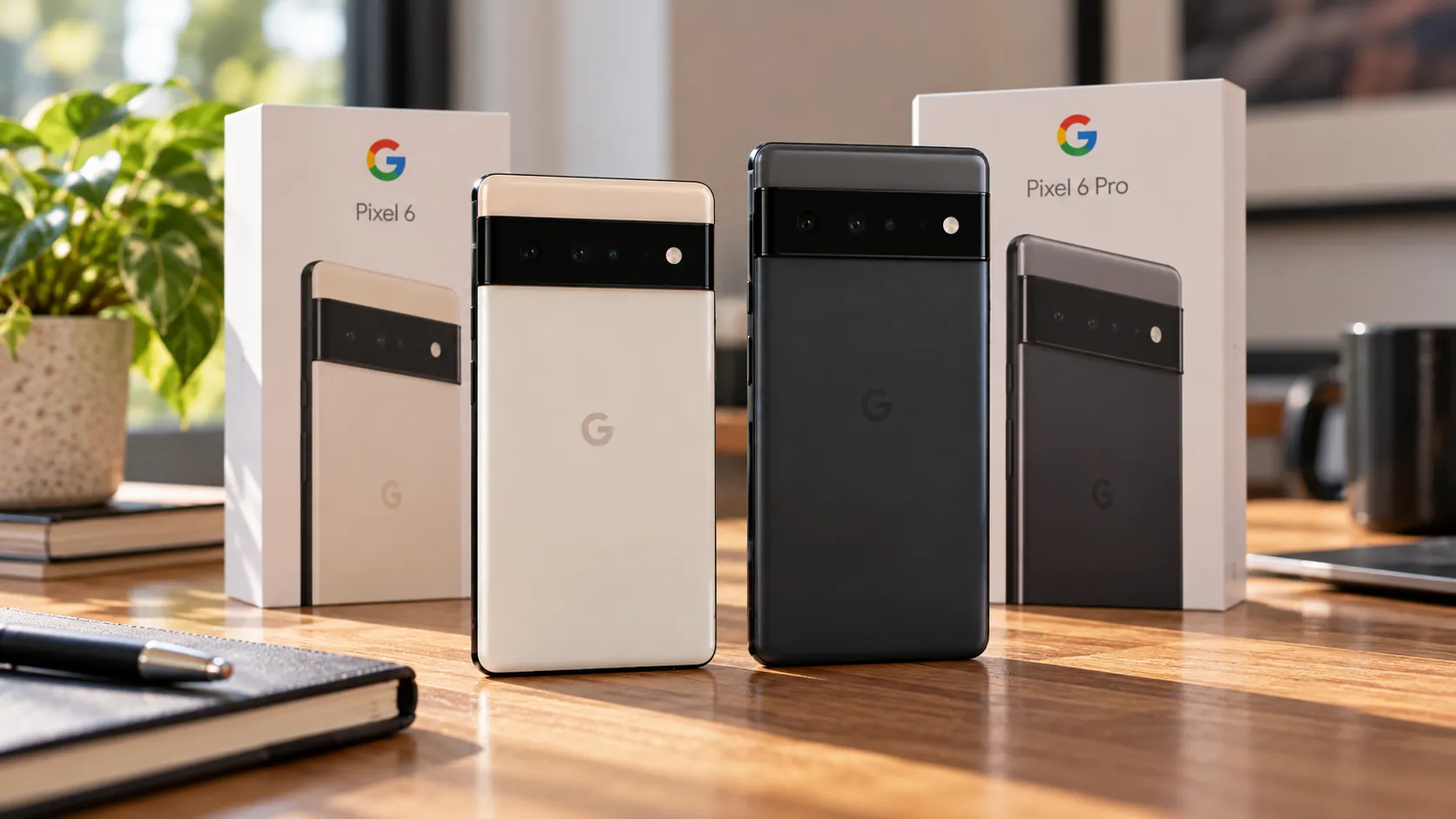
The Pixel 6 line sits in an instructive middle position. Last November, Google extended Scam Detection for chat notifications to Pixel 6 and newer US phones, automatically displaying a "Likely scam" alert on suspicious messages across popular apps. That's a meaningful security feature arriving on hardware that launched in 2021. The same update reserved Notification Summaries for Pixel 9 series phones and newer, excluding Pixel 9a.
The same update reserved Notification Summaries for Pixel 9 series phones and newer, excluding Pixel 9a. These summaries recap lengthy text threads directly in the notification shade, a useful addition for anyone drowning in group chats.
But the same November 2025 update draws the line clearly. Call-based Scam Detection, which uses AI to identify speech patterns commonly used by phone scammers during live calls, expanded internationally for Pixel 9 and newer users only. Call Notes, which uses Gemini Nano on-device to record calls, generate transcripts and summaries, and suggest next steps, is tied to Pixel 9 hardware. One update cycle, two distinct product experiences.
The fragmentation doesn't stop at chipset generation. Android 14 requirements, US-only restrictions, English-only limitations, and experimental labels all reduce the effective audience for features that sound broad in a press release. A Pixel 6 owner in the UK on Android 13 may find that a given drop adds nothing to their phone at all. That's not abandonment, but it's also not the universal upgrade cycle the announcement cadence implies.
What stays on flagship hardware and why
The hardware rationale is straightforward enough: the Tensor G4 chip in the Pixel 9 series can run Gemini Nano's most capable on-device models; the Tensor G1 in the Pixel 6 cannot. That's a physics constraint, not a policy one.
What is a policy decision is how Google framed the value of that on-device architecture when these phones launched. When Gemini Nano debuted on the Pixel 8 Pro in December 2023, Google was explicit about what it was offering: an AI model that helped prevent sensitive data from leaving the phone and could run features without a network connection. The privacy argument wasn't incidental to the pitch. It was the pitch.
Eight months later, Google's Android AI overview doubled down on the same point, describing Android as the first mobile OS with a large on-device multimodal AI model, and noting that user data never leaves the phone for some of the most sensitive use cases. The framing was structural: local processing as an architectural guarantee, not a preference.
That guarantee is what older Pixel hardware can't receive. Call Notes on a Pixel 9 processes entirely on-device. Conversation summaries on a Pixel 6 carry an experimental label and the implicit understanding that their quality and availability depend on software layers rather than silicon purpose-built for the task. The features share a family resemblance. They're not the same product.
It's also worth noting that cloud assistance was already part of the Pixel AI model before this distinction mattered much. Video Boost on the Pixel 8 Pro uploaded footage to Google's servers for computational photography processing, applying color grading, stabilization, and noise reduction remotely. In 2023, though, cloud assistance was positioned as a camera enhancement layered on top of an on-device AI foundation. The shift since then is that cloud processing is increasingly the foundation itself for older devices, not the enhancement.
Why older Pixel phones are getting more cloud-based features
Google's answer to the hardware constraint is Private AI Compute, introduced last November. Magic Cue's contextual suggestions moved to cloud processing through this new platform, which Google describes as "our latest AI processing platform, built to deliver the speed and power of advanced Gemini models in the cloud while extending the same user security and privacy assurances of on-device processing." That sentence is doing significant work.
Google is not claiming that cloud processing and on-device processing are identical. But framing cloud processing as extending "the same assurances" of local processing is a deliberate comparison, and it marks a genuine philosophical shift from how Pixel's AI was positioned two years earlier.
In 2023, the value of on-device processing was architectural: data physically could not leave the device. Private AI Compute replaces that structural guarantee with a policy commitment. One is enforced by design; the other requires trusting that Google's infrastructure behaves as described. Private AI Compute has not been independently validated on its privacy claims in published research.
The case for the cloud approach isn't unreasonable. Proponents would correctly note that older Pixel hardware cannot run Gemini's most capable models locally, and that most users aren't running threat models against their AI assistant. Cloud processing lets Google extend more capable features to a larger install base without waiting for users to upgrade. That's a real benefit, delivered to real people with real phones that still work fine.
The problem is the framing. Calling cloud processing equivalent to on-device processing isn't a description of a tradeoff; it's a rebranding of one. Owners who bought into Pixel's on-device privacy argument in 2022 or 2023 are now being offered something architecturally different, presented as though the original promise is intact. The distinction matters most to users who valued the structural guarantee, and Google's messaging around Private AI Compute isn't designed to make it easy to see that the guarantee has changed.
Google's backward-support track record elsewhere is real and shouldn't be dismissed. The March 2024 feature drop backported health and productivity capabilities from the second-generation Pixel Watch to the original. Scam Detection for chat notifications reaching Pixel 6 hardware last November, nearly four years after that phone launched, is the kind of durable security update that holds up over time. Gemini, as a general assistant, runs in 45 languages across more than 200 countries and territories on hundreds of phone models. Pixel ownership still means being inside a large, actively maintained ecosystem.
But the pattern across recent drops is consistent enough to name plainly. The most capable on-device AI experiences are concentrated on the flagship tier. Cloud processing is Google's mechanism for extending AI capability downward through the lineup, and it arrives with privacy assumptions that differ from what Pixel's on-device model originally promised.
What this means for Pixel's AI strategy going forward
The more consequential question isn't what older Pixel owners are missing today. It's what Private AI Compute signals about where Google is taking the Pixel AI story.
Cloud processing as a platform allows Google to update AI capabilities independently of hardware release cycles. Features that previously required a new chip can now reach older phones through server-side improvements, with no OS update required. That's a genuinely different distribution model, and it gives Google more flexibility to segment the Pixel lineup by experience tier rather than just by hardware spec.
The practical implication: "Pixel AI features" is becoming a two-track category. On-device Gemini Nano capabilities tied to current Tensor silicon define one track, with the structural privacy guarantees that on-device processing provides. Cloud-assisted features via Private AI Compute define the other, with broader hardware reach but a different trust model. Both tracks will be presented under the same Pixel brand, in the same feature drops, often in the same press releases.
For anyone evaluating a Pixel purchase or deciding whether to upgrade, the distinction between those two tracks is increasingly the thing worth understanding. A scam alert running locally on a Pixel 6 is a different product, with different privacy properties, than a contextual AI suggestion processed on Google's servers. Both might ship in the same update. Google's incentive is to make that difference invisible. The feature drop documentation, read closely, makes it visible again.




Comments
Be the first, drop a comment!