





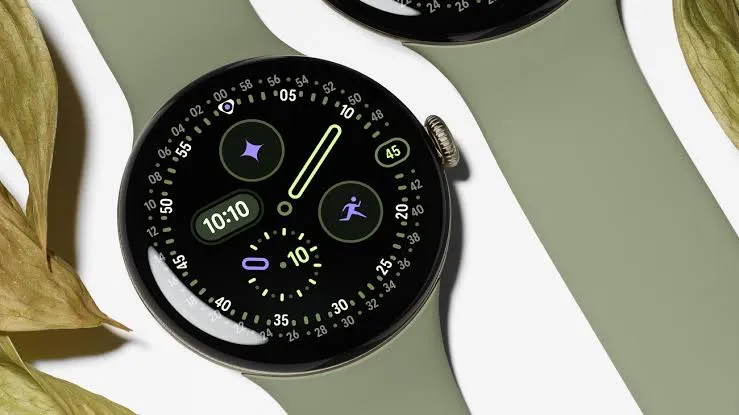
Google began rolling out the Pixel Watch 5's first software update on September 1, moving the build from CD5A.260611.008 to CP3A.260905.002 while keeping Wear OS 7 based on Android 17. The changelog for this Pixel Watch 5 first update headlines Gemini features like offline AI, Gemini Personalization, and improved GPS route accuracy, but there's a catch worth knowing before you go hunting for something new on your wrist.
9to5Google's own reporting notes the published changelog "just recaps the software changes from the initial launch." Most of what's listed here was already running on review units tested by The Verge and Engadget roughly two weeks before this OTA went out. This isn't a feature drop so much as Google formally documenting software capabilities that were already part of the Pixel Watch 5 launch experience.
Owners can check for the update now at Settings > System > System updates. 9to5Google reported that factory and OTA images weren't yet live when the rollout began, while Google said availability would roll out in phases by carrier and device.
Here's the order of operations: confirm you're on build CP3A.260905.002, test offline Gemini using airplane mode on the watch itself, check whether your paired phone is a Pixel 11 before expecting auto-reply suggestions, review which Google apps Gemini Personalization can access, and hold off on any buying decision tied to health features that reviewers couldn't test in mid-August. The rest of this article sorts out which capabilities you can actually use today and which ones are still question marks.
What the September build actually changes
The changelog lists six areas: Gemini Personalization, proactive suggestions, offline Gemini, Raise to Talk improvements, GPS route-map accuracy, and expanded hand gestures, on top of general bug fixes. The gesture expansion is one of the most concrete capabilities highlighted in the changelog: Google added double-pinch shortcuts to open At a Glance and the notification center from the watch face, scroll through Gemini responses and Wallet cards, cycle workout metrics, toggle Google Maps views, manage the Recorder app, and a wrist-turn gesture that now works as universal back navigation.
Everything else on the list — offline Gemini, gesture-based navigation broadly, and the GPS overhaul — already appeared in reviews from The Verge and Engadget published two weeks before this OTA shipped. Matching your build number to CP3A.260905.002 confirms you're current. It doesn't mean you're getting capabilities that weren't already part of the launch software described by reviewers.
Gemini on the wrist: Pixel Watch 5 Gemini integration, what's offline, and what needs a Pixel 11
Offline Gemini uses on-device AI to handle core actions with low latency and no connection required, things like setting timers, starting or stopping a workout, and toggling Do Not Disturb. Reviewers confirm it works. The Verge called it "more convenient in testing than I'd anticipated" and reported that Gemini could start a workout and grab a GPS signal well outside Bluetooth range of the paired phone. Engadget called on-device Gemini "a huge and necessary improvement."
To actually test this yourself, turn on airplane mode directly on the watch, not just the paired phone. A Wi-Fi or LTE connection active on the watch itself can keep Gemini online even while the phone sits in another room, which defeats the point of the test.
Gemini Personalization draws on past conversations plus connected Google apps, including Gmail, Calendar, Search, YouTube, and Photos, combining an offline profile with real-time online retrieval to answer requests like locating a tracking number buried in an email. Because this pulls from multiple personal accounts at once, check which Google services are connected before treating it as a default convenience rather than a deliberate data-sharing choice.
Proactive suggestions can surface a calendar detail inside a message thread as a one-tap reply. Automatic text-reply suggestions specifically need both a Pixel 11 phone and an active internet connection, not just any Android device paired to the watch. That means the offline mode and the auto-reply feature can't both be active at the same time on a Pixel 11.
Raise to Talk got an updated gesture-detection model in this build, but Android Central found reliable detection depends on setting your wrist orientation correctly in the watch software first. If the gesture feels inconsistent, check that setting before assuming something's broken.
GPS route accuracy: a real improvement, but it shows up after your workout
Google's GPS overhaul is largely post-processing. It combines 3D building-height models similar to Google Earth, DGNSS weather corrections, and cloud-based sensor fusion to redraw your route once an activity ends, not while you're actively moving. That distinction matters if you're expecting live navigation improvements. You won't get them here.
The correction currently applies only to walking, running, hiking, and cycling. It doesn't yet help open-water swimming or other activity types.
Across three 20-to-30-minute test walks in Manhattan, a location known for reflecting and blocking GPS signals off glass and steel, The Verge found the GPS "dramatically improved" and better than the Apple Watch Ultra 3, while noting the sample size was still limited. DC Rainmaker separately described the resulting tracks as among the most accurate currently seen in sports tech.
Not every test went smoothly. Android Central reported a 5K run where the watch failed to record GPS data entirely, though it still logged distance accurately and later tracked a separate walking route without issue. Android Central reported that one failed recording; the available reviews don't establish how widespread that issue is.
Don't expect this update to improve live pace or in-workout navigation. The accuracy gain shows up afterward, in the Google Health app's route map. If GPS fails to record mid-run, retest on your next outing before assuming it's a persistent bug.
The health features reviewers couldn't test yet
Several of the Pixel Watch 5's most-hyped capabilities weren't running when reviewers tested the watch in mid-August. This update's changelog doesn't mention any of them, so it doesn't confirm whether that status has changed as of this week.
The new Strength Training experience, a workout builder with audio cues, rest timers, and weight and rep tracking, plus an AI coach that can build a routine from a photo of your equipment, was unavailable when WIRED and Engadget reviewed the watch and was expected sometime in September.
Blood Pressure Trends passively estimates trends from pulse and motion data without manual calibration, and WIRED reported it's expected to arrive across the Pixel Watch 3, 4, and 5, not exclusively the newest model.
Insulin Resistance Trends analyzes weeks of physiological data to flag metabolic shifts without a blood draw, and it's planned for both Pixel and Fitbit devices, not just the Watch 5. Android Central independently confirmed both trend features were unavailable at the time of its review.
Sleep Breathing Quality Trends is a separate feature from Breathing Emergency Detection. It uses minute-by-minute blood oxygen variation to assess nightly breathing patterns, and it was also unavailable when WIRED tested the watch.
Breathing Emergency Detection, which can contact emergency services if oxygen levels drop and you become unresponsive, remains pending FDA clearance in the U.S. as of The Verge's review, though the outlet reported the feature was already live in Europe at launch.
Because Blood Pressure Trends and Insulin Resistance Trends are also headed to older Pixel and Fitbit hardware, upgrading specifically for those two tools buys you less than it might seem, according to WIRED's reporting on the broader rollout.
What to do next
Check for build CP3A.260905.002 in Settings > System > System updates, but don't assume the long changelog represents a new feature drop if you were already running launch-day software.
If you're testing Gemini, put the watch itself, not just the phone, into airplane mode to verify offline mode actually works, and confirm you have a Pixel 11 plus an active connection before expecting auto-reply text suggestions.
If you're buying primarily for Gemini and GPS, both are usable now and have been independently tested across multiple reviews, regardless of when the rest of the health rollout finishes.
If you're buying specifically for Blood Pressure Trends, Insulin Resistance Trends, Sleep Breathing Quality, the workout builder, or Breathing Emergency Detection in the U.S., reviewers found none of these live when they tested the watch in mid-August, and this update's changelog doesn't confirm whether that's changed. Watch for Google's official release notes or independent retesting before deciding.
If you already own a recent Pixel Watch, The Verge and Android Central both advised against upgrading before the missing health features actually arrive. Several of the Watch 5's software advantages are expected to reach the Watch 4 anyway.


Comments
Be the first, drop a comment!