





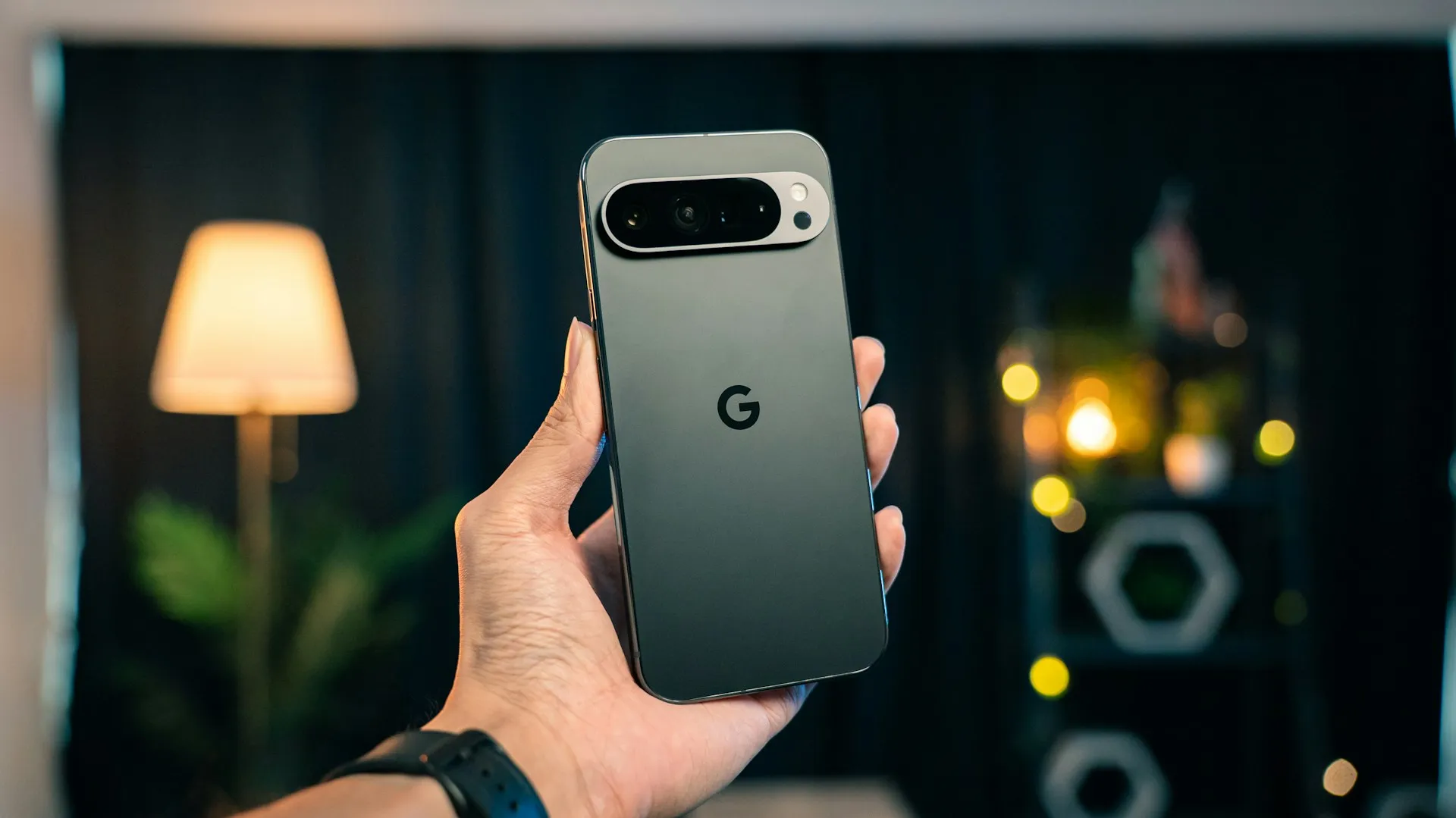
If you've been using your Pixel recently and something about the Recents screen felt... off, you're not losing your mind. Google's March update has quietly stripped away one of Android's most useful multitasking shortcuts, and it's the kind of change that hits you right in the daily workflow.
The March 2026 Pixel update brought the stable Android 16 QPR3 release to Pixel devices earlier this month, and most Pixel users have likely already installed it. What Google didn't advertise prominently was that this update fundamentally changed how you interact with images in your Recent apps screen. The functionality that allowed users to easily save images or launch Google Lens searches directly from Recents has been significantly reduced. Users are now left with primarily Copy, Share, and Edit options when selecting images, while the direct save-to-Photos option has disappeared entirely.
What exactly did we lose in this update?
Let's break down what made the old Recents screen so powerful. Previously, when you long-pressed an image visible in your recent apps, you'd get a comprehensive menu of actions. You could copy, share, save directly to Photos, or launch a Google Lens search - all without having to dive back into the original app.
Now? The options have been severely limited. When you select an image in Recents today, you'll only see Copy, Share, and Edit options. The convenient save-to-Photos button is completely gone, and so is the direct Lens integration that made visual searches so effortless.
This represents a fundamental shift in how power users interact with content across apps. The change was first spotted in testing back in January, but now it's official in the stable release. What made this feature so valuable was its ability to eliminate the cognitive switching cost between apps - that moment where you have to remember which app you were using, navigate back to it, and hunt for the right menu options.
The impact becomes clear when you consider typical workflows: you're reviewing recent apps, spot an interesting chart or meme, and previously could act on it immediately. Now that seamless interaction requires breaking your flow to return to the source app, creating the kind of friction that accumulates throughout the day. Where you could previously long-press an image in Recents to save it locally or open it straight in Lens, the menu now offers just two actions: copy and share.
Why would Google remove such a useful feature?
Google hasn't confirmed this, but there are several logical explanations that collectively paint a picture of intentional simplification.
First, there's the privacy and consistency angle. Saving images directly from Overview thumbnails might bypass app-specific security measures or watermarking systems. By limiting actions to copy and share, Google keeps the workflow within Android's standardized permission and intent system, which arguably makes the overall experience more predictable and secure.
Then there's the product focus consideration, which ties directly into Google's broader strategy. The company has been heavily promoting Circle to Search as its unified visual discovery solution. The company has been steering users toward Circle to Search for contextual on-screen analysis, and having multiple entry points for similar functionality can create user confusion. Removing the Lens shortcut from Recents pushes users toward the newer, more comprehensive gesture-based system.
Finally, there's the maintenance burden that ties these decisions together. Simplifying these interaction paths reduces complexity in testing and maintenance across different OEM implementations, especially when you consider that image previews in Recents aren't always full-resolution or consistently available across all app states. These three factors reinforce each other in Google's decision-making calculus - security standardization supports the push toward Circle to Search, which in turn simplifies the overall system architecture.
Workarounds that actually work (sort of)
Let's be practical about this - the functionality isn't completely gone, it's just more buried and requires understanding why these alternatives create friction. Here's how you can still accomplish what you used to do with a single tap, and why each method disrupts your mental flow differently.
For saving images, you have a couple of options, though neither preserves the seamless multitasking experience. You can use the Share option and look for "Upload to Photos" in the share sheet, though it's buried in there and requires some hunting. While this does save the image to Google Photos, it takes significantly longer than the previous one-tap save button. The cognitive load increases because you're now parsing a share menu designed for communication, not storage.
Alternatively, you can share the image with Files by Google, which will save it to your device, though it ends up in the Downloads folder rather than your main Photos library. This creates an organizational problem - your saved images are now scattered across different locations, breaking the mental model most users have for where their photos live.
For visual searches, your best bet is Circle to Search, which Google has been enhancing with multi-object recognition capabilities. You can also use the "Google Search Image" option from the share sheet, which essentially launches a Lens search. The challenge here isn't just the extra steps - it's that Circle to Search requires you to maintain visual focus on the content while performing a gesture, rather than acting on content you've already identified in your recent app stack.
The bigger picture: what this means for Android's evolution
This change represents something larger happening in Android's development philosophy. The Recents screen has historically been more than just an app switcher - it allowed quick content actions without diving back into apps. Power users relied on these shortcuts for common workflows like saving charts for later annotation, grabbing receipt images, or launching visual searches on memes.
The broader implications extend beyond convenience into user behavior patterns. These tasks now require additional steps - reopening apps, using their individual save options, taking screenshots, or invoking Circle to Search. Each added step creates friction, and frequent app-switching behavior suggests how often users bounce between apps daily, making streamlined actions increasingly important. When you multiply these micro-inefficiencies across dozens of daily interactions, the cumulative impact on productivity becomes significant.
What's particularly telling is how this fits into Google's broader competitive positioning. Android enthusiasts have long pointed to Recents' content tools as a key differentiator for Pixel devices and a practical example of Android's intent-driven design philosophy. Losing key options like Save and Lens reduces that competitive edge, potentially pushing Android closer to the more restrictive interaction models we see on other platforms.
There's still a chance Google could adjust course - QPR beta cycles have seen minor UI reversals when usability costs outweighed simplification benefits. But for now, Android 16 QPR3 has cemented a more limited Recents experience, and it's a reminder that even subtle system shortcuts are never guaranteed to stick around.
Bottom line: adapting to the new reality
The March update's changes to Pixel's Recents functionality represent a clear shift in Google's priorities, trading power-user convenience for system simplification. If you updated your Pixel recently and noticed something felt different in the Recents screen, you weren't imagining things - Google really did remove some genuinely useful shortcuts.
For users who relied heavily on these shortcuts, the path forward involves adapting your workflow patterns rather than fighting the change. Heavy multitaskers might benefit from embracing Circle to Search more proactively, treating it as a primary tool rather than a backup option. Screenshot workflows become more valuable when you need to quickly capture and process information from multiple apps. And getting comfortable with the share sheet's expanded role in your daily routine can help bridge some of the functionality gaps.
This change signals Android's broader evolution toward more controlled, standardized interaction patterns - a philosophical shift that prioritizes consistency and mainstream usability over power-user efficiency. Whether that's ultimately better for the platform's long-term health depends largely on how successfully Google can make their preferred alternatives (like Circle to Search) feel as natural and immediate as the shortcuts we've lost.
Here's the practical reality: embrace Circle to Search for visual lookups, master the share sheet for saving images, and consider building screenshot-based workflows for rapid content capture. It's not the elegant solution we lost, but with some adjustment, these alternatives can cover most of the same ground - just with a bit more intentionality required in your daily device interactions.


Comments
Be the first, drop a comment!