




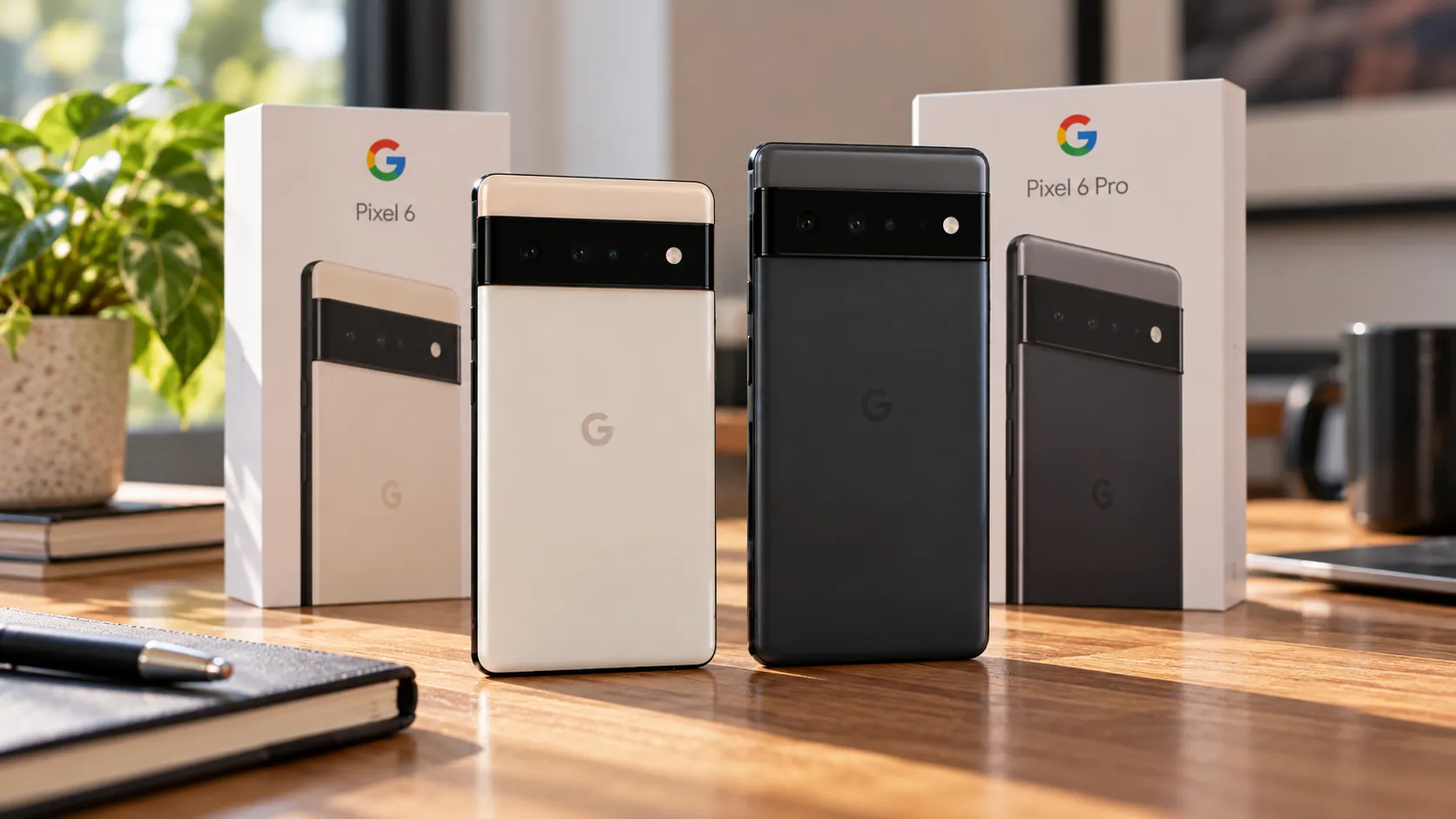
Your phone's automatic audio transcription feature just became a potential backdoor for hackers. Google's Project Zero team has revealed a sophisticated exploit chain that can completely compromise Pixel 9 devices through nothing more than a malicious audio message—and you don't even need to open it. The vulnerabilities were discovered during a routine security hackathon, where researchers found critical flaws in just two days. This rapid discovery timeline is particularly alarming when you consider what it suggests about sophisticated threat actors with unlimited resources and time—if researchers can uncover these issues during routine testing, what might nation-state actors or criminal organizations already have in their arsenals?
The attack exploits a fundamental shift in how modern smartphones handle incoming messages, but the implications go deeper than simple convenience features. When someone sends you an audio file through SMS or RCS, your device now automatically processes it for transcription without any user interaction. This seemingly helpful feature creates what security experts call a "zero-click attack surface"—meaning hackers can potentially gain access to your device without you doing anything at all. The vulnerability affects the Dolby audio decoder component that is integrated into many devices via Dolby's UDC (Dolby UDC v4.5–4.13) and is included by multiple OEMs; impact depends on whether a given device includes that component, transforming this from a Pixel-specific problem into a supply chain security crisis affecting the entire Android ecosystem.
How the exploit actually works
Here's where things get technical, but stay with me because this demonstrates exactly how AI convenience features can become security nightmares. The attack chain begins with a weakness in Dolby's Unified Decoder, a component responsible for processing high-quality audio formats. Security researchers discovered that this decoder fails to properly validate the size of audio metadata, allowing attackers to trigger memory overflow conditions. The flaw, tracked as CVE-2025-54957 with a severity score of 9.8, enables malicious code execution within the phone's media processing sandbox.
What makes this particularly clever is how the vulnerability exploits something called EMDF (Extensible Metadata Delivery Format) parsing. The root of the problem is that there's no stated limit for the size of EMDF payload data, and attackers can craft files with extremely large values. When the decoder tries to allocate memory for this oversized payload, it triggers an integer overflow that wraps around on 64-bit systems, essentially giving attackers a small buffer with a much larger payload length to work with. This creates a precisely controlled memory corruption scenario that's a hacker's dream—reliable, predictable, and exploitable.
But that's just the first step. The researchers then chained this vulnerability with a second flaw in Google's BigWave driver, which handles video processing on Pixel devices. This combination allows attackers to break out of the initial security sandbox and gain full kernel-level access to the device. Once they achieve kernel access, the scope of potential damage expands exponentially—attackers can read your messages, access photos, activate your camera or microphone, and send data to external servers without any notifications.
What makes this particularly concerning is how automatic transcription fundamentally changes the attack landscape from passive message storage to active processing. Google Messages now processes incoming audio attachments before you even see the message, meaning the vulnerable code runs automatically on potentially malicious content. Additionally, a separate process called com.google.android.tts also decodes incoming audio on Pixel 9 devices, creating multiple attack vectors where previously there were none. This represents a shift from user-initiated risk (where you chose to play a file) to system-initiated vulnerability (where your phone processes files automatically for AI features).
The technical execution reveals sophisticated exploitation techniques. Attackers can chain multiple audio frames together to fill a custom heap with attacker-controlled data while maintaining precise control over write sizes and addresses. This level of control makes it possible to achieve reliable code execution even within Android's security sandbox environment, essentially turning memory protection mechanisms into stepping stones for further exploitation.
Why this vulnerability is particularly dangerous
The speed at which these vulnerabilities were discovered should give everyone pause, but the broader implications are even more troubling. The Dolby decoder flaw was found in less than two days during a team hackathon, while the kernel vulnerability took less than one day of code review. This suggests that the rapid discovery capability isn't just theoretical—it demonstrates that complex exploit chains can be developed quickly by researchers working with limited time and resources, making the threat from well-funded attackers exponentially more serious.
The patch timeline compounds this risk significantly. From initial report to the first mobile security update took 139 days, with the vulnerability remaining public and unfixed on Pixel devices for 82 days. When you combine rapid vulnerability discovery with extended patch deployment windows, you create a dangerous exposure period where sophisticated attackers could develop and deploy similar exploits in the wild. Both vulnerabilities in this exploit chain were public and unfixed on Pixel devices for some time, highlighting the coordination challenges inherent in modern software supply chains.
The vulnerability also highlights fundamental architectural differences that leave Android more exposed than competing platforms. While the same Dolby decoder vulnerability exists on iOS and macOS, it hasn't been successfully exploited there due to compiler-level protections. Android's lack of automatic memory safety checks represents a strategic security philosophy difference—where iOS prioritizes security through compiler-level mitigations, Android has historically relied more heavily on sandboxing and runtime protections. Additionally, while Pixel 8 and newer devices include hardware memory protection called MTE, Google ships it disabled by default, requiring users to manually enable advanced protection modes that most people will never discover.
What's particularly concerning is how this exploit required relatively modest effort to develop compared to its potential impact. The researchers spent eight person-weeks exploiting the Dolby vulnerability and just three weeks developing a basic proof-of-concept for the kernel driver exploit. This effort-to-impact ratio suggests that similar vulnerabilities may be economically attractive targets for sophisticated attackers, especially when you consider that the time investment required to find these vulnerabilities was small compared to their potential impact.
Which devices are affected and what's been fixed
The vulnerability impacts a wide range of devices beyond just Google's phones, illustrating how supply chain dependencies create ecosystem-wide security risks. Confirmed vulnerable devices include Google Pixel 9, Samsung Galaxy S24, most Android phones with Dolby audio processing, and even Windows systems running specific versions of Dolby's software. This broad impact stems from how widely Dolby's audio technology is integrated across different platforms and manufacturers. The Dolby Unified Decoder is integrated into a variety of hardware and platforms, including Android, iOS, Windows and media streaming devices, making this fundamentally a supply chain issue where one vendor's vulnerability affects countless downstream products.
The good news is that patches are now available, but the deployment complexity reveals ongoing challenges in securing modern supply chains. The vulnerabilities discussed (notably CVE-2025-54957 in Dolby UDC and CVE-2025-36934 in the BigWave driver) were fixed/patched by the dates below; specify CVE numbers for clarity in the research were fixed as of January 5, 2026. However, the coordination timeline illustrates the challenges of managing third-party component security: The UDC vulnerability was reported to Dolby on June 26, 2025, and binary fixes were first pushed to ChromeOS on September 18, 2025. This lengthy coordination process shows why supply chain vulnerabilities often take months to resolve across all affected products and manufacturers.
For users concerned about similar attacks, there are some protective measures available, though they require security-conscious choices. GrapheneOS, an alternative Android distribution, provides better security than stock Google software and includes built-in protections against various exploit techniques. The enhanced security comes from more aggressive sandboxing, memory protection features, and reduced attack surface compared to standard Android installations. As of late 2024, even a fully unlocked GrapheneOS device is immune from having its data copied by forensic tools, demonstrating the effectiveness of its comprehensive security improvements for users willing to sacrifice some convenience features for maximum protection.
What this means for the future of mobile security
This exploit chain represents a broader challenge as smartphone manufacturers race to integrate AI-powered features, often without fully understanding the security implications of automatic data processing. The explosion of AI-powered features on mobile phones has the potential to greatly increase their zero-click attack surface, as these features often require automatic processing of incoming data from potentially untrusted sources. It's a classic security trade-off with a modern twist—the more our phones do automatically to make our lives convenient through AI analysis, the more opportunities they create for attackers to slip through unnoticed.
The research also highlights how well-intentioned software changes can inadvertently expand attack surfaces in ways that aren't immediately obvious to developers or security teams. Software changes can unintentionally increase the amount of code that attackers can reach remotely. Features like automatic audio transcription represent a fundamental architectural shift—five years ago, receiving an audio message meant the file just sat there until you chose to play it. Now your phone immediately starts analyzing, transcoding, and processing that audio for transcription, summaries, and other AI features, essentially turning every incoming message into an automatic code execution opportunity.
Looking ahead, security researchers note that gaps in vendors' understanding of their attack surface are a common source of zero-click vulnerabilities. As manufacturers continue adding AI-powered features, maintaining awareness of how these features might expand the attack surface becomes increasingly critical, especially when these features rely on third-party components that may not have been designed with zero-click security in mind. The challenge is compounded by the fact that many AI features integrate components from multiple vendors, creating complex interaction patterns that are difficult to security audit comprehensively.
What's particularly interesting is that despite significant investment in security, vulnerabilities continue to emerge in core systems. Android has invested significantly in media codec security through vulnerability rewards programs and fuzzing with tools like OSS-Fuzz, yet these vulnerabilities still slipped through. This suggests that the expanding attack surface from AI features is outpacing traditional security measures, requiring new approaches to secure automatic processing of untrusted content.
Bottom line: staying protected in an AI-powered world
While this specific vulnerability has been patched, it serves as a wake-up call about the security implications of our increasingly intelligent devices. The relatively small time investment required to find these vulnerabilities compared to their potential impact suggests that similar issues may surface as AI features become more prevalent across the mobile ecosystem, making this less of a one-time problem and more of an ongoing security challenge.
The key takeaway isn't to avoid AI features entirely—they genuinely make our phones more useful and our lives more convenient. But we need to understand that convenience often comes with security trade-offs that manufacturers may not fully communicate. Keep your devices updated religiously, consider enabling advanced security features when available (like MTE on newer Pixels if you're willing to dig into developer options), and be aware that even seemingly innocent features like automatic transcription can create new avenues for sophisticated attacks.
For users who prioritize maximum protection over convenience, alternatives like GrapheneOS offer significantly enhanced security at the cost of some AI-powered features and ecosystem integration. GrapheneOS represents a security-first approach that demonstrates what's possible when you're willing to trade convenience for protection—but for most people, staying current with security updates and being aware of these risks represents the best balance between security and usability.
As our phones become smarter, the challenge of keeping them secure becomes more complex—but awareness of these risks is the first step toward better protection. The era of zero-click exploits through AI features is just beginning, and understanding how they work helps us make better decisions about the technology we carry in our pockets and the automatic processing we allow on our most personal data.












Comments
Be the first, drop a comment!