



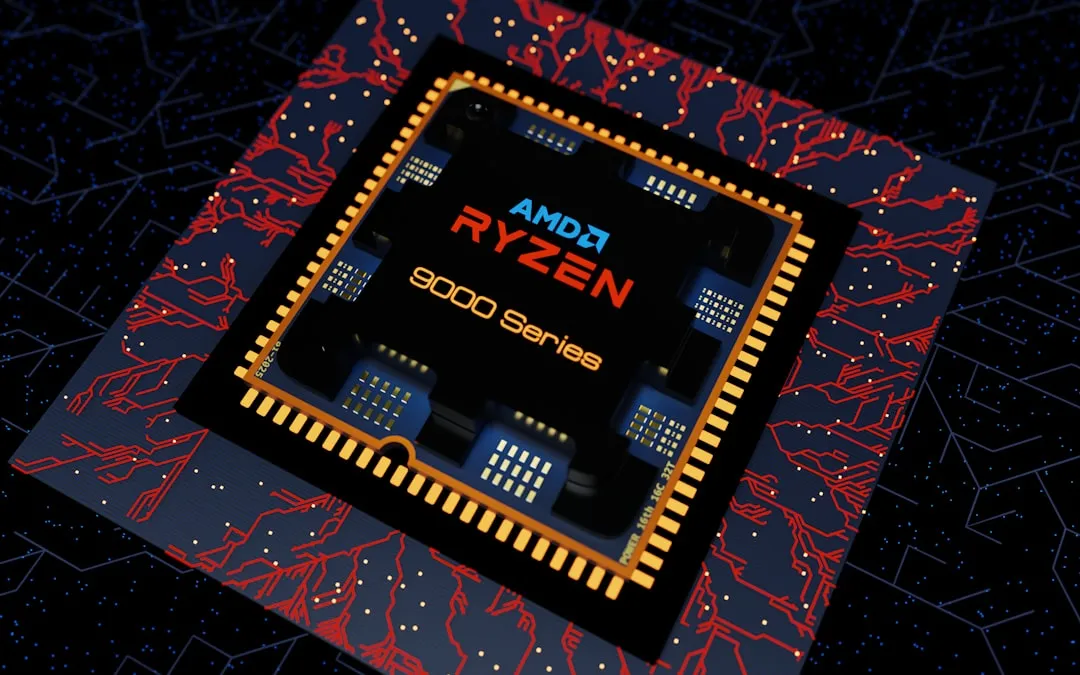
Google's upcoming Pixel 11 series could mark a watershed moment in smartphone security—not through software wizardry, but via a fundamental hardware upgrade that's been years in the making. Recent leaks suggest the Tensor G6 processor will debut alongside the Titan M3 security chip, according to Android Authority. This would represent the first major security silicon refresh since the Titan M2 launched with 2021's Pixel 6 range, as reported by Android Authority. The timing isn't coincidental—as on-device AI workloads grow and authentication standards evolve, the security coprocessor that protects your most sensitive data needs to keep pace.
For context, the Titan M2 has served as the hardware root of trust across four Pixel generations—spanning the Pixel 6, 7, 8, and 9 families—safeguarding biometric data and cryptographic keys while validating the Android OS at boot, according to Android Authority. The chip also resists physical attack vectors including laser fault injection, electromagnetic analysis, and voltage glitching, according to Android Authority. But the smartphone landscape has changed dramatically since 2021. While M2 could handle 2021's primarily cloud-based authentication, today's on-device AI models processing biometric data in real-time demand far more processing power. Features like Circle to Search perform cryptographic verification that bottlenecks on M2's aging processor, and passkey authentication requires parallel key operations that M2 struggles to accelerate efficiently.
What we know about Titan M3 so far
Details remain scarce, but the evidence is compelling. A leaker known as Mystic Leaks uncovered references to "Google Epic" and "longjing," believed to be the Titan M3's internal codename and firmware designation, according to PiunikaWeb. The source shared a screenshot linking these identifiers to the Tensor G6 platform (codenamed "Malibu"), according to PiunikaWeb. While the leaker didn't reveal technical specifications, the timing alone is significant—this marks the first substantial security hardware overhaul in half a decade, according to PiunikaWeb.
The Tensor G6 itself represents a major architectural shift, moving to TSMC's N3P manufacturing process and potentially swapping Samsung's Exynos modems for MediaTek's M90 baseband, according to PiunikaWeb. More importantly, moving from Samsung's integrated approach to discrete TSMC fabrication and MediaTek connectivity creates physical separation at the silicon level. Currently, the Exynos modem shares memory spaces with the security processor through Samsung's integrated architecture. The MediaTek M90 baseband forces physical separation—the modem can no longer directly access security-critical memory, requiring any attacker to breach multiple, independent hardware boundaries rather than exploiting a single vendor's ecosystem, according to findarticles.com. That kind of holistic redesign doesn't happen often—and when it does, it usually signals a multi-year commitment to a new security baseline.
How hardware security actually protects you
Let's break down what a dedicated security coprocessor does. The Titan chip operates as a completely isolated subsystem that never exposes its data to the main operating system, according to PiunikaWeb. During boot, it verifies every piece of software to prevent rollback attacks that could revert your device to a vulnerable Android version, according to PiunikaWeb. It manages Android's StrongBox KeyStore, which securely houses the cryptographic keys used for full-disk encryption and third-party app transactions like mobile payments, according to PiunikaWeb.
The chip also enforces brute-force protection by physically throttling lock screen attempts. Specifically, the chip enforces exponential delays—the first attempt is instant, the tenth attempt requires 30 seconds, the twentieth requires 24 hours—making the billions of combinations in a six-digit PIN require centuries to brute-force, even with direct hardware access, according to PiunikaWeb. And it's literally hardened against physical lab attacks, including electromagnetic analysis, voltage glitching, and laser fault injection, according to PiunikaWeb.
Here's the thing: hardware isolation is increasingly critical as phones become authentication hubs for banking, workplace access, and passkeys, according to findarticles.com. A stronger secure enclave can blunt entire classes of attacks rather than chasing them one by one in software, according to findarticles.com. For example, when you authenticate with your bank app, the private key never leaves the Titan chip—the app sends data to the chip for signing, receives back only the signature, and the key itself remains physically inaccessible to Android, the app, or any malware that might compromise the main processor. That's the core value proposition—defense in depth, baked into silicon.
PRO TIP: To see your device's hardware security level, go to Settings → Security → More security settings → Encryption & credentials. Devices with StrongBox support (including all Pixels since the 6) will show "Hardware-backed keystore" with a separate StrongBox entry—this is your Titan chip at work.
Why this upgrade matters now
Why does a five-year-old security chip matter when software updates keep coming? Because software can only be as secure as the hardware enforcing it—and that hardware is frozen the day your phone ships. Consider the vast amount of on-device AI and software evolution that separates the Pixel 6 from the current Pixel 10—Gemini Nano processes biometric data locally at scales M2 was never designed to handle, all while relying on the same M2 architecture, according to PiunikaWeb. A future-proofed Titan M3 will likely introduce next-generation encryption standards, according to PiunikaWeb. This would effectively allow Google to step up its game and fiercely compete with the latest iterations of Apple's Secure Enclave Processor, according to PiunikaWeb.
Expect improvements in three areas: resilience, performance, and cryptographic agility, according to findarticles.com:
Resilience: Hardened defenses against modern side-channel and fault attacks, plus stricter isolation of sensitive code and memory, according to findarticles.com
Performance: Faster biometric matching and cryptographic operations, reducing unlock and sign-in latency while improving energy efficiency. This translates to tangible user benefits—Face Unlock that completes before you've fully raised the phone, passkey authentication that happens in the background while you're tapping the login button, and banking apps that can verify transactions without the spinning wheel that currently signals cryptographic processing, according to findarticles.com
Cryptographic agility: With standards bodies such as NIST advancing post-quantum primitives, a new secure element could add hardware paths for emerging algorithms, better random number generation, and expanded attestation features for enterprise fleets, according to findarticles.com
To understand why cryptographic agility matters: today's RSA and elliptic curve encryption rely on the mathematical difficulty of factoring large numbers—a task that would take classical computers millennia. Quantum computers could theoretically crack these in hours, retroactively decrypting any data intercepted today. While practical quantum attacks remain years away, the "harvest now, decrypt later" threat means devices sold in 2026 need quantum-resistant algorithms baked into hardware now, before the vulnerability window opens. M3 isn't just about today's threats—it's about ensuring Pixel devices remain secure as cryptography itself evolves in response to quantum computing and other emerging attack vectors.
Enterprise and developer implications
For businesses and public sector buyers who need assurances like Common Criteria or FIPS 140-3 certifications, a next-generation Titan could strengthen compliance narratives and zero-trust deployments, according to findarticles.com. Key signals to watch include mention of StrongBox updates, new attestation capabilities, or references to post-quantum readiness in developer documentation, according to findarticles.com. Any claims around independent lab evaluations or certification roadmaps would further validate the scope of the upgrade, according to findarticles.com.
That would pay dividends for features like passkeys, eSIM provisioning, and wallet credentials that depend on hardware-backed keys via StrongBox and the Android Keystore, according to findarticles.com. If Google follows precedent, a Titan M3 would integrate with Android's Verified Boot, SafetyNet and Play Integrity signals, and on-device machine learning features that increasingly guard against phishing, fraud, and malware, according to findarticles.com. The result would be a platform where the CPU, modem, and secure element operate with clearer, hardware-enforced lines between them, according to findarticles.com.
This enterprise angle isn't merely opportunistic—it addresses Google's long-standing challenge in regulated industries. Where Samsung Knox has historically won government and healthcare contracts through its Common Criteria EAL certification and physical tamper detection, M3 could level the playing field by achieving equivalent certifications while offering tighter integration with Google's cloud identity and zero-trust frameworks. For IT departments managing thousands of devices, the combination of hardware attestation and Google's admin console could finally deliver the "zero-touch" deployment that Knox has dominated. If you're in IT considering Pixel deployments, the key question isn't whether M3 matches Knox Vault on paper—it's whether Google can deliver certification documentation fast enough to meet your compliance timelines.
What this means for you
Bottom line: hardware security isn't sexy, but it's foundational. Apple's Secure Enclave and Samsung's Knox Vault illustrate how vendors treat secure elements as long-term anchors for identity and payments—chips that define security posture for a device's entire lifecycle, according to findarticles.com. Google has been on a similar path with Titan, but until now, the M2's five-year tenure meant newer Pixels were running cutting-edge AI features on aging security silicon. The M3 realigns hardware and software ambitions, ensuring that Google's seven-year update promise isn't undermined by a security coprocessor designed for 2021's threat landscape, according to findarticles.com.
We should start getting more Pixel 11 details in the coming weeks ahead of launch later this year, with Google I/O 2026 confirmed for May 19, according to PiunikaWeb. Until official specs land, the emerging picture suggests this isn't just an iterative bump—it's the security foundation Google needs to compete in enterprise markets, support quantum-resistant cryptography, and justify premium pricing against rivals who've already made similar hardware investments, according to findarticles.com. For users, that translates to a phone that's genuinely harder to compromise, not just in theory, but in the specific ways that matter in 2026: protecting AI-processed biometrics, securing passwordless authentication, and maintaining trust even when the cryptographic landscape shifts beneath us.




Comments
Be the first, drop a comment!