



Henry Cavill Googlebook video game: what's confirmed so far
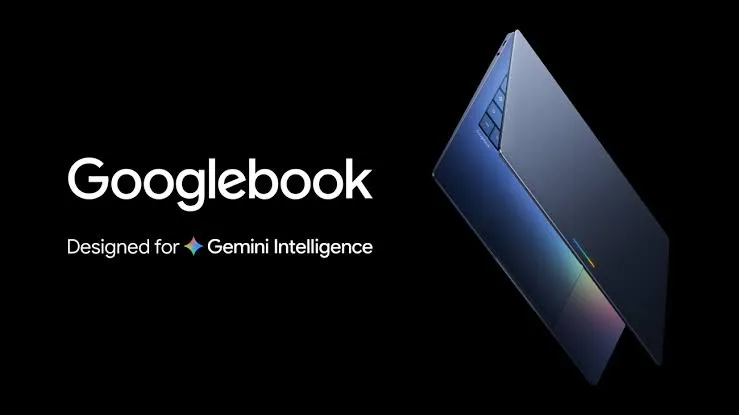
Google confirmed Tuesday that actor Henry Cavill is building a video game on a Googlebook, the company's new AI-focused laptop line, as part of a promotional partnership. Google says the collaboration will take place in November, according to Google's announcement.
Buyers need to separate two timelines here. Googlebooks are shipping hardware: preorders opened last week through the Google Store, Best Buy, and other retailers, with units reaching shelves Oct. 4 in the U.S. and Oct. 5 in Canada, the U.K., Ireland, France, Germany, and Australia (Google Blog, last week). Cavill's game is a separate promotional project. Google hasn't said whether the November result will be a playable game, a development video, or promotional footage.
What follows is what Google, Engadget, and Notebookcheck have verified about the Cavill project, and where the campaign stops short of proving Googlebook can handle real game development.
What the Henry Cavill Googlebook video game campaign confirms
Google describes Cavill, in its own post, as an "actor, producer, and tech enthusiast" who has been testing a Googlebook to see how its hardware and Gemini-based AI tools support his creative work. This November he'll build a game "from scratch" alongside the company (Google Blog, Tuesday).
Google frames the project as a showcase for how the laptop handles complex professional and personal tasks, not just a scripted demo (Google Blog, Tuesday). That framing is worth noting, because it tells readers this is meant to look like real work, even though the extent of that work hasn't been detailed yet.
Google's wording around November also leaves out a start date. Cavill and the company will "team up" that month, but the post doesn't say when actual development begins (Google Blog, Tuesday). Engadget's coverage adds a more specific claim, reporting that "the final result will be published in November" (Engadget, Tuesday). Published doesn't necessarily mean playable, and until Google spells out what that publication looks like, public availability stays an open question.
Notebookcheck reports that the game's genre, its project duration, and how much support Cavill will get from Google's engineers remain undisclosed (Notebookcheck, today). Google's announcement doesn't name a game engine, an IDE, or a development environment either.
Google is pointing interested readers to a signup landing page and an Instagram account called "Henry Cavill is making a video game." As of today, that account contains only the original announcement, with no build footage or project updates posted yet (Notebookcheck, today).
Why Google chose Cavill for the campaign
Google frames the partnership as a way to "tap Henry's inner maker" and demonstrate how Googlebook handles complex creative and professional work, a goal stated directly in the company's post (Google Blog, Tuesday). Engadget characterizes the move as Google giving its new laptop category "an extra hard sell" by recruiting Cavill, whom the outlet describes as a known gaming enthusiast, to promote the devices (Engadget, Tuesday).
Google's announcement pairs the endorsement with no benchmarks, no named development tools, and no third-party testing. The campaign generates visibility for the laptop launch. It doesn't, on its own, establish that Googlebook supports mainstream game-development workflows.
What Googlebook's specs say about game-development capability
Google's advertised specifications for Googlebook, which may vary by model and manufacturer, include Intel and Qualcomm processors paired with dedicated NPUs rated above 45 TOPS, and battery life up to 14 hours (Google Blog, last week). Those figures describe on-device performance and battery life. They don't identify which game-development tools, if any, the laptops support. Google also advertises features like Continue on phone syncing, Rambler speech-to-text, and a tool called Antigravity as part of Googlebook's software lineup, though nothing in the announcement says whether any of them factor into Cavill's build (Google Blog, Tuesday).
The November project doesn't yet prove Googlebook supports mainstream game-development tools, and the platform itself matters more than chip specs for anyone weighing development work. Googlebook runs on a shared Android foundation with Play Store access, rather than ChromeOS, a distinction confirmed by both Google and Engadget (Engadget, Tuesday; Google Blog, last week). That Android base makes app compatibility a key unanswered question, since none of Google's announcements have identified a single development tool that runs on the platform.
The initial Googlebook lineup comes from five manufacturers: Acer, ASUS, Dell, HP, and Lenovo (Google Blog, last week). Google also promises OS feature updates for up to 10 years, plus a 12-month bundle of Google AI Pro that includes 5TB of cloud storage, Gemini Advanced, three months of YouTube Premium, and three months of Adobe Photoshop, all starting at $899 (Google Blog, last week). Google markets those perks for creative and AI-assisted tasks broadly. Neither claim demonstrates performance under a game-development pipeline specifically.
Engadget reported hands-on time with the first five Googlebook models from launch partners Acer, ASUS, Dell, HP, and Lenovo ahead of the Cavill announcement (Engadget, Tuesday). That coverage is worth reading for general impressions of the hardware, but it doesn't include an independent game-development benchmark or compatibility test.
What to do with this if you're deciding on a Googlebook
If a Googlebook purchase is already on the table, the documented facts stand on their own: the $899 starting price, the Intel and Qualcomm chip options, the Android and Play Store foundation, and the bundled software perks (Google Blog, last week). Google says Googlebook uses the same security architecture as ChromeOS, anchored by a Titan hardware root of trust, plus a Level 5 security-certified pKVM hypervisor, a first for the laptop category (Google Blog, last week). Those features can be evaluated independently of the November campaign.
If game development specifically is the goal, Google hasn't named an engine, an IDE, or a workflow for the Cavill project, and none of the reporting gathered here includes an independent test of Googlebook under a development workload. Buyers who need game-development support should wait for Google to identify compatible tools or for independent testing of the workflow. Watch the "Henry Cavill is making a video game" Instagram account and Google's landing page for technical details once the November collaboration begins, and treat any footage or claims from that campaign as promotional material until independent reviewers confirm what the laptop can actually run.

Comments
Be the first, drop a comment!