



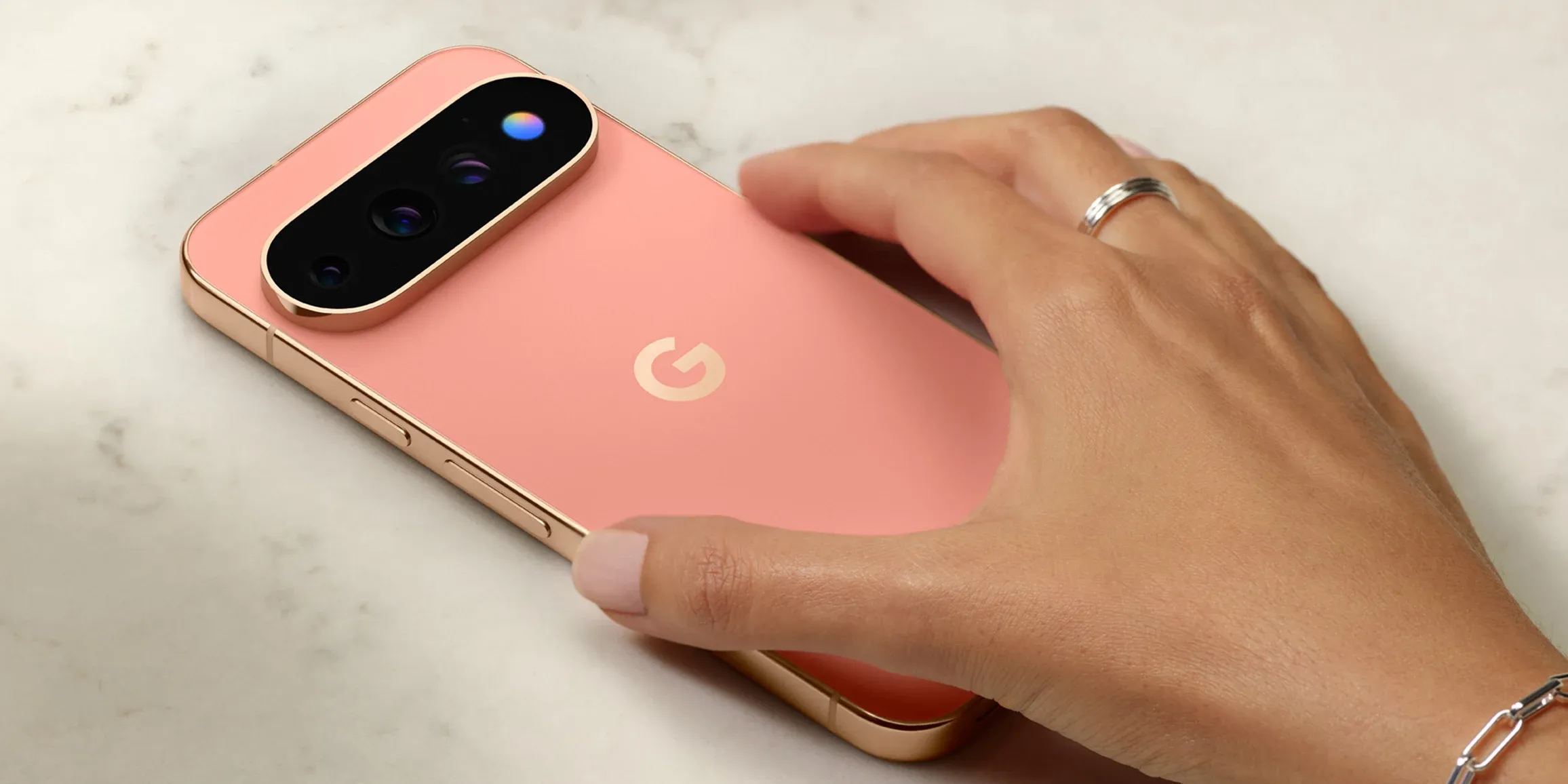
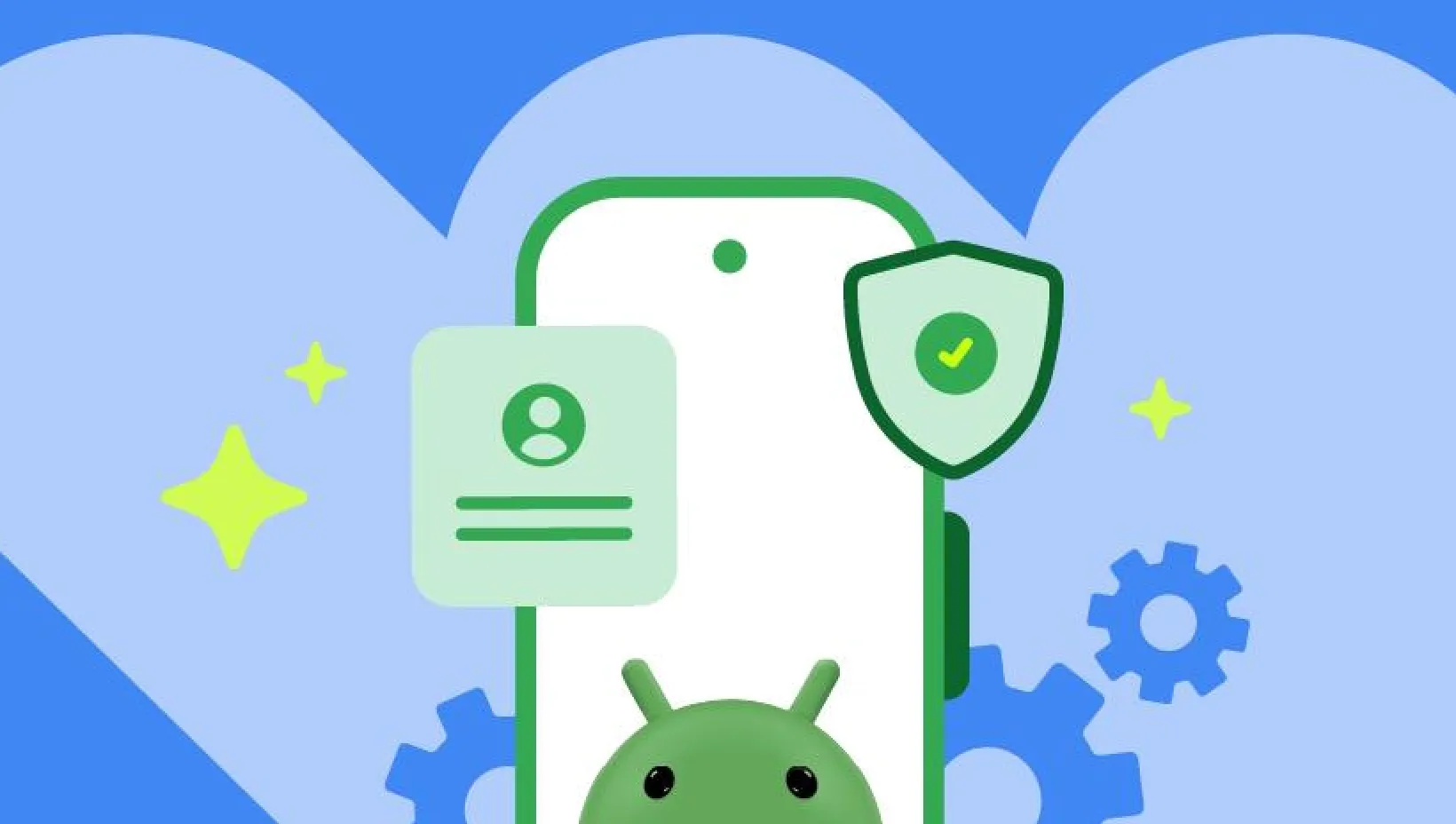
Google's September Pixel Drop scam detection features are live now, alongside a redesigned Pixel VIPs contact widget for calling and texting the people you talk to most. Both started rolling out on September 15, 2026, as part of the September Pixel Drop.
Because Google frames this as a staged rollout rather than a switch flipped for everyone at once, an eligible phone might not see every feature immediately. Google says the rollout continues over the following weeks in phases depending on the device and carrier.
The notification-based scam alerts expanded beyond the US in the September update, while inline keyboard warnings began rolling out in the US. The VIP widget, meanwhile, adds one-tap calling and texting, notification badges, and easier switching between favorite contacts.
Three Scam-Protection Features, Three Sets of Rules
Pixel now has several separate scam-protection layers covering chat notifications, keyboard replies, and phone calls. Each has its own availability rules, so qualifying for one doesn't automatically mean the others are available.
Scam Detection for Chat Notifications
The feature expanded in the September Pixel Drop analyzes notifications from supported chat apps and can display a "Likely scam" warning before the message is opened.
Google's September 15 announcement said the feature, previously available in the US on Pixel 6 and newer phones, was expanding to nine more countries:
Australia
Canada
France
Germany
India
Japan
Mexico
Singapore
United Kingdom
That made 10 countries at launch.
Google's current Pixel help documentation now lists Spain as well, bringing the documented footprint to 11 countries:
Australia
Canada
France
Germany
India
Japan
Mexico
Singapore
Spain
United Kingdom
United States
The launch announcement also added six languages beyond English. Google's current help page now lists eight supported languages in total:
Arabic
English
French
German
Indonesian
Japanese
Portuguese
Spanish
That means the current support page has already expanded beyond the exact country and language list Google published on September 15.
The feature is on by default. Users can manage it under:
Settings > Security & privacy > More security & privacy > Scam Detection
Then turn Message scams on or off.
Google says detection runs in a secure, isolated environment and the contents of the message aren't sent to Google unless the user actively chooses to share a flagged message to help improve Scam Detection.
Google also warns that the system won't identify every scam.
Inline Keyboard Scam Warnings
The September Pixel Drop also added warnings while someone is composing a reply.
Starting in the US on Pixel 6 and newer phones, Scam Detection can place a "Likely scam" warning above the keyboard when the user starts responding to a suspicious conversation.
Google says the processing happens in real time on the device.
The announcement centers on Gboard, although Google's own rollout notes say the capability can also work with other keyboards that support Keyboard Suggestions.
Google currently limits this keyboard-based feature to the US and says availability is restricted to select languages. It hasn't published the same detailed country-and-language matrix that it provides for notification alerts.
Call-Based Scam Detection
Call Scam Detection is a separate feature with different device and region requirements.
Google's current Phone app documentation says it is available on:
Pixel 6 and later in the US.
Pixel 9 and later in Australia, Canada, France, Germany, India, Ireland, Italy, Japan, Mexico, Singapore, Spain, and the United Kingdom.
Pixel 9a and Pixel 10a in the US only.
That is broader than the earlier international rollout information and means the blanket "Pixel 9 or newer" description no longer applies in the US.
The underlying AI also varies by hardware. Google says Pixel 9 and newer models use Gemini Nano on-device, while earlier supported Pixels use Google's other on-device machine-learning models.
Call Scam Detection is off by default and has to be enabled manually under:
Phone > More > Settings > Scam Detection
Once enabled, it runs in the background during calls that could be scams and alerts the user if it detects suspicious patterns.
Google says call processing happens entirely on-device. Conversation audio and transcripts aren't stored on the device or sent to Google.
Google also documents that the system doesn't apply to calls from saved contacts.
Pixel Scam Detection Supported Countries and Languages
The easiest way to keep the three systems straight is:
Chat-notification Scam Detection: Pixel 6 and newer; currently documented in 11 countries and eight languages; on by default.
Keyboard Scam Detection: Pixel 6 and newer in the US; select languages; runs while the user types a response.
Call Scam Detection: Pixel 6 and newer in the US, with Pixel 9 and newer required across the current international rollout; off by default.
Google Messages has its own spam and scam protections as well, but those shouldn't be confused with the broader notification system above.
The notification feature examines message notifications from supported chat apps, not just conversations inside Google Messages.
Pixel Favorite Contacts Shortcuts Get an Overhaul
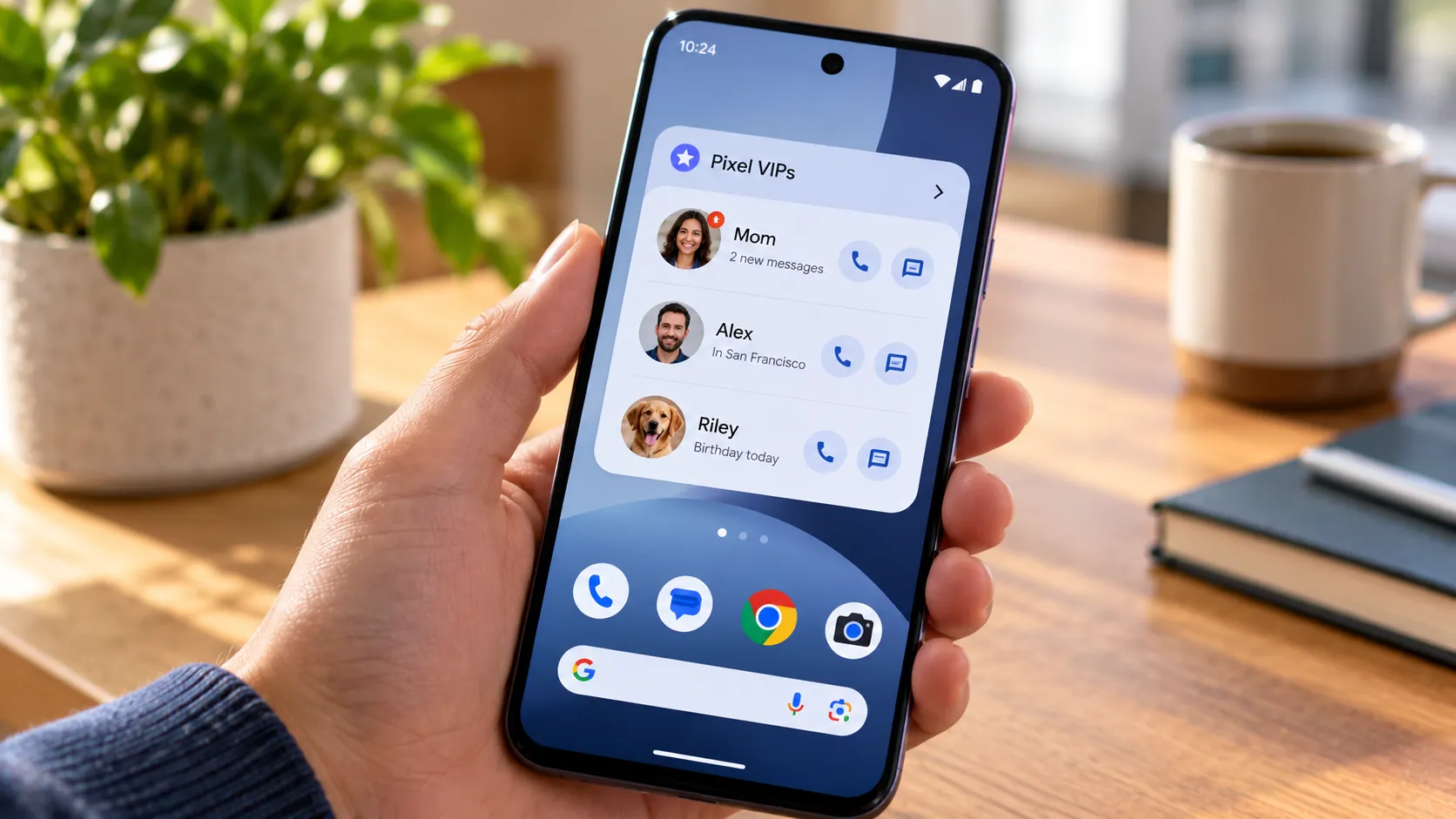
The Pixel Drop also updates the Pixel VIPs widget.
Google's current Pixel VIPs documentation says the feature works on Pixel 6 and later, including Pixel Fold.
Users can add up to 16 people as VIPs.
The redesigned home-screen widget adds quick actions that let users call or text a VIP with one tap. A floating menu along the bottom makes it easier to switch between contacts without leaving the widget.
New notification badges also highlight urgent or unread messages.
Pixel VIPs can surface recent interactions and other information about close contacts, including real-time location when that person shares it, local updates, and activity suggestions.
Google specifically tells users to keep apps including WhatsApp, Pixel Weather, and Google Contacts updated for the feature.
That means the original uncertainty around minimum device support is now resolved: Pixel VIPs requires a Pixel 6 or newer.
The VIP contact itself doesn't need a Pixel. Google says VIPs can use either Android or iOS devices.
Other Features in the September Pixel Drop
The same update bundles several smaller changes unrelated to scam detection.
Pixel Watch 3 and newer models get expanded one-handed gestures that can open the notification tray and move through notifications with a pinch.
Pixel Watch 4 and newer models receive improvements to Raise to Talk and gesture recognition.
Google also released Harry Potter Audiobook Packs tied to Audible's Harry Potter: The Full-Cast Audio Editions. The packs can change Pixel wallpaper, icons, and sounds.
Google says the Audiobook Packs remain available through December 31, 2026.
Eligible Pixel users can also receive a two-month Audible trial. Google's promotion terms currently list the US, Canada, UK, France, Germany, Italy, Spain, India, Japan, and Australia, with the Audible offer available until January 14, 2027.
What to Check Before Assuming You Have These Features
Availability differs by feature and by how far the rollout has reached a particular device, so run through a few checks before deciding something is missing.
Confirm the Pixel model. Chat-notification and keyboard warnings start with Pixel 6. Call detection has different requirements depending on the country.
Check the country and language. Notification-based Scam Detection now has a wider list than Google originally published on September 15.
Check the scam settings. Notification Scam Detection is on by default but can be disabled under Security & privacy. That means there is a dedicated user control, contrary to the initial rollout coverage.
For call protection, turn it on manually. Open the Phone app, go to Settings, then Scam Detection.
Update both Android and relevant apps. Google says Pixel Drop features can depend on app updates as well as the system update itself.
Allow time for the rollout. Google says features are reaching supported devices in phases over several weeks depending on carrier and device.
None of these protections is a guarantee.
Google explicitly warns that Scam Detection isn't 100% accurate and that scammers continually change their tactics.
What to Do Now
If you have a Pixel 6 or newer, first make sure the September Pixel Drop and your apps are up to date.
For suspicious chat messages, notification Scam Detection should be enabled by default if your phone, country, and language qualify. Check Settings > Security & privacy > More security & privacy > Scam Detection if you want to confirm or change it.
US users on Pixel 6 and newer can also look for the new inline scam warnings while replying through a supported keyboard.
For suspicious phone calls, don't assume the same setup applies. Call Scam Detection has to be enabled separately in the Phone app, and international device requirements are stricter than they are in the US.
Pixel VIPs is also more broadly documented than the initial announcement suggested. If you're on Pixel 6 or newer, the redesigned widget can put quick calling, texting, recent interactions, and notification badges for your closest contacts directly on the home screen.
Whatever protections appear on your phone, keep verifying unexpected requests independently. Google itself warns that its Scam Detection systems can't catch every scam.







Comments
Be the first, drop a comment!