





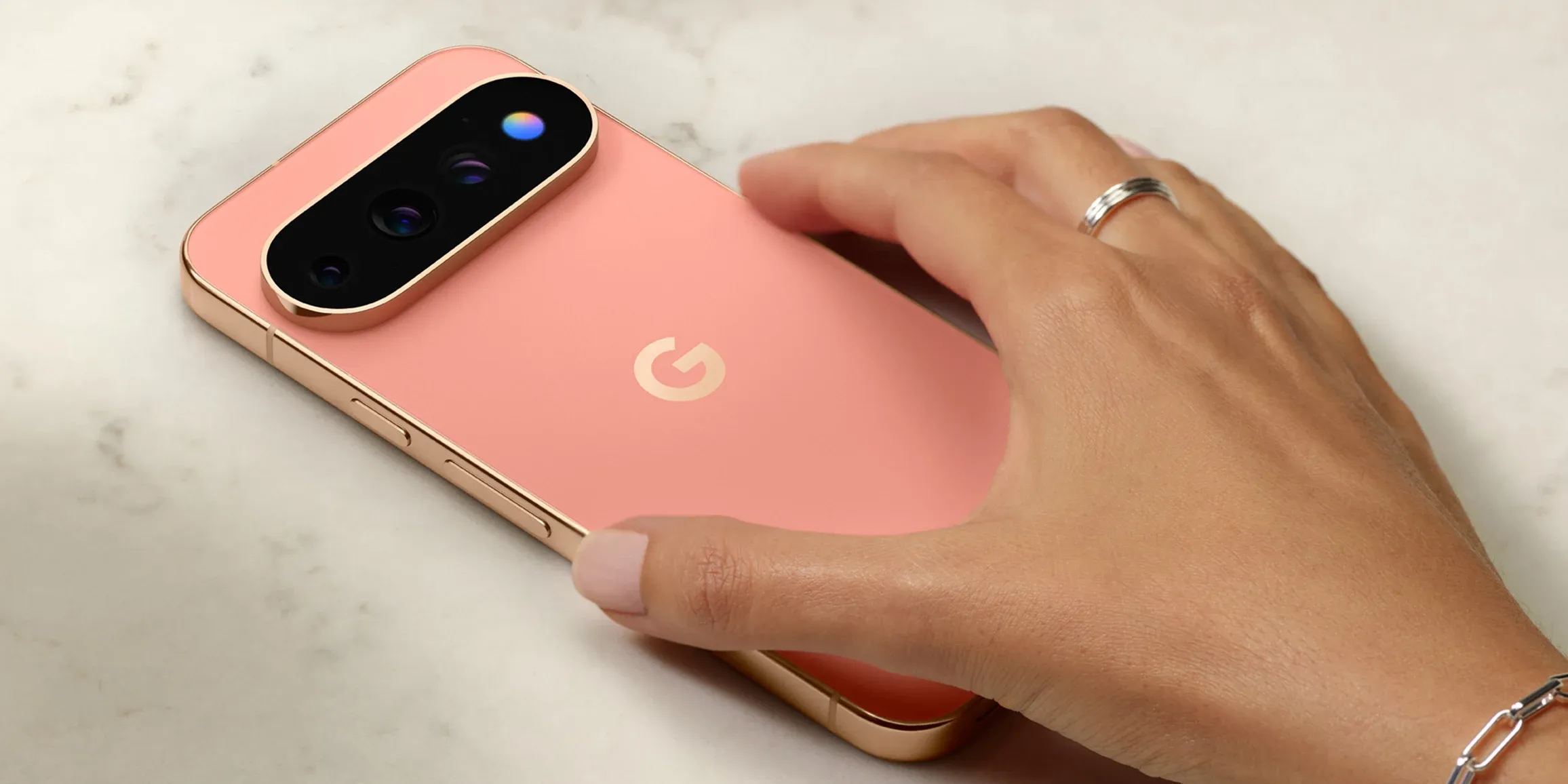
Most of the coverage around Google's new flagship is fixated on the Tensor G6 chip. That's fair; it's a real chip with real upgrades.
But this Pixel 11 Pro review is more interested in a quieter change that matters most to the phone's technical buyers: according to Android Authority, citing GrapheneOS, Google has replaced instant, public Pixel kernel-source downloads with a manual request form, turning a process that used to take hours into one that can now take weeks.
Here's the context that frames everything else. The Pixel 11 Pro starts at $1,099/£1,079 for its 256GB configuration, according to Trusted Reviews.
The base model ships with 12GB of RAM, down from the 16GB that came standard across every Pixel 10 Pro tier.
This isn't a full hands-on review of our own. Independent performance, camera, and battery testing is now available, including Tom's Guide's testing, so Google's launch claims no longer have to stand on their own.
What can still be argued is direction: the silicon is a real step forward, but two decisions, one about memory and one about how hard Google is making it for developers to build alternative software for its hardware, suggest Google is narrowing the platform for enthusiasts who treat Pixel as Android's most hackable flagship.
What's actually new in the Pixel 11 Pro
The headline performance figures come from Google: the company claims the Tensor G6 delivers up to 20% better CPU efficiency, 25% faster web browsing, and 15% faster app launches compared with the Tensor G5, based on tests Google ran on pre-production hardware, according to Android Authority.
A redesigned Tensor Processing Unit, with 50% more compute power, is said to run some local AI tasks up to 3.5x faster. New features include 4K Portrait Video and Instant Night Sight, which Google says captures shots up to 4.5x faster than on prior Pixels.
Paired with the new Titan M3 chip, in what Android Authority describes as the company's first major hardware security refresh in roughly five years, the Tensor G6 also enables what Google calls a "quantum-safe boot."
Independent reviews now paint a more measured performance picture, with the biggest gains showing up in efficiency, AI workloads, and camera processing rather than a dramatic jump in raw flagship performance.
The point isn't that Google stopped innovating. It's that the investment is flowing toward AI features and computational photography, not toward the openness that once defined Pixel's relationship with developers, and that split gets sharper the closer you look.
Google is making Pixel harder to build for, and it's not a phone feature, it's a policy shift
The kernel-access change is concrete, and it's the strongest evidence here. GrapheneOS says Google now requires developers to submit a form and wait for a Google Drive link to receive Pixel kernel source.
The project also says update history arrives squashed into a single, hard-to-read file rather than a browsable commit log.
That delay isn't abstract. Full Pixel-specific updates can depend on new kernel, firmware, and driver code, so waiting weeks for source can delay the work custom operating systems need to complete before shipping corresponding updates.
It also follows a broader shift. With Android 16, Pixel device trees and hardware repositories disappeared from AOSP, while Google's Android Building guidance pointed developers instead toward Cuttlefish and GSI targets.
Google had never been required to provide all of that Pixel-specific material through AOSP. The Linux kernel's GPLv2 does require corresponding source for distributed GPL-covered binaries, but it doesn't require Google to preserve a public Git history.
The GPLv2 requirements therefore make the source-availability question more precise than simply asking whether Google still publishes a browsable repository. No legal finding says the request-form process violates the license, and Google has not publicly explained why it introduced the manual system.
The clearest sign of how developers are reading the broader shift comes from GrapheneOS itself. Its Motorola partnership ended years of Pixel exclusivity when it was announced in March, months before this specific request-form change was reported.
GrapheneOS has tied that move beyond Pixel to Google's wider changes around AOSP and device support. With Motorola, the project says it expects to maintain its own AOSP repositories and prepare releases alongside major Android updates instead of waiting for Google's Pixel-specific process.
Anyone buying a Pixel 11 Pro specifically to flash a custom OS now has to factor that changing support environment into the decision.
To be precise, this is a Pixel platform-support decision, not a feature of the Pixel 11 Pro handset itself. But it lands as Google asks enthusiast buyers to pay flagship prices for a phone built increasingly around its own tightly integrated AI features, not around openness for the people who build on top of it.
Pixel 11 Pro vs Pixel 10 Pro: the RAM math
Set the platform politics aside for a moment. The base Pixel 11 Pro drops to 12GB of RAM, down from the 16GB that came standard on every Pixel 10 Pro configuration, a change specific to this model's memory tiering.
To restore 16GB, buyers need to step up to the 512GB model at $1,219 or the 1TB model at $1,449, pricing now confirmed by the Google Store.
That's a $120 to $350 premium over the $1,099 starting price to match last year's standard memory, though the higher tiers also add substantially more storage.
For enthusiasts, RAM isn't cosmetic. It affects multitasking headroom and heavier workloads such as emulation, which makes this arguably the clearest Pixel 11 Pro compromise hiding inside an otherwise strong upgrade.
Segmenting last year's standard memory behind a storage upsell, on a phone marketed heavily around on-device AI, still undercuts the pitch.
The counterargument: most buyers will never notice, and the phone is still better for them
This is the strongest objection to the case above, and it holds up. Google rates the Pixel 11 Pro for more than 30 hours of battery life versus more than 24 hours on the Pixel 10 Pro, despite a slightly smaller battery, and adds Qi2.2 wireless charging support.
Independent testing is now available rather than hypothetical. Results vary by test, but reviewers have measured real battery-life improvements while still finding the Pixel short of some flagship rivals.
Everyday users get tangible new features too: 4K Portrait Video, faster night shots, and on-device tools like Gboard's sign-to-text translation.
As Android Authority puts it, "if you use your Pixel out of the box with standard Android, you won't notice a difference today," since the kernel-access change specifically affects developers building custom, privacy-centric operating systems, not typical buyers.
Google didn't build a worse phone for most people. It built a phone that's arguably its best AI-and-camera package yet, while narrowing some of the advantages that made Pixel especially attractive to third-party OS developers.
Both things can be true at once, and weighing them is really what deciding whether the Pixel 11 Pro is worth it comes down to.
So, is the Pixel 11 Pro worth it?
The answer depends entirely on why you're buying one. If camera quality, sustained performance, or real-world battery life is the deciding factor, don't rely on Google's launch figures alone.
Independent reviews are now available, and they paint a more nuanced picture than the pre-production claims: meaningful efficiency and camera improvements, but no across-the-board performance leap. Trusted Reviews' framing of the 11 Pro as more of a refinement than a complete overhaul still holds up.
If 12GB of RAM covers what you actually do with a phone, the entry-level configuration is fine, and there's no need to pay extra just to chase last year's spec sheet. If it doesn't, factor the $120 to $350 step-up into the real price before deciding.
And if the plan is to run GrapheneOS or another custom OS, don't assume the old Pixel advantage is intact. GrapheneOS still plans to support 11th-gen Pixels, but it has also said it is becoming less interested in Pixel as Google's source and release process grows harder to work around.
Google hasn't publicly explained the kernel-access change or committed to a predictable turnaround time for requested source. That leaves custom-OS developers with more uncertainty than Pixel buyers used to face.
That last point is the one worth watching. GrapheneOS didn't wait for this latest request-form change to start diversifying: it announced its Motorola partnership in March and expects its first supported Motorola devices in 2027.
That's not proof that Pixel support is ending; GrapheneOS says the opposite for the Pixel 11 generation. But it is a preview of where the leverage is moving.
Until Google shows that its source-release process won't stall custom-ROM work, the safest conclusion is narrower than declaring Pixel finished for enthusiasts: building for Pixel has become harder, and the developers most affected are already making sure they have alternatives.



Comments
Be the first, drop a comment!