





Google Maps Restaurant Ordering: What's Here and What's Next
Google Maps cannot place a restaurant order. That distinction matters, because the conversational discovery experience Google has built over the past eight months makes the question feel closer than it did before. A sequence of Gemini-powered feature launches hands-free navigation, AI-synthesized venue tips, multi-step voice queries has moved Maps from a directions app into something that finds restaurants, answers follow-up questions about them, and routes you there by voice. Whether ordering follows is still an open question. But the pieces Google has assembled are worth understanding clearly before speculating about what comes next.
Can users order food with Google Maps yet?
No. The current Gemini-powered experience handles genuine multi-step restaurant discovery, but stops well short of a transaction.
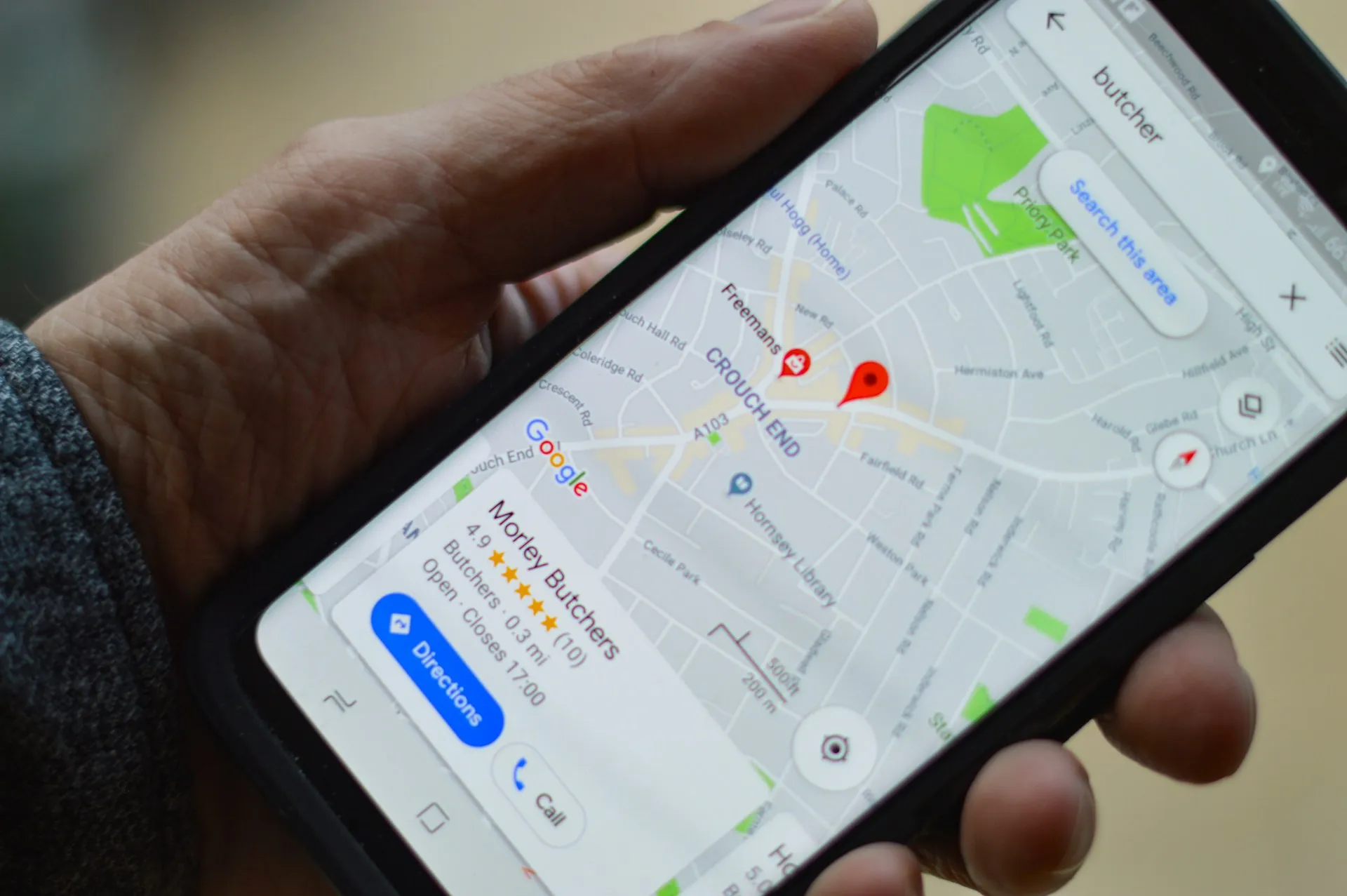
A driver can ask for a budget-friendly vegan restaurant along a route, follow up with a question about parking, and commit to a destination by saying "OK, let's go there" all without touching the screen, Google said in November 2025. That is not a one-shot query. The system retains context across turns, handling sequential intent the way a conversation does.
The Explore tab was updated around the same period to surface trending restaurants and curated lists from partners including OpenTable, Lonely Planet, and Viator, according to Google. OpenTable's presence here means list-surfacing only, not booking integration. That distinction matters.
Gemini also proactively synthesizes Maps reviews and web content before a user asks, surfacing practical venue details like parking availability and dress codes directly on a listing page. These "know before you go" tips began rolling out in the U.S. on Android and iOS in November 2025, Google confirmed.
The one confirmed cross-service action in the current experience is calendar integration. During navigation, a user can ask Gemini to add a calendar event, and it does so automatically with permission, Google said in November 2025. That is the only action Google has publicly demonstrated where Maps completes a task in an external service not reservations, not orders, not payments.
What remains unconfirmed is everything a restaurant commerce layer would actually require: in-app reservations, food ordering or delivery initiation, menu-aware prompts, merchant backend integrations, any payment flow inside Maps. The rollout geography reinforces the product's experimental state. Some Gemini features launched in India first, per the India-specific announcement; others are U.S.-only. The walking and cycling expansion announced in January 2026, the first to reach a fully global footprint, Google said, is the most recent signal of where the rollout stands. This is not a finished, unified product.
Why the architecture points toward Google Maps restaurant ordering
The multi-step restaurant interaction already in Maps shares structural DNA with a transaction flow. Filtering by budget and dietary needs, drilling into specifics, committing to a destination that conversational sequence maps neatly onto the steps an ordering interface would need. The gaps are not conversational intelligence. They are merchant integrations, menu and order APIs, a payment layer, and a business model. Those are partnership and product decisions.
Google's strategic position adds context. Gemini analyzes information about 250 million places and cross-references it with Street View images, Google noted in November 2025. That combination of real-world place data, route context, and on-device AI gives Maps capabilities that are harder to replicate than a general-purpose chatbot. Turning that into a local commerce layer would put Maps in territory where neither ChatGPT nor Apple Maps currently competes directly, though Google has not described that as a stated goal.
The restaurant industry, for its part, has been moving in that direction independently. Chatbots are the most common AI application among restaurant businesses surveyed, used as interfaces for guests to place orders and make reservations, Deloitte's June 2025 restaurant industry report found. Sixty percent of respondents said they use such tools daily; another 27% reported active pilots. The operator-side infrastructure for AI-mediated transactions is largely established, which lowers the integration burden for any platform that wants to connect to it.
Reservations and food ordering are different problems, though, and conflating them obscures what Google would actually have to build. A booking button passing a user to an existing reservation system like OpenTable is a light integration. Delivery or takeout ordering requires menu data, real-time inventory, payment processing, and kitchen-side confirmation. Both are plausible next steps, but they involve different partners, different complexity, and different timelines.
What this means for users, restaurants, and the platforms currently owning that space
For users tracking how Google products reshape local search, the shift is already underway. Maps is increasingly where dining decisions take shape, not just where routes get confirmed. AI-synthesized venue summaries change the research behavior that previously sent users to Yelp or TripAdvisor. Route-aware recommendations cut the friction between "I'm hungry" and "I'm navigating there." If ordering follows, the session that currently moves from Maps to DoorDash, OpenTable, or a restaurant's own website could close inside Google.
For restaurants, that concentration of attention has a sharp edge. Gemini's venue summaries compress an entire review record into a few sentences selected by an algorithm. Google states that anti-fake-review monitoring continues behind the scenes even as it introduces pseudonymous nickname-based reviews, per the November 2025 Explore tab update. But how Gemini handles ambiguous or mixed reviews whether it smooths them into a neutral summary or surfaces the tension is not publicly documented. Operators with complicated reputations have little visibility into how they're being represented.
For platforms that currently own dining discovery and transactions OpenTable, DoorDash, Resy, Yelp a Maps commerce layer is not a theoretical threat. The pressure resembles what eroded traffic to general web publishers once Google began answering questions directly in Search rather than routing users elsewhere. The open question is whether those platforms become integration partners inside Maps or face the same displacement.
What to watch
The signals worth watching are specific. A reservation booking button appearing inside a Gemini Maps flow would be the first sign of transactional intent. Any announced integration with a delivery platform such as DoorDash or Uber Eats would be a sharper signal still. Menu-aware prompts appearing within a restaurant listing, or a payments partnership that closes the session inside Maps either would move the ordering question from plausible inference to confirmed product direction.
Google has not announced any of those. What it has announced, across a series of updates since November 2025, is a conversational discovery layer that handles the consideration phase of a restaurant visit better than anything previously built into Maps. The gap between discovery and transaction is real. It is also, structurally, a gap that Google has built toward closing.







Comments
Be the first, drop a comment!