





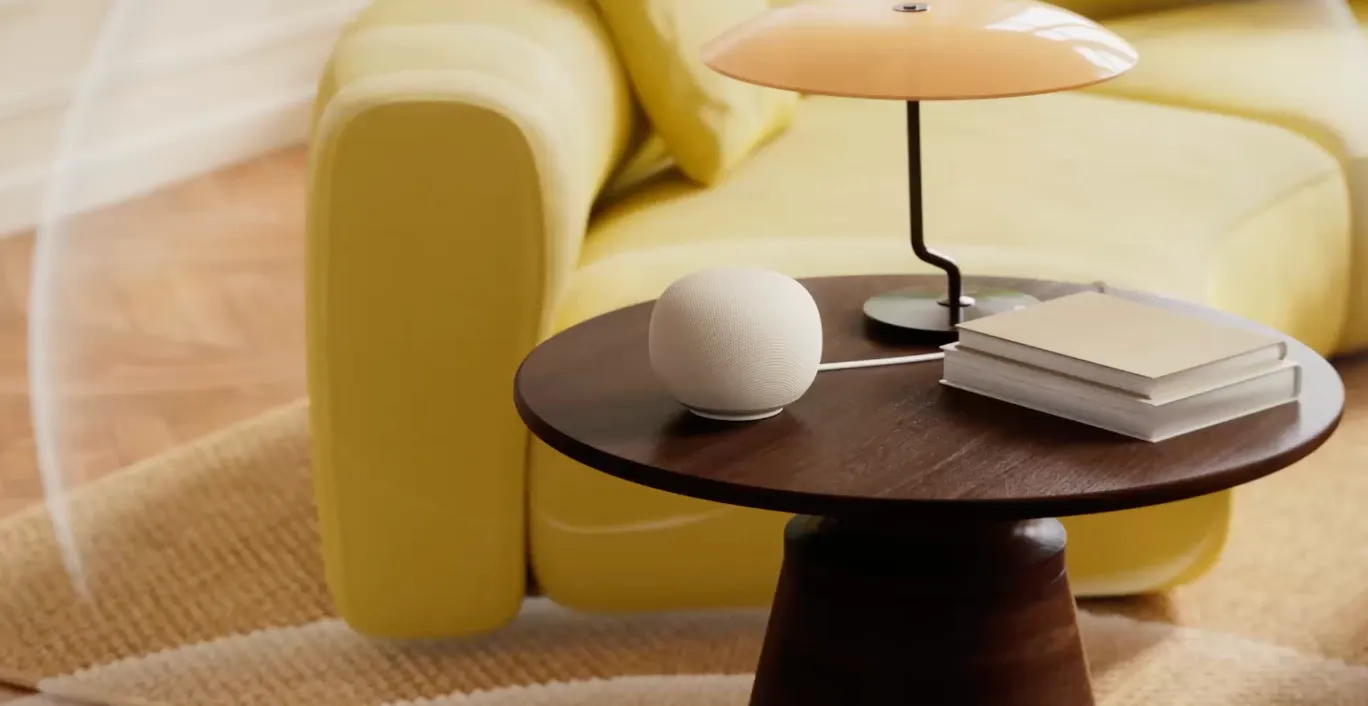
Apple spent this week shipping something Google has only sketched out in app code. On October 13, Apple announced HomeView, a $299 smart display built for shared households, with facial recognition for up to six family members, Siri AI, and controls that adapt as someone walks closer. Pre-orders are open now, and the device starts shipping November 13.
Google Home Display rumors, by contrast, are still just that: rumors. The evidence comes from strings found in the Google Home app's code, first spotted by Android Authority and detailed by Notebookcheck. There's no price, no release window, and no official word from Google confirming the rumored Google Home Display exists at all.
That gap is exactly why HomeView is worth paying attention to if you're tracking Google's plans. It's not proof Google is behind it. There's too little confirmed about its device to make that call. But HomeView's hands-on debut sets a concrete bar: five specific capabilities a shared-household display needs to get right. Treat the Google Home Display vs Apple HomeView comparison below as a buyer's checklist, not a spec sheet. One product ships next month. The other is still a leak.
What Google Home Display rumors actually confirm
Apple's side of this is well-documented. The $299 price, the November 13 launch, the six-person face recognition, and Siri AI's eight-market English rollout all come from Apple's announcement and are backed up by The Verge's hands-on and MacRumors' coverage this week.
Apple also says HomeView setup and multi-user support require a compatible iPhone or iPad running the latest software. It isn't sold in the European Union because Siri AI isn't available on iOS there yet. Siri AI launches in beta with HomeView software version 27.2, with English support in eight markets. The deeper personal-context tricks, like pulling an arrival time out of a text message, require pairing with an Apple Intelligence-compatible iPhone or iPad, so a bare HomeView unit won't do everything Apple demoed on its own.
Google's side is thinner by design, since nothing has shipped. The leaked code points to a built-in camera that could be used like a Nest Cam, three hours of default video storage, and a Google Home Premium tier that reportedly unlocks 60 days of motion-triggered clips or 10 days of continuous video. None of it is confirmed by Google.
The same report notes that Google appears not to be planning a new Pixel Tablet or a Nest Hub Max successor, and suggests this display could take over as Google's smart-home control hub, though Google hasn't confirmed anything about its product roadmap. That's the entirety of what's publicly known. Everything else is guesswork until Google says otherwise.
1. Personal profiles: recognizing individuals, not just the household
Apple says private content, including Messages and Calendar information, appears only when HomeView recognizes the enrolled user and detects their paired iPhone or iPad nearby and recently unlocked.
That distinction matters more than it sounds. A display parked in a kitchen or entryway gets used by whoever walks by, not just whoever set it up. A dashboard that treats every user the same wastes the hardware. If Google's rumored display wants to compete as a genuine Google smart home display for families, it needs some version of per-person recognition, not a single shared household login.
The leaked code strings describe camera behavior and storage tiers, not identity switching. Whether Google builds in individual recognition, and how it handles consent for storing face data in a house full of different people, is the open question worth watching in any eventual announcement.
2. A walk-up interface that adapts to distance
MacRumors reports that HomeView's interface shows larger, simpler information from across a room and richer detail as someone steps closer. The Verge's hands-on confirmed a dedicated Home Widget built for walk-up-and-tap control of thermostats, locks, and scenes.
A display mounted in a hallway or propped against a backsplash has to work in two modes at once: glanceable from six feet away, tappable from six inches. That's a harder design problem than it sounds, and it's the kind of detail that only shows up in a hands-on, not a spec sheet.
Nothing in the available reporting on the rumored Google Home Display touches interface behavior at all. The strings found in Google's app code describe camera and storage specs, not layout or scaling. Before assuming Google's display handles proximity the way HomeView does, look for demo footage or screenshots. Scaling a phone app onto a bigger screen is not the same as designing for distance.
3. A multi-camera dashboard, not just one built-in camera
HomeView's Home Camera face can livestream up to nine feeds at once, and The Verge's hands-on confirmed swiping to a live view and opening a garage door directly from there.
That's the feature that actually matters to a household with a doorbell cam, a backyard cam, and an indoor cam: one screen that pulls in all of them, not just whatever lens is built into the display itself.
The reported code suggests a built-in camera that could be used like a Nest Cam, but the available report doesn't describe the display aggregating other Nest or third-party cameras into a single dashboard. A device with its own camera and a device that acts as a hub for a house full of cameras are two different products, and the gap between them is worth watching for in Google's eventual launch materials.
4. Authentication friction for locks and other sensitive controls
The Verge's hands-on found that trying to unlock a door on HomeView required face or iPhone authentication, even though the lock control sat right on the main dashboard. That's a tested safeguard, not a line from a press release.
A shared display sitting on a kitchen counter is also an attack surface for anyone who wanders through the room. Locks need more friction than a thermostat does, and the real test is whether a company actually builds that friction in, not whether it says it cares about security.
The reported code for Google's display includes a visible on-screen warning while the camera records, a reasonable privacy signal, but the available reporting says nothing about authentication requirements for locks or other sensitive accessories.
Both ecosystems also gate their deeper features behind a subscription: Apple's camera recognition needs a supported iCloud+ plan, and Google's extended video history reportedly needs Google Home Premium. Check exactly what's included free versus locked behind a plan before assuming a feature works out of the box.
5. AI that finishes tasks, not just answers questions
In The Verge's demo, Siri AI pulled an arrival time out of a text message, calculated transit time from the airport, and set up an automation to start the coffee maker 15 minutes before arrival, all from one spoken request. It also turned a web recipe into step-by-step instructions with built-in timers after a user handed it off from an iPhone.
That's the bar for AI on a kitchen or entryway display: fewer steps, not a chattier version of the same steps.
Notebookcheck's reporting assumes Google's display will run Gemini as a voice-controlled smart-home terminal, but that's framed as a reasonable guess, not a demoed feature. Until Google demonstrates Gemini completing comparable multi-step household tasks, there's no evidence that its rumored display can match the capabilities Apple showed in its controlled Siri AI demo.
What to do before buying either device
Of the five items above, two matter most: per-person recognition and tested authentication on sensitive controls. A shared display that can't tell users apart, or one that doesn't add friction before unlocking a door, isn't solving the problem it exists to solve. The other three, distance-adaptive layout, multi-camera aggregation, and task-completing AI, are what separate a genuinely useful hub from a bigger tablet bolted to the wall.
Don't plan a purchase around the rumored Google Home Display yet. There's no price, no release date, and no public demo of its interface. Wait for Google to show, not just imply, that its display can recognize individual household members, require real authentication before unlocking anything, and tie into the Nest cameras people already own. Until then, HomeView is the only one of the two with a confirmed launch date, with broader independent testing possible once it becomes available November 13.



Comments
Be the first, drop a comment!