



Google Pixel 11 Pro Review: Real Upgrades Beyond the AI Zoom
The Pixel 11 Pro is a genuinely excellent phone. Google just isn't selling it on the reasons why.
The company's own launch material leans hard on "major camera upgrades" and a headline 120x zoom figure (Google Blog, this week). The phone itself, according to a hands-on Google Pixel 11 Pro review published this week, is "almost a copy-paste" of last year's Pixel 10 Pro (The Independent, this week). That gap between the pitch and the product says something about how flagship phones get marketed these days, and it's worth working through, because the parts of this phone worth paying for aren't the parts Google put on stage.
Google Pixel 11 Pro review: what has actually improved?
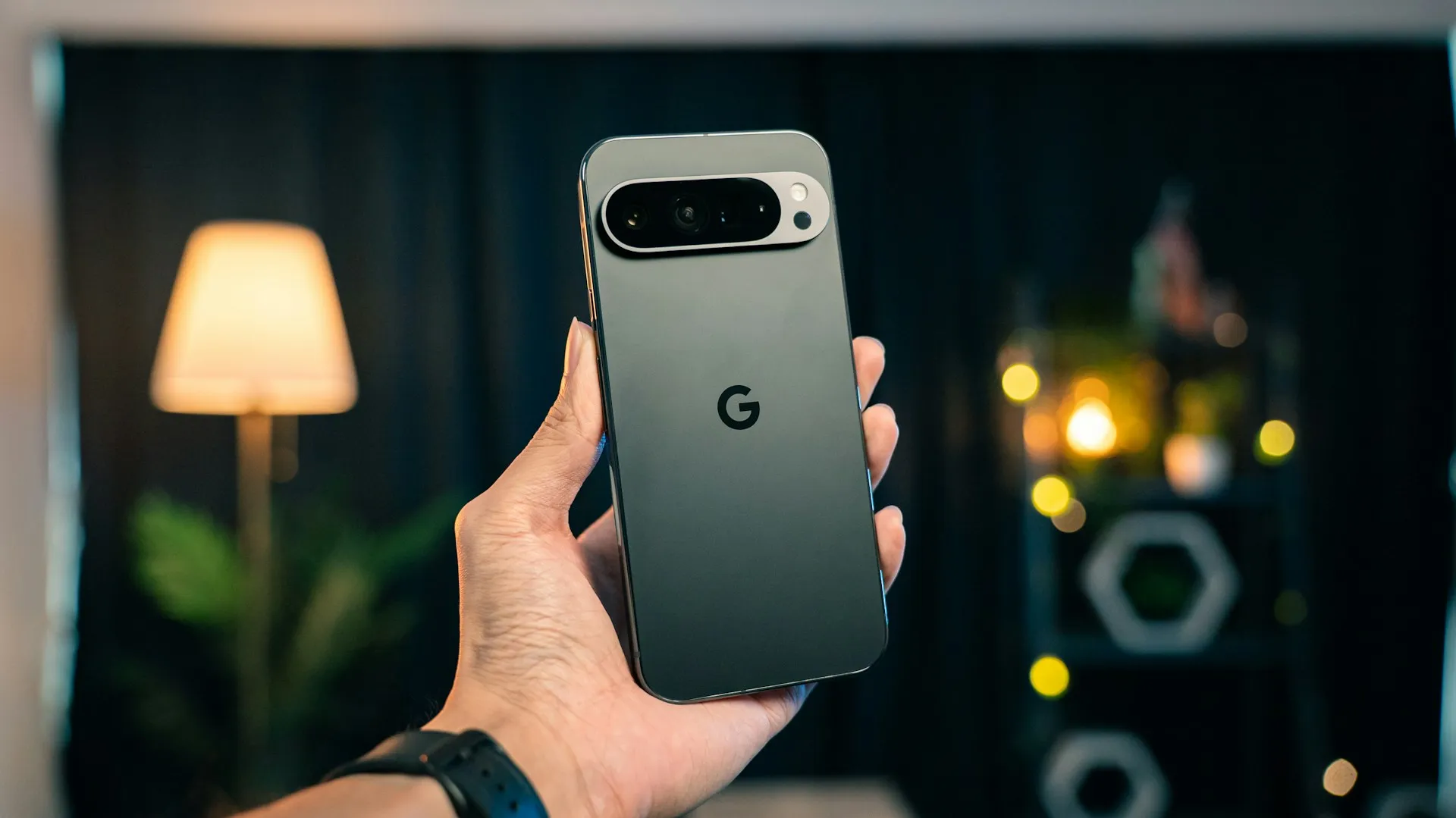
Start with what nobody put in a headline. The camera bar is 40% thinner than on the Pixel 10 Pro, and it's noticeable in hand rather than just on a spec sheet, which Google frames as improved pocketability and less desk-wobble (Google Blog, this week; The Independent, this week).
The display now peaks at 3,600 nits, a 9% jump over last year (The Independent, this week), paired with a new coating Google says delivers more than double the scratch resistance of the previous generation (Google Blog, this week). Battery capacity climbs to 4,850mAh from 4,700mAh, translating to a claimed 30-plus hours of use per charge, up from the 24-plus hours promised for last year's model (The Independent, this week).
None of that would survive as a standalone slide in a keynote. A thinner camera bump doesn't trend. A slightly brighter screen doesn't generate headlines. But these are exactly the changes you register every day, whether you're pulling the phone out of a tight pocket, checking it outdoors in direct sun, or making it to the end of a long day without hunting for a charger. That's the quiet case for this phone, and it holds up better than anything in Google's own promotional copy.
Pixel 11 Pro camera upgrades and the 120x zoom problem
The most meaningful upgrade in this Google Pixel 11 Pro camera review isn't glamorous: a bigger telephoto sensor. Google fitted a larger 1/2-inch sensor that captures 30% more light than the one in the Pixel 10 Pro, a straightforward optical improvement rather than a software trick (The Independent, this week).
That extra light-gathering capacity pays off most obviously after dark. Night Sight now captures images up to 4.5 times faster than before (Google Blog, this week), and in hands-on testing that meant photos snapping in about a second instead of the several seconds of standing dead still that Pixel owners have come to expect (The Independent, this week). That's the difference between actually getting the shot of your kid blowing out candles and getting a blur.
Then there's the 120x zoom, up from 100x last year, the number Google chose to lead with. Past roughly 30x, though, an on-device generative AI model takes over, reconstructing and sharpening detail the sensor itself never captured (The Independent, this week).
That distinction matters more than it sounds. A sensor upgrade that lets you take a usable photo in one second instead of five is a real, repeatable improvement to how the camera works. A zoom multiplier built partly on a model filling in pixels the lens never saw is a different kind of feature, and treating both as equivalent "camera upgrades" flattens a difference that matters to anyone deciding whether this phone is worth the money.
The software that actually earns the "brilliant" label
If the hardware story is modest, the software story is where this phone separates itself. Live Translate can now handle real-time audio translation from videos, podcasts, and voice messages, a capability one reviewer described as genuinely impressive after a week of daily use (The Independent, this week).
Magic Capture drew even stronger praise, described as a "total gamechanger" that can be set as the camera's default mode (The Independent, this week). It doesn't add a gimmick to the camera app. It fixes the ordinary annoyance of framing and timing a shot correctly, a far more common frustration than not being able to zoom to 120x on a whale three miles offshore.
Underneath all of it sits the Tensor G6 chip, which Google says delivers 25% faster web browsing and 15% quicker app launches, plus on-device AI tasks running up to 3.5 times faster while using up to 3.5 times less energy (Google Blog, this week). That's the horsepower behind features like Live Translate and Magic Capture, though Google doesn't spell out how much of the credit belongs to the chip versus the software layered on top of it.
Not every AI feature travels well, either. Active, which proactively surfaces information based on what's happening on your screen, isn't available in the UK; users there get Magic Cue instead, a feature that already debuted on last year's Pixel 10 (The Independent, this week). Then there's HiLight, the colored LED lights built around the camera flash that glow to signal when Gemini is listening, thinking, or responding (Google Blog, this week). It's a neat visual idea, but nothing in the research shows it solving an actual problem, which puts it closer to the 120x zoom than to Magic Capture: a feature built for a launch stage rather than a reason to upgrade.
Pixel 11 Pro vs Pixel 10 Pro: is the upgrade worth it?
This is where Google's own support policy quietly undercuts its yearly upgrade cycle. The Pixel 11 Pro launches with Android 17 and comes with seven years of OS, security, and Pixel Drop updates, meaning a unit bought today should still be getting software support in 2033 (The Independent, this week).
Charging tells a similar story. Wireless charging via Pixelsnap jumps to 25W from 15W, reaching roughly 50% charge in 30 minutes, which finally puts wireless speeds close to wired (The Independent, this week).
Pricing starts at $1,099 in the US (Google Blog, this week), or £1,079 in the UK (The Independent, this week). Pro buyers also get six months of Google AI Pro for eligible users, including expanded Gemini access and 5TB of cloud storage (Google Blog, this week). That bundle has real value, but it expires in six months, and it shouldn't be what tips a hardware decision meant to last years.
The verdict from hands-on testing is direct: existing Pixel 10 Pro owners likely don't get enough here to justify the cost, while owners of older Pixels, or anyone shopping for a first flagship Android phone, do (The Independent, this week). Put more plainly, the decision comes down to a few questions:
- Buy if faster low-light shooting, near-wired wireless charging, or a bigger battery would solve a real daily annoyance.
- Buy if the phone in hand is an older Pixel, or this is a first flagship Android purchase.
- Skip if the phone in hand is a Pixel 10 Pro and none of the above describes an actual problem. The year-over-year gains are real, but they're incremental, not transformative.
That seven-year support promise cuts both ways. It's the reason this phone makes sense as a long-term purchase for someone stepping up from an aging device. It's also the reason a Pixel 10 Pro owner from a year ago should feel no urgency to trade up, since that phone isn't losing support anytime soon.
Is the Google Pixel 11 Pro worth buying?
Strip away the keynote framing and the case for this phone rests on faster low-light capture, a bigger battery, wireless charging that finally rivals a cable, and software that fixes real annoyances without asking for credit. It doesn't rest on a zoom multiplier partly built from AI guesswork, or on LED lights still looking for a job.
Google will keep pairing genuine daily-use upgrades with showier ones dressed up in the same breath, and it falls on buyers to tell the two apart. A faster Night Sight shot is something you can trust the moment it lands in your camera roll. A 120x zoom stitched together by AI is worth a second look before it goes anywhere near the group chat as evidence of what was actually there.








Comments
Be the first, drop a comment!