



Chromebook Upgrade to Googlebook OS: Which Models Qualify?
Google confirmed on September 28, 2026 that a Chromebook upgrade to Googlebook OS is coming for at least some devices, though it still hasn't said which models qualify, when the migration will roll out, or how the process will work, according to PCWorld and 9to5Google. The announcement came through a new Google support page.
Two separate promises are easy to blur here. Individual Chromebooks keep getting updates through their own Auto Update Expiration date, while Google says the ChromeOS platform itself will keep receiving regular updates and security patches through mid-2034, according to 9to5Google and heise online. A migration to Googlebook OS sits on top of both as a third, still-undefined layer.
Google's own wording narrows the eligible pool considerably. The company describes "many newer commercial Chromebook models" as capable of upgrading, according to heise online. Google's wording does not establish whether consumer or education models are included in that group.
Which Chromebooks can upgrade to Googlebook OS?
Google's guidance points to devices purchased today whose 10-year update lifecycle stretches past 2034. Those are the devices Google says it's "committed to supporting" through some kind of transition, with "many" offering a direct path to Googlebook OS, per 9to5Google. That's a commitment to a category, not a guarantee for every device inside it.
No model list exists yet. Google says eligibility and migration details are coming "soon," and PCWorld confirmed the migration mechanics remain undisclosed, according to PCWorld and 9to5Google. Until Google publishes that list, an owner's best move is checking their device's Auto Update Expiration date to see whether it even falls in the post-2034 window Google is describing.
What continued ChromeOS support actually means
Google says current Chromebooks will continue receiving updates through their supported lifetimes under the existing Auto Update policy, regardless of how the Googlebook OS rollout plays out, according to 9to5Google.
Active ChromeOS Enterprise Upgrade and Education Upgrade licenses aren't affected either. Those licenses remain valid and keep their current management capabilities for the life of the device, a point echoed by both 9to5Google and heise online.
A device that never qualifies for the Googlebook OS path will continue receiving updates until the end of its standard support period, and schools and businesses can still deploy Chromebooks today without factoring any of this in, per PCWorld and 9to5Google. Google has not said whether a qualifying owner could decline the migration once it's offered.
What changes if a Chromebook moves to Googlebook OS
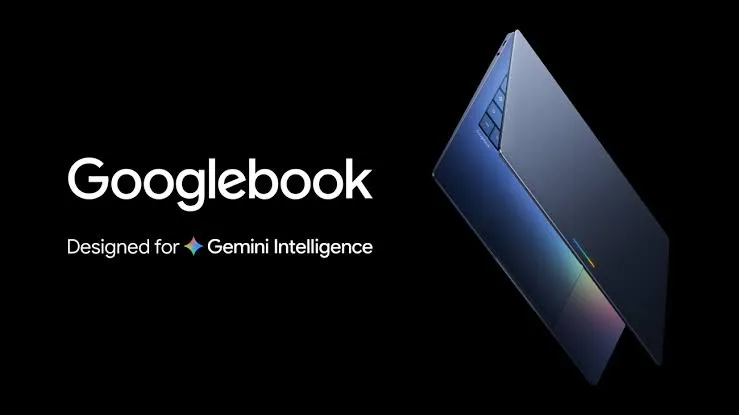
Googlebook OS isn't a ChromeOS point update wearing a new name. Google describes it as built on the Android technology stack combined with ChromeOS desktop foundations, designed around Gemini and tighter integration with Android phones, according to Google's blog.
A hands-on look at a launch Googlebook unit, not a migrated Chromebook, found the interface leans hard into that Android lineage. Settings mirrors the Pixel Settings app, the app drawer functions like the Pixel Launcher, Quick Settings sits in the same top-right spot Android users already know, and desktop widgets, something ChromeOS never supported, appear as a standard feature, according to 9to5Google's hands-on report. Whether a Chromebook that migrates later behaves identically to that review unit hasn't been established.
For someone weighing an eventual upgrade, the trade-off breaks down into what's promised and what's still open. On the plus side: Android app compatibility, closer phone-to-laptop integration, native widget support, and Gemini-based features Google is building the platform around, per Google's blog and 9to5Google. Still unresolved: exactly how the migration process works, whether local files and settings carry over cleanly, and whether every ChromeOS capability an owner relies on today survives the switch.
App behavior itself isn't uniform yet. On the reviewed device, Gmail and Calendar launched as web-based Trusted Web Activities instead of native Android apps, and Google told 9to5Google that individual app teams decide which format fits their product rather than the platform enforcing one rule, per 9to5Google. Google has not said whether that pattern will change as more apps come to the platform.
Security architecture carries over more directly, at least as described. Google says Googlebooks launch on the same core security foundation as ChromeOS, including a Titan hardware root of trust, layered defense-in-depth, and on-device malware detection, according to Google's blog. Institution-specific tools like secure student assessments and content filtering are still being built out, and Google itself acknowledges some functions required for commercial use are currently missing, per heise online.
What schools and businesses should know before planning around this
Sign-in on Googlebooks right now is limited. Users can log in to private devices with managed Google Workspace accounts, but only if a domain admin enables that access through Google Endpoint Management, according to heise online. There's no way yet to enroll a device into an organizational domain or manage a fleet centrally.
Google says a fuller management setup, covering admin controls, device and user reporting, zero-touch enrollment, and support for third-party Enterprise Mobility Management tools, won't start rolling out until the second half of 2027, per 9to5Google and heise online.
Licensing adds another open question. Existing ChromeOS Enterprise and Education Upgrade licenses stay active for current Chromebooks, but managed Googlebook deployments will run on a new licensing structure Google plans to publish before the devices reach general commercial availability, according to heise online. Whether existing licenses carry over in any form hasn't been addressed.
What to do with a current or future Chromebook
The confirmed facts are narrow: ChromeOS platform updates continue through mid-2034, current devices keep their support windows and enterprise licenses regardless of Googlebook OS, and Google has promised, but not published, an eligibility list for the upgrade path. The scope and mechanics of that upgrade, along with the management tools institutions depend on, remain unsettled.
Current owners don't need to act. ChromeOS keeps working as it always has, and there's no reason to assume a specific laptop qualifies for Googlebook OS until Google names it directly.
Anyone shopping for a Chromebook this fall should buy based on that device's current ChromeOS support window and its fit for daily use, not a hoped-for upgrade Google hasn't detailed. IT teams considering a Googlebook rollout still lack the model, licensing, and management details needed to plan a deployment, given the current sign-in restrictions and the second-half-2027 timeline for fleet tools. Watch Google's official support documentation for the promised eligibility list, and treat any third-party claim about specific qualifying models as unconfirmed until Google says so itself.



Comments
Be the first, drop a comment!