





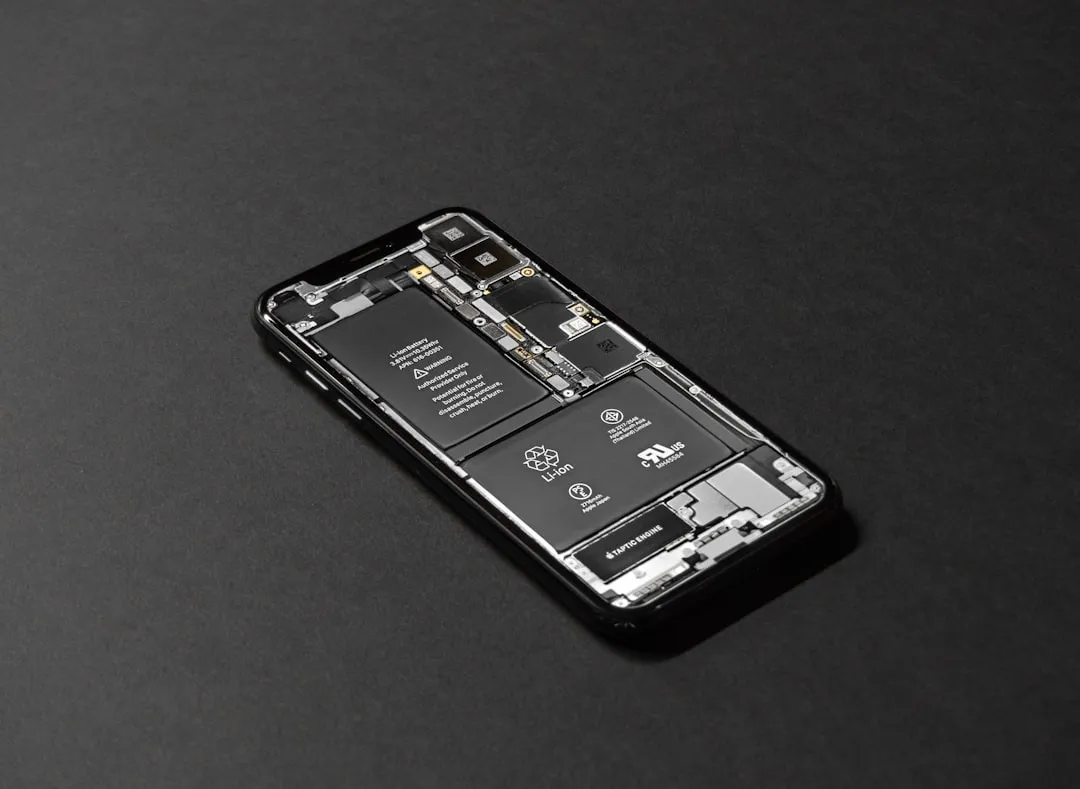
Pixel 11 overheating and battery life: what readers want
Between the start of August and today, Android Authority ran three separate reader polls about the Pixel 11. Together, they paint a picture of weak upgrade enthusiasm, and two of the three raise concerns about Pixel 11 overheating and battery life specifically, rather than cameras or design. Google's own pitch for the phone, at least as covered by outside reporting, points somewhere else entirely: toward computational photography tools and creative software, not the hardware fundamentals its own readers keep flagging.
None of this confirms actual Pixel 11 hardware problems. No independent lab testing shows up in the reporting reviewed for this piece, no sustained-load thermal results, no side-by-side battery drain figures. What the polling does show is a gap between what a self-selected slice of Android Authority readers says it wants and what the company has chosen to emphasize publicly so far. That gap deserves scrutiny, though this readership doesn't speak for every Pixel buyer, and the three surveys weren't designed to build on one another.
Pre-launch indifference and Google Pixel 11 upgrade concerns
In a poll published 11 days ago, six days before Google's August 12 launch event, Android Authority reported findings from more than 9,000 readers on their upgrade plans. Nearly half said they were happy sticking with whatever Pixel they already owned. Just 8% said leaks and rumors had already sold them on the new phone, and another 16.3% said they had no interest in Pixel phones at all.
Only 27% said they were waiting for official details before deciding. Add that group to the 8% already sold, and roughly a third of all respondents showed any real inclination to buy. Narrow the sample to voters who said they were interested in Pixels specifically, and the numbers shift: 58% were staying put out of satisfaction with their current device, 32% were waiting on launch specifics, and 9.6% were already planning to upgrade, meaning more than 40% of engaged fans remained open to buying.
One commenter's frustration captured the mood better than any percentage could. As reader Bluestew99 put it in the poll's comment section, "At this point, why stay with Pixel? The camera isn't enough to keep me." Not every comment matched that mood, though. Reader GrapTops offered the opposite read: "I don't think I'll be moving off my 9XL until I physically have to." Both are color, not data, but together they suggest the reluctance isn't uniform frustration so much as a mix of fatigue and genuine satisfaction with older hardware.
This purchase-intent poll actually published two days after Android Authority's separate battery-wishlist survey, not before it. The publication's readership had already expressed frustration with battery life days earlier. These may be overlapping pools of readers, but the reporting doesn't identify repeat respondents, so this isn't a tidy timeline where general reluctance came first and specific complaints followed.
Two polls, one recurring ask: fixing Pixel 11 overheating issues
The battery-focused survey, published 13 days ago with more than 6,300 respondents, found that more than half of them named better battery life as their top wish for the Pixel 11, according to Android Authority.
A newer survey, published today, sharpened the complaint. Overheating topped the list at 42.3%, with readers citing unchanged battery capacity across generations close behind at 39%, according to Android Authority. More than 81% said Google should fix those fundamentals before making future phones any thinner or lighter.
"Unchanged battery sizing" reflects how readers perceive the situation across Pixel generations, not a confirmed, spec-by-spec comparison of Pixel 10 and Pixel 11 battery capacities. That comparison doesn't appear anywhere in the reporting reviewed for this piece, so treat it as reader sentiment rather than verified fact. The available polling raises Pixel 11 hardware problems as a reader concern, not a confirmed defect in the device itself.
"Battery life" and "overheating" are broad terms, and neither survey unpacks what respondents mean by them. That vagueness matters because these issues get measured in entirely different ways once a phone actually reaches a review bench. Battery capacity is a fixed number printed on a spec sheet; endurance is how long that capacity lasts under mixed daily use, which depends on screen brightness, network conditions, and background apps as much as cell size. Charging speed is measured separately again, usually timed from empty to full or to a set checkpoint. Thermal throttling is different still: it shows up as a drop in sustained performance during a long task, not as a figure any spec sheet reports at all.
A single word like "overheating" could describe several distinct experiences, from a phone that gets warm during a video call to one that visibly slows down twenty minutes into a demanding game. A poll captures what readers perceive, not which of these categories is actually driving that perception, and that distinction matters more than any single percentage in these surveys.
The earlier battery survey disclosed a sample size north of 6,300 votes, and the purchase-intent poll drew more than 9,000 responses. The reporting reviewed here on the overheating survey doesn't state a sample size, only percentages. That's at least two differently sized, differently worded polls, plus a third whose scale isn't documented in the available reporting, not one consistent dataset tracked over time. Read individually, each still lands in a similar place: the reported hardware questions center on heat and endurance.
The launch pitch: cameras, software, and a price comparison
The launch coverage reviewed here emphasizes computational photography over the hardware questions readers keep raising. Per Digital Trends' coverage, published five days ago, the headline addition is Creator Suite, which bundles social-media framing guides, project organization tools, speech enhancement, and a built-in teleprompter directly into the camera app. Magic Capture, which can gather video and still moments simultaneously, and Camera Looks, which gives users more control over image processing, extend that same software-first push.
Digital Trends' own assessment of last year's phone complicates the case for leaning so heavily on software this time around. The outlet called the Pixel 10 "an excellent $800 flagship with a strong balance of cameras, software, battery life, and everyday usability," per Digital Trends. If reviewers already rated the Pixel 10's battery life as a strength, the gap between that verdict and Android Authority readers now demanding better endurance is worth sitting with. Either professional testing and everyday reader experience of the same hardware diverge more than the marketing admits, or expectations have simply climbed faster than the phone underneath them.
Only Creator Suite is confirmed as Pixel 11-exclusive; the reporting doesn't say whether Magic Capture and Camera Looks will eventually reach older Pixels too. Digital Trends advises treating claims of software exclusivity skeptically unless Google explicitly says a feature needs the Tensor G6 or other new hardware to run. Nothing in the reporting reviewed here confirms whether that's the case for any of these three tools.
Price offers a useful counterweight to the idea that cost alone explains reader hesitation, though it doesn't settle the question. Once storage is matched, most of the apparent price jump disappears: the 256GB Pixel 11 and 256GB Pixel 10 both launched at $899, and 256GB Pro models are identically priced at $1,099, per Digital Trends. Only the Pro XL and Fold carry genuine like-for-like increases of $100. Digital Trends listed US trade-in values ranging from $500 for a Pixel 10 to as much as $1,000 for a Pixel 10 Pro Fold, depending on the Pixel 11 variant purchased.
It's tempting to conclude that flat pricing rules out cost as a factor in reader reluctance, but that overstates what the data shows. The reported results do not show that respondents in the purchase-intent poll were asked about price, and that poll published six days before Google announced official pricing at its launch event. Flat, storage-matched pricing weakens one plausible explanation for reader hesitation, without eliminating it entirely.
What the record shows, and what to watch for next
Two differently worded hardware surveys, one built around battery life and one built around overheating and capacity, independently converge on a similar demand from Android Authority's readership, with 81.4% wanting the basics fixed before Google chases any more thinness. A third poll shows upgrade urgency among that same readership was already soft, for reasons that predate and overlap with those specific complaints rather than follow cleanly after them. None of that data proves the Pixel 11 has a hardware problem. It shows a self-selected segment of Android Authority readers is concerned about what it perceives as recurring Pixel hardware weaknesses, evaluated here before independent testing was available in the sources reviewed.
The reporting also leaves several questions unanswered. There's no sustained thermal testing, no model-by-model battery capacity comparison, and no benchmark data connecting chip design choices to actual real-world drain or heat. There's also no sales or return data showing whether this sentiment is translating into fewer purchases.
Anyone weighing an upgrade should hold off on drawing conclusions from polling alone. Look for reviews that report screen-on-time battery results under mixed use rather than a single benchmark number, sustained-load temperature checks during gaming or extended video capture rather than a brief burst test, real-world charging speed measured start to finish, and official capacity specs set directly against the Pixel 10 rather than reader impressions of "the same battery, generation after generation." Worth watching too is whether Google ever states that Creator Suite requires new hardware, or whether the feature eventually reaches older Pixels, which would help clarify whether the exclusivity reflects a technical limit or simply a marketing decision.
Independent reviews will show whether Google's software-first pitch translates into meaningfully better battery life and cooler-running hardware, not just new camera tools. Until those reviews arrive, the polls show concern, not a verdict on the phone.






Comments
Be the first, drop a comment!