



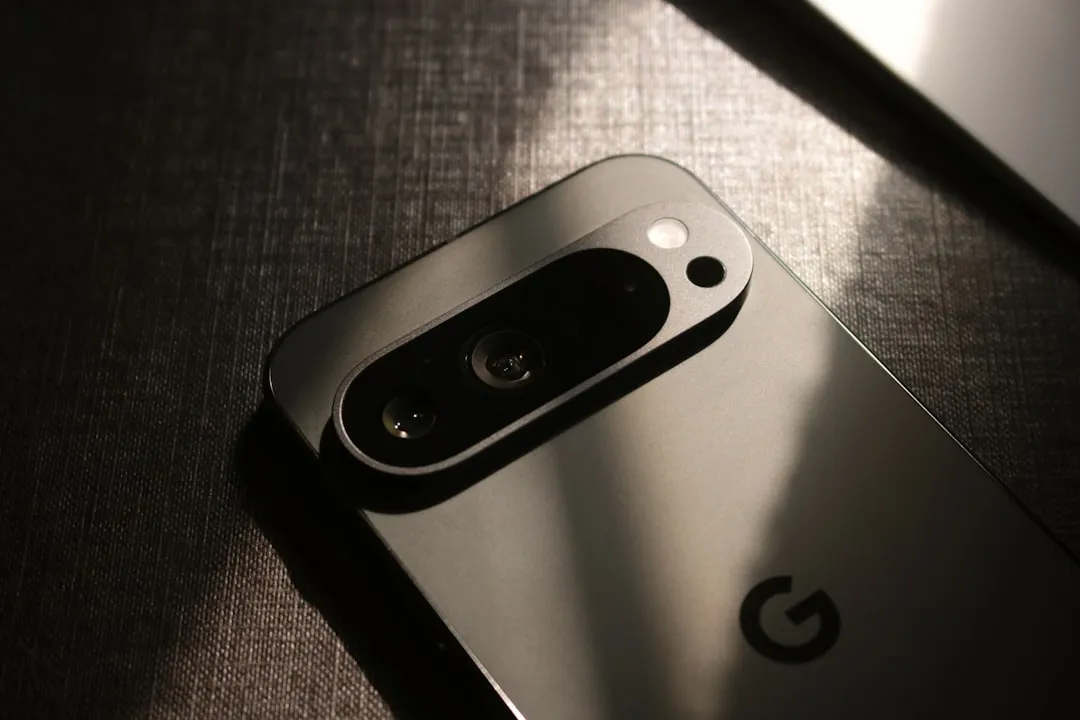
The Pixel 10 series has been available for several months now, and while many users have praised the overall experience, a significant issue has emerged that's causing widespread frustration. Google's implementation of Qi2 wireless charging in their latest flagship phones has created a compatibility nightmare that affects everything from your existing charging setup to your daily routine.
User complaints have been mounting regarding Google's approach to battery management and the dramatically reduced wireless charging speeds these devices achieve, according to Android Authority. The Pixel 10 lineup includes Qi2 support across all models, with the standard Pixel 10, 10 Pro, and 10 Pro Fold limited to 15W while only the 10 Pro XL can reach 25W speeds, as reported by Android Authority. However, achieving these maximum speeds requires certified Qi2 chargers, effectively making older Qi 1 and MagSafe chargers nearly useless for optimal performance, Android Authority notes.
Your existing chargers just became paperweights
Here's where things get frustrating: if you've invested in wireless chargers over the years, most of them won't work properly with your new Pixel 10. While previous Pixel 9 devices could achieve up to 12W on compatible EPP wireless chargers, the Pixel 10 series maxes out at a painfully slow 5W on these same chargers, sometimes dropping as low as 3W, with charging sessions that frequently fail altogether, according to Android Authority.
The real-world impact is severe. Testing revealed that a Pixel 10 Pro would require eight hours to charge from 27% to full on certain wireless chargers, assuming the charging process doesn't randomly stop mid-session, as documented by Android Authority.
What makes this particularly maddening is that other manufacturers have managed Qi2 implementation without breaking backward compatibility. Samsung phones can achieve their full 15W charging speed on the same Qi2 chargers that struggle with Google's devices, even when using cases with added magnets, Android Authority reports. This proves the technology works as intended – Google's implementation appears unnecessarily restrictive.
Survey data reveals the scope of this problem: over 26% of more than 2,600 Pixel users are experiencing reduced charging speeds because they're using incompatible chargers for their devices, according to Android Authority research. The compatibility nightmare affects both directions – older Pixel 9 devices drop to just 5W on newer Qi2 chargers, while Pixel 10 devices perform poorly on older Qi chargers, the same survey found.
PRO TIP: Before assuming your Pixel has hardware issues, test multiple chargers to identify whether you're dealing with a compatibility problem or device malfunction.
The technical mess behind the scenes
Let's break down what's actually happening under the hood. The root cause lies in Google's overly strict implementation of charging protocols. When Pixel devices encounter chargers they don't fully recognize, they default to the most conservative power profile available.
Here's the technical breakdown: Qi2 chargers should automatically switch to EPP mode when they detect a non-Qi2 phone, delivering the full 12W to devices like the Pixel 9 Pro. Instead, Pixels seem to reject the Qi2 charger's negotiation to switch from the initial Magnetic Power Profile (MPP) to EPP, leading the charger to default to the Basic Power Profile at a measly 5W, Android Authority's technical analysis reveals.
Older Pixel models on Qi2 chargers experience a "handshake" failure where the phone becomes overly cautious about overheating and compatibility, requesting the charger's Basic Power Profile that delivers only 5W of theoretical power, Android Authority explains. In practice, this theoretical 5W often translates to just 3-4W of actual power delivery, creating charging times of three to four hours or more, testing by Android Authority revealed.
Google's overly restrictive approach to wireless charging has been problematic for years, and the introduction of Qi2 has only complicated matters further. The company's implementation appears to reject standard backward compatibility negotiations, forcing chargers into their lowest power modes, according to technical analysis by Android Authority.
Real-world impact: cars, offices, and daily frustration
The compatibility problems extend far beyond home charging setups, affecting your entire daily routine. Most modern vehicles include wireless charging pads for use with Android Auto, but virtually none of these automotive chargers are Qi2 certified, Android Authority reports. This means your daily commute charging routine just became significantly less effective.
Nearly half of surveyed Pixel 10 users (48% of over 400 respondents) have noticed charging issues when using older Qi chargers, according to Android Authority's research. The Pixel 10 and 10 Pro, designed for 15W Qi2 charging, along with the 10 Pro XL with its 25W capability, all drop to a mere 5W on older Qi chargers, the survey data shows.
The charging interruptions are particularly annoying in practice. Your phone will begin charging, show the charging indicator, then suddenly stop after a few seconds or minutes. This cycle can repeat endlessly, making overnight charging unreliable and forcing you to constantly check whether your device is actually gaining power. Problems also extend to Google's own hardware ecosystem, with users reporting issues with both the original Pixel Stand and Pixel Stand 2, according to CNET testing. The problems become more pronounced when using phone cases, regardless of whether they include magnetic arrays, CNET found.
Google's response and the path forward
Google's official stance has been frustratingly contradictory. Company representatives have stated that the Pixel 10 lineup isn't optimized for older Qi wireless charging standards, though they maintain this doesn't necessarily mean the phones won't work with older chargers, a Google spokesperson told CNET. However, Google Support has reportedly told some users that Pixel 10 devices only support Qi2 chargers, according to Reddit reports cited by Android Police.
This inconsistent messaging leaves users in limbo, unsure whether their charging problems represent a bug that will be fixed or an intentional design decision they'll have to live with. On one hand, Google's marketing suggests older chargers should work. On the other hand, their support team directly contradicts this by saying only Qi2 chargers are supported.
The company has acknowledged some issues, particularly with the Pixel 10 Pro Fold, where users report seeing a mysterious question mark instead of battery percentage, Android Central reports. Google has confirmed this issue appears linked to wireless chargers, especially third-party or non-Qi2 certified devices, and has promised fixes in monthly updates, according to Android Central.
The recommendation from Google is clear: Pixel 10 Pro Fold users should stick to certified Qi2 wireless chargers, a Google spokesperson confirmed to Android Central. While software fixes may address some compatibility issues with older wireless charging hardware, as TechRadar suggests, the fundamental limitation appears to be by design rather than accident.
Bottom line: Google's contradictory messaging suggests they're either unwilling to admit the scope of the compatibility problem or genuinely unsure how to address it without forcing ecosystem upgrades.
Bottom line: prepare to upgrade your charging ecosystem
The harsh reality is that Google's Pixel 10 wireless charging implementation represents a step backward in practical usability. While the company has achieved Qi2 certification and magnetic alignment, they've sacrificed backward compatibility in the process. Your investment in existing wireless chargers has been effectively nullified, and you'll need to budget for new Qi2-certified chargers if you want your Pixel 10 to charge at anything approaching reasonable speeds.
This isn't just about slower charging – it's about a fundamental shift in how Google approaches hardware compatibility. The company appears to be prioritizing strict adherence to new standards over user experience, leaving customers to deal with the expensive consequences of upgrading their entire charging infrastructure.
For Pixel 10 owners, the message is unfortunately clear: if you want reliable wireless charging, you're going to need to invest in new Qi2-certified chargers across all the places you typically charge your device. That means new chargers for your bedside table, office desk, car (if possible), and anywhere else you've gotten used to the convenience of wireless power. It's an expensive proposition that feels like a betrayal of the wireless charging ecosystem that's been building for years.
The most disappointing aspect is that this appears to be an artificial limitation rather than a technical necessity. Other manufacturers manage Qi2 implementation without breaking backward compatibility to this degree, suggesting Google could have taken a different approach. Instead, they've chosen to force their users into an ecosystem upgrade that benefits accessory manufacturers more than consumers.
PRO TIP: If you're considering a Pixel 10 purchase, factor the cost of entirely replacing your wireless charging infrastructure into your budget – it's not optional if you want the feature to work reliably.



Comments
Be the first, drop a comment!