



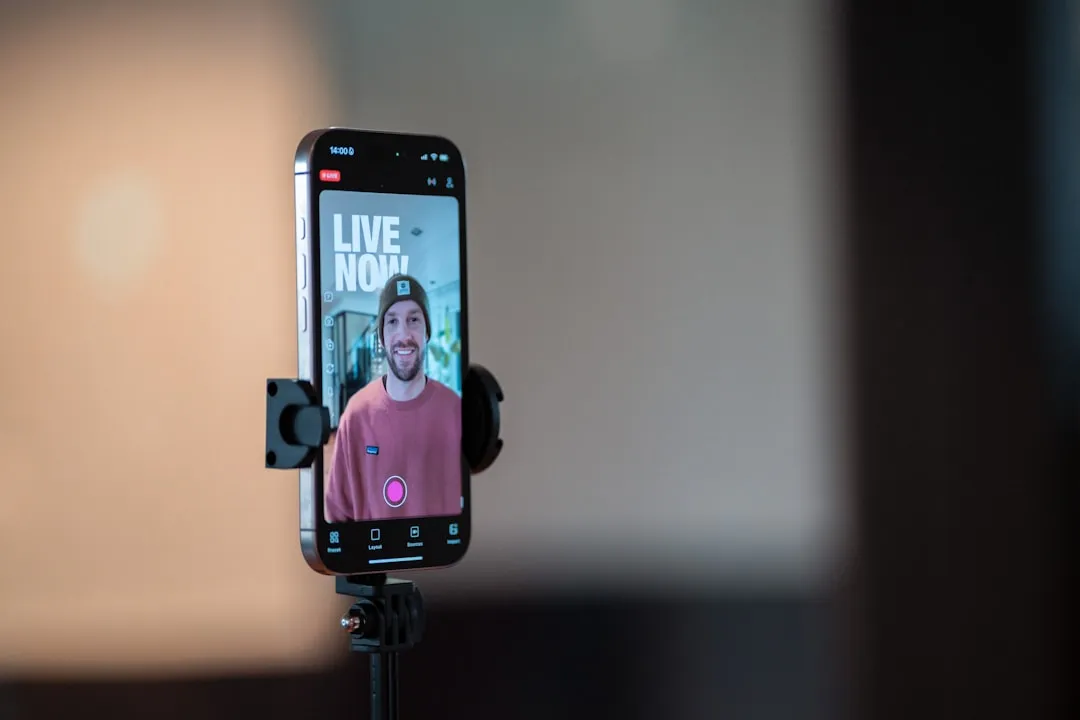
When seconds count in an emergency, having the right information can mean the difference between life and death. Google just launched a game-changing feature that transforms how Android users communicate with first responders during critical moments. Android's Emergency Live Video capability began rolling out December 10th, enabling users to transmit real-time visual information directly to emergency dispatchers. This encrypted streaming service operates on devices running Android 8 or newer with Google Play services in the US, along with select regions of Germany and Mexico. The technology represents a significant leap forward in emergency response, providing dispatchers with crucial visual context that can dramatically improve their ability to assess situations and coordinate appropriate help.
How dispatcher-controlled video requests actually work
The Emergency Live Video system operates through a carefully designed request-and-consent process that puts users in complete control. When you place an emergency call, dispatchers can now send a request to your Android device asking for live video access. You'll see a clear prompt on your screen, and choosing to share requires just a single tap to begin securely transmitting your camera's feed.
What makes this system particularly effective in crisis situations is how it maintains user agency while streamlining the process. The interface includes practical features like camera flipping to show the best angle and a prominent "Stop sharing" button that immediately ends the stream whenever you choose. The video feed can also be minimized while you take other important actions on your device, ensuring you're not locked into a single view while managing an emergency.
This dispatcher-initiated approach represents a fundamental departure from traditional emergency protocols. Unlike automatic activation systems that might trigger during false alarms, the request-based model ensures video sharing only occurs when professional responders determine visual information would genuinely improve the response. This targeted approach reduces unnecessary privacy exposure while maximizing the feature's effectiveness when it matters most.
Why visual information transforms emergency response
Real-time video fundamentally changes how dispatchers can assess and respond to emergencies, with research data demonstrating remarkable impact on response accuracy. Live video transmission succeeds in over 82% of attempted connections, and dispatchers modify their assessment of patient conditions in more than half of cases after receiving visual information. This isn't just incremental improvement—it's a paradigm shift in emergency communication effectiveness.
The visual context proves especially transformative in scenarios where verbal descriptions inherently fall short. Consider car accidents, medical crises, or natural disasters where it's difficult to articulate exactly what's happening—these are precisely the moments when accurate information becomes life-critical. Emergency response changes occur 58% more frequently when video is added to calls, allowing dispatchers to provide more targeted guidance for critical actions like CPR or first aid administration.
Perhaps most striking is how visual information impacts dispatcher decision-making accuracy. Research shows that in about half the cases where video was used, dispatchers found the patient's condition was less critical than initially described, while in roughly 13% of cases, the situation was actually more serious than first reported. This real-time calibration can determine whether dispatchers send basic EMT support or deploy a full trauma response team—decisions that directly influence survival outcomes.
Security and privacy safeguards built into the system
Google designed Emergency Live Video with comprehensive privacy protections that address legitimate concerns about sharing sensitive footage during vulnerable moments. The video stream uses encryption by default, ensuring that visual information remains secure during transmission using enterprise-grade security protocols.
The privacy-by-design approach extends beyond technical encryption to include robust user controls. Users maintain complete agency over when video sharing begins and can terminate the stream instantly at any time during the call. The system also includes thoughtful data handling policies: the video isn't meant to be kept on your device, though individual emergency agencies may retain footage based on their specific policies and legal requirements.
This implementation philosophy prioritizes user consent at every stage rather than treating privacy as a secondary consideration. The prominent "Stop sharing" button remains immediately accessible throughout the entire video session, ensuring users never lose control of their visual information even during high-stress emergency situations.
Technical infrastructure and expanding availability
The technical foundation enabling this breakthrough has been months in development, with Google strategically building the framework before launching the user-facing feature. The Emergency Live Video capability was integrated through Google Play Services updates in November 2025, creating a robust foundation for dispatcher-controlled streaming functionality.
RapidSOS provides the critical technical backbone, combining live video with other emergency data sources through their HARMONY AI system to give dispatchers comprehensive incident visibility. This integration represents more than simple video transmission—it creates a unified emergency data ecosystem that correlates visual information with location data, caller information, and incident classification.
The infrastructure delivers enhanced resilience precisely when it's needed most. Call volumes can spike by as much as 12,500% during natural disasters, exactly when emergency services must function flawlessly. The RapidSOS network provides redundant communication pathways that remain operational even when standard networks become overloaded, ensuring video capabilities persist during large-scale emergency events.
International expansion is actively underway, though implementation varies by region. Google is collaborating with public safety organizations worldwide to expand availability beyond the current US and select regions of Germany and Mexico coverage, with rollout timelines dependent on local emergency service infrastructure and regulatory frameworks.
The bigger picture: Android's comprehensive emergency toolkit
Emergency Live Video represents the latest evolution in Android's increasingly sophisticated safety ecosystem. The platform already includes Emergency Location Service, Car Crash Detection, Fall Detection, and Satellite SOS capabilities that work synergistically to provide comprehensive emergency assistance. This integrated approach means your Android device can automatically detect certain emergencies, accurately pinpoint your location, and now provide real-time visual context—all without requiring you to navigate complex interfaces during a crisis.
This development directly parallels Android's answer to Apple's Emergency SOS live video feature, which debuted on iPhone 14 and later models with iOS 18. The competitive landscape reveals how both platforms are pushing beyond traditional voice communication to create multimedia emergency response systems. However, Android's approach emphasizes broader device compatibility—supporting phones as old as Android 8—compared to Apple's focus on newer hardware generations.
The timing of this launch reflects a broader transformation in emergency communication infrastructure. Approximately 80% of emergency calls now originate from mobile devices, making smartphone-based emergency features increasingly critical for public safety. As emergency services continue evolving beyond voice-only communication, these visual capabilities represent a fundamental shift toward richer, more informative response systems that can save more lives through enhanced situational awareness.
Bottom line: we're witnessing the transformation of emergency communication from an audio-centric system to one that harnesses the full multimedia capabilities of modern smartphones. When seconds count in a real emergency, having the ability to instantly share what you're seeing with trained professionals who can guide you through the response could be the difference between a tragedy and a successful rescue. That's the kind of technological advancement that transcends convenience—it's genuinely life-saving innovation that makes emergency response more effective for everyone.



Comments
Be the first, drop a comment!